A fisherman caught a big swordfish at Donkuru beach. Kod Narayana Guru, a fisherman, went into the sea near Vekuvajamu on Thursday. This fish is huge with a length of about 10 feet and a weight of about 200 kilograms. Here its estimated value is around 9000, but they claim it fetches up to 50,000 rupees when sold in other regions. Locals gathered around to witness the sight as the fish were brought ashore.
News
MPEDA-RGCA is proud to announce the launch of a New Central Aquaculture Genetics, Pathology, and Food Testing Laboratory (CAGPFTL) facility. Situated at the RGCA Headquarters in Sirkali, Mayiladuthurai District, TN, this state-of-the-art lab boasts advanced technology ensuring top-notch aquaculture testing services. With a focus on precision and efficiency, the lab’s seasoned technicians are committed to delivering accurate results.
Notably, the lab has earned accreditation from NABL, making it one of India’s few aquaculture pathology and genetics labs recognized for adhering to ISO/IEC 17025:2017 standards. Specializing in Real Time PCR testing, the lab can detect a range of shrimp pathogens and identify Mud crab species, aligning with international benchmarks.
Beyond shrimp, crab, and fish disease diagnostics, the lab offers comprehensive testing services covering microbiology, water quality analysis, and more. It also provides training programs and consultancy services for setting up aquaculture disease diagnosis laboratories.
Primarily serving hatcheries, farmers, and seafood exporters, the lab invites interested parties to reach out for comprehensive pathogen screening and assistance. For inquiries, contact centrallabrgca@gmail.com or call Mathews Varkey at 7382287509.
Hidden Realities: Labor Conditions in India’s Shrimp Supply Chain
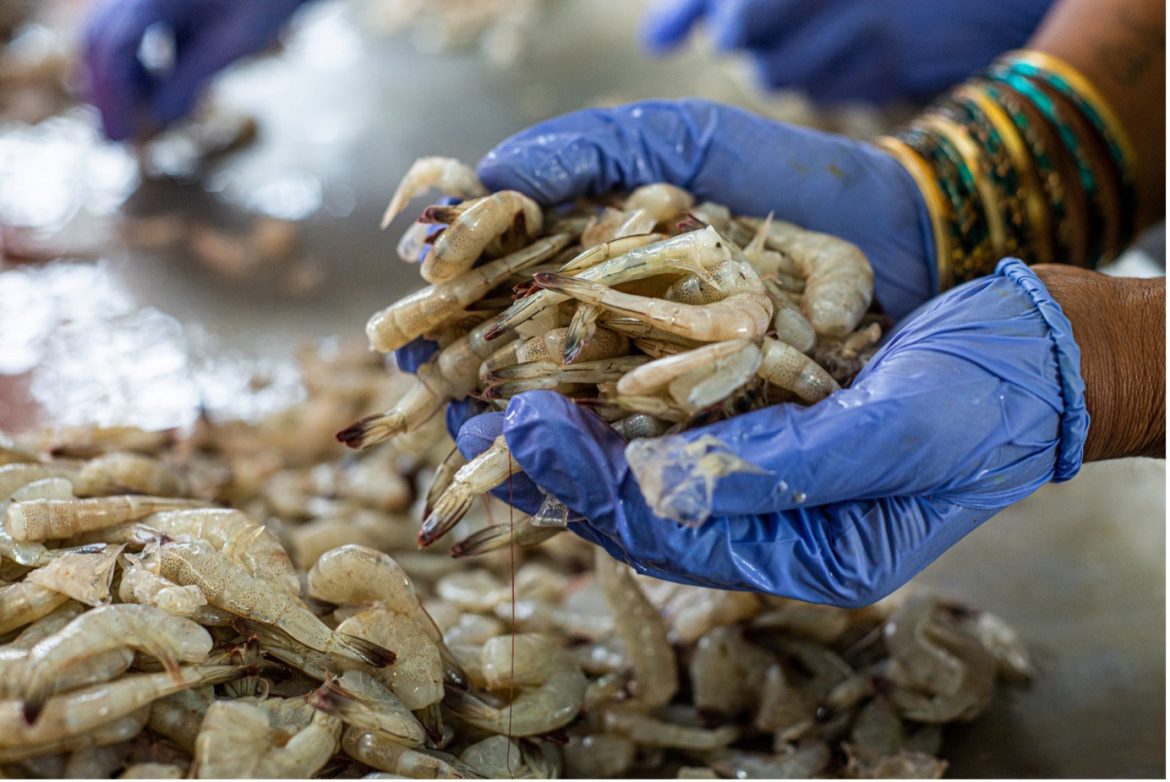
India sells a lot of shrimp to the United States. one reason Indian shrimp is popular is because it’s cheap. But the people who work to get that shrimp often face dangerous and unfair conditions. recently, investigators looked into this issue in a state called Andhra Pradesh in India. They found that workers there endure tough conditions while producing shrimp.
Americans eat a lot of shrimp, more than any other seafood. Most of them would prefer to buy shrimp that’s made in the United States. But because only a small amount of shrimp sold in the US is actually caught there, it’s hard to find local shrimp, and it’s usually more expensive. In the past, the US used to produce a lot of shrimp itself. But then, shrimp farming became big in Asia, especially in countries like Thailand and India. These countries started exporting a lot of shrimp to the US.
India became the top shrimp supplier to the US partly because of reports exposing bad working conditions in the Thai shrimp industry. As a result, people started looking to India for their shrimp supply. In Andhra Pradesh, journalists found that the shrimp industry was causing problems for local communities. The water and soil were being polluted by shrimp farming, making it hard for people to grow their own food.
Workers in shrimp factories often endure long hours in harsh conditions. They’re paid very little and sometimes have to pay fees just to get a job there. Many workers don’t even have proper contracts or any protection if they get hurt on the job. Despite these hardships, many workers see this work as their only option to survive.
Once the shrimp is processed in India, it’s shipped all the way to the US. It’s hard to track exactly where each shrimp goes and whether it’s been produced in a fair and ethical way. Even though some big companies say they care about human rights and the environment, they still buy shrimp from India where these issues exist.
Groups like CAL say that Indian companies need to treat their workers better and follow the laws. And US companies need to make sure they’re paying enough for shrimp so that Indian workers are treated fairly. They also say that both the Indian and US governments need to enforce these laws.
Experts say that consumers can help by being aware of where their shrimp comes from and supporting companies that prioritize fair labor practices and environmental protection.
Source: abc NEWS
India Denies Accusations of Shrimp Farm Abuses, Stresses Compliance with Global Rules
India, the largest supplier of shrimp to the US, has vehemently denied allegations of human rights and environmental abuses at its shrimp farms. The Commerce Ministry is taking steps to counter attempts to tarnish India’s global reputation in the seafood market.
Shrimps are a key component of India’s exports, with $5.6 billion worth of shipments in 2022-23. However, a report by the Corporate Accountability Lab (CAL) raised concerns about working conditions in shrimp hatcheries, ponds, and peeling sheds.
Senior officials have refuted these claims, highlighting that India’s entire shrimp export value chain is certified by the Marine Products Export Development Authority (MPEDA). They assert that the allegations are driven by vested interests aiming to damage India’s aquaculture sector.
With nearly 70% of India’s shrimp output coming from Andhra Pradesh, the Ministry plans to boost seafood exports to โน1 lakh crore by 2025-26. To address the allegations, exporters may commission independent studies on working conditions. Additionally, the Andhra Pradesh government has been urged to investigate the CAL report’s claims.
Officials argue that the CAL report selectively highlights isolated incidents without verifying their authenticity. They stress that India’s shrimp farming and processing sector complies with international regulations, monitored by regulatory agencies and auditors such as the USFDA, European Commission, and China’s GAC.
The Ministry’s proactive measures aim to safeguard India’s reputation in global markets and reassure consumers of the integrity of its shrimp exports. As India continues to dominate the US shrimp market, efforts to address concerns about working conditions are crucial for sustaining its leadership position.
Fishers Protest on Beach Over Lack of Amenities, Threaten to Boycott Lok Sabha Election
Families from four fishermen villages in Thennampattinam panchayat, Mayiladuthurai district, gathered on the beach for a protest, highlighting the absence of basic amenities in their communities. They expressed dissatisfaction with the inadequate facilities and threatened to boycott the upcoming Lok Sabha election if their demands were not addressed.
The villagers, representing Kizhamuvarkarai, Savadi Kuppam, Melamoovarkarai, and Konnayampattinam, waded into the sea to stage their demonstration. They demanded the construction of a new fish market building, a separate structure for a ration shop, and the establishment of a harbour for their fifty-plus motor boats.
Efforts by M. Panneerselvam, Sirkazhi MLA, to placate the protesters proved unsuccessful. Determined to have their grievances heard, the villagers asserted that they would continue their agitation until the District Collector visited their village and provided assurances of action.
Thiruvengadam, a fisherman from Kizhamuvarkarai, lamented the plight of the communities, stating, โOur villages are home to several thousand fishermen, yet we lack proper infrastructure for selling fish. Our existing fish market is dilapidated. Additionally, we lack a dedicated building for the ration shop, resulting in spoilage of stored rice during rainy seasons. Despite repeated appeals to Collector A.P. Mahabharathi, no concrete steps have been taken. Frustrated by governmental inaction, we are compelled to boycott the Lok Sabha elections.โ
The protest underscores the urgent need for authorities to address the longstanding grievances of the fishing communities and provide essential amenities for their livelihoods. Failure to do so risks further disenchantment and disruption within these vital coastal communities.
Chiang Mai Zoo Aquarium Reopens with Spectacular Upgrades for Visitors
After years of anticipation, Chiang Mai Zoo Aquarium has reopened its doors to the public, offering a captivating experience for visitors to the northern province of Thailand. With a 29-million-baht renovation project spearheaded by the Zoological Park Organisation of Thailand, the aquarium in Muang district has undergone a remarkable transformation, boasting modern amenities and enhanced habitats for its diverse aquatic wildlife.
The highlight of the revamped aquarium remains its iconic 133-metre-long underwater tunnel, acclaimed as the longest of its kind worldwide. This immersive tunnel allows visitors to marvel at rare marine creatures, including more than 30 species of sharks, rays, and turtles, up close and personal.
Divided into two sections โ the sea tunnel and the freshwater tunnel โ each measuring 66.5 metres, the tunnel offers a mesmerising journey through diverse aquatic environments. Linked by a travelator, visitors can seamlessly transition between the saltwater and freshwater habitats.
NarutatChareonsedtasin, chairman of Marine Scape (Thailand), which manages the aquarium, emphasised its significance as not only a tourist attraction but also a vital educational resource. He highlighted the role of the aquarium in raising public awareness about marine and coastal conservation, as well as the impacts of climate change on ocean ecosystems.
Visitors to Chiang Mai Zoo Aquarium can look forward to daily feeding shows, scheduled at the seawater tunnel at 10.30am and 2pm, and at the saltwater tunnel at 11am and 2.30pm, adding an interactive element to their experience.
Situated at 100 Huay Kaew Road, Tambon Suthep, Muang district, Chiang Mai, the aquarium offers a unique blend of entertainment and education, making it a must-visit destination for locals and tourists alike. Don’t miss the chance to explore this newly renovated aquatic wonderland and delve into the fascinating world beneath the waves.
India Surrendered Fishing Rights in Katchatheevu in 1974, Sri Lanka Documents Reveal
Recent revelations from Sri Lankan documents shed light on India’s surrender of fishing rights near Katchatheevu Island in 1974, a fact that has sparked controversy amidst ongoing disputes over Indian fishermen being arrested by Sri Lankan authorities.
According to an RTI response by India’s Ministry of External Affairs, in 1974, assurances were given to Karunanidhi that Indian fishermen would retain access to Katchatheevu Island as before. However, Sri Lanka contends that this was never the case.
A document from Sri Lanka’s then Foreign Minister Rohitha Bogollagama, presented in the Sri Lankan Parliament in September 2008, provides further clarity. Bogollagama referenced Article 6 of the 1974 India-Sri Lanka agreement, highlighting that it only preserved navigational rights for vessels of both countries over each other’s waters. He emphasised that the combined provisions of Articles 5 and 6 unequivocally indicate the relinquishment of fishing rights by India.
This revelation has reignited debates over the historical agreement and its implications for Indian fishermen who continue to face arrests by Sri Lankan authorities while fishing near Katchatheevu Island.
The 1976 agreement further solidified this understanding, explicitly stating the limitations on fishing rights near the island, as per the Sri Lankan document.
As tensions persist and diplomatic efforts intensify to address the plight of Indian fishermen, the Sri Lankan document provides crucial insights into the legal framework surrounding fishing rights in the region.
This revelation underscores the complexity of maritime disputes and the importance of diplomatic resolutions to ensure the equitable treatment of fishermen from both countries.
Source-News18
Nearly 750,000 Fish Killed in Iowa River After Liquid Nitrogen Fertilizer Spill
A devastating incident unfolded in Iowa as nearly 750,000 fish perished in the East Nishnabotna River due to a massive liquid nitrogen fertilizer spill. The spill, originating from NEW Cooperative, Inc. in Red Oak, occurred when approximately 1,500 tons of liquid nitrogen fertilizer was inadvertently released into a drainage ditch, eventually making its way into the river.
State officials, particularly the Iowa Department of Natural Resources (DNR), are deeply concerned about the ecological impact of the spill. The affected stretch of the river, spanning nearly 50 miles downstream of the spill site and extending into Missouri, witnessed significant damage to aquatic life, particularly minnows, shiners, dace, and chubs.
The spill was attributed to a valve left open on an above-ground storage tank over the weekend, as reported by the DNR. Despite ongoing efforts to contain the spill and mitigate its effects, investigations are underway to assess the broader impact on the river’s ecosystem.
Iowa state codes mandate permits for discharging pollutants into rivers, prompting collaboration between the DNR and legal authorities to determine the appropriate enforcement measures and restitution for the loss of aquatic life.
While recent field tests indicate a decline in ammonia levels in the river, caution remains paramount. The DNR advises against recreational activities on the river and urges people to refrain from collecting or consuming dead fish found in the vicinity.
This tragic incident underscores the importance of stringent regulations and vigilant oversight to prevent environmental disasters. The repercussions of such spills extend beyond immediate wildlife casualties, highlighting the fragility of our ecosystems and the imperative of responsible stewardship.
ICAR-CIBA and ICAR-CIFE Introduce Certification Course on Shrimp Crop Insurance & Loss Assessment
In a strategic collaboration, ICAR-Central Institute of Brackish water Aquaculture (CIBA) and ICAR-Central Institute of Fisheries Education (CIFE) have launched a Certification Course on Shrimp Crop Insurance & Loss Assessment. This initiative aims to equip professionals with vital skills for effective risk management in the shrimp industry.
Shrimp farming holds significant importance in India’s coastal economy, with its lucrative export potential. However, it comes with inherent risks, necessitating a deep understanding of industry dynamics and risk mitigation strategies. The certificate course addresses this need by providing insights into shrimp production systems, industry landscape, and shrimp crop insurance mechanisms.
The course covers topics such as risk assessment, documentation, and claims management to empower participants to navigate shrimp crop insurance effectively. Tailored for working professionals across sectors like insurance, banking, and shrimp industry stakeholders, the course also welcomes recent graduates aspiring to enter the shrimp industry.
With a limit of 30 participants, selection will be on a first-come, first-served basis, with priority given to candidates nominated and sponsored by industry and government entities. Interested individuals can apply by completing the application form provided, ensuring timely enrolment in the program.
By offering this certification course, ICAR-CIBA and ICAR-CIFE aim to enhance industry collaboration, disseminate knowledge, and cultivate a new generation of informed professionals in shrimp farming and risk management.
Link to Application Form: – https://docs.google.com/forms/d/e/1FAIpQLSeqPjFzz0BzaQmQzSUL-PBlxW4iYiDI1yooB9AT75K1_uRrgw/viewform?pli=1
Dead Fish in Bhopal’s Prempura Ghat Spark Water Contamination Concerns
The discovery of several dead fish in Bhopal’s Prempura Ghat, located on the Upper Lake, has raised serious concerns about water contamination. Prempura Ghat is a significant site used for the immersion of idols. While the Bhopal Municipal Corporation (BMC) has pledged to investigate the cause of the fish deaths, the Madhya Pradesh Pollution Control Board (MPPCB) has announced plans to dispatch a team to assess the water quality at the ghat.
Santosh Gupta, in charge of lake conservation at BMC, stated, “The BMC administration is committed to uncovering the reasons behind the fish deaths in Prempura Ghat.
Brijesh Sharma, the regional officer of MPPCB, explained, “One of the primary reasons for fish mortality is the lack of dissolved oxygen in the water. Typically, dissolved oxygen is generated by algae and aquatic plants during photosynthesis. However, as temperatures rise, the oxygen levels tend to decrease. The MPPCB will be dispatching a team to evaluate the water quality in response to this situation.
The incident has sparked concerns among locals and environmentalists, who are urging prompt action to address the underlying issues affecting the health of the lake ecosystem. The BMC and MPPCB’s collaborative efforts to investigate and rectify the situation have been welcomed by the community.
This unfortunate event underscores the importance of maintaining water quality and preserving the ecological balance of Bhopal’s lakes, which are vital to the city’s environment and heritage. It serves as a reminder of the collective responsibility to safeguard natural resources for future generations.