• E – Magazine
    • Aquaculture
    • Aqua Health & Disease Management
    • News
      • National
      • International
    • Farming
    • Research and Innovation
    • Sustainability
    • Technology & Equipments
    • This is Africa
    • Trade
  • Publications
  • Events
    • Expos
    • Trainings
    • Events by Month
  • Business Listings
    • List Your Business
    • Business Listings
    • Buy & Sell
    • Get Consultation
  • Employment
  • About Us
    • Founder
  • Contact
Fishery News
Home » International
Category:

International

nationalherald yixvlof iansindia
InternationalNews

Andhra Shrimp Shock: U.S. Tariff Tsunami Hits ₹60,000 Cr Seafood Industry Hard

by fishery 31/07/2025
written by fishery

India’s booming shrimp export dream has hit troubled waters—and Andhra Pradesh is at the epicenter.

Starting August 1, the United States is set to impose a crippling 26% countervailing duty (CVD) on shrimp imports from India, up from the current 10%. The move has sent shockwaves across Andhra’s aquaculture belt, threatening the livelihoods of nearly 3 lakh shrimp farmers and thousands of allied workers.

Andhra Pradesh, which contributes over 40% of India’s shrimp exports, is already witnessing sharp declines in farm-gate prices. Shrimp that once sold for ₹460/kg is now fetching ₹390–410/kg, leaving farmers staring at massive revenue losses during their peak harvest season.

Exporters are in a fix—either absorb the cost or shift the burden to farmers. Meanwhile, global competitors like Ecuador and Vietnam, facing lower tariffs, are positioned to steal India’s market share in the U.S., the world’s largest shrimp importer.

Industry experts fear this tariff hike could trigger a domino effect—leading to production drops, farmer exits, and a shift in global sourcing away from India.

Calls are growing louder for the Indian government to urgently negotiate trade relaxations or seek exemptions. The sector, which fuels ₹60,000 crore in foreign exchange, is too vital to sink.

If corrective action isn’t taken soon, the damage won’t just be economic—it’ll be generational.

31/07/2025 0 comment
0 FacebookTwitterPinterestEmail
Picture
InternationalNews

Shrimp Shake-Up in Sri Lanka: New Rules to Protect Local Farmers & Stop “Fake Lankan” Exports!

by fishery 30/07/2025
written by fishery

Sri Lanka has rolled out strict new regulations to curb the unchecked import and re-export of shrimp after mounting pressure from local aquaculture farmers. The country, which had previously allowed the import of foreign shrimp for value addition and re-export, is now hitting pause to protect its domestic industry.

The Sri Lankan Ministry of Fisheries, Aquatic, and Ocean Resources had opened the gates to foreign shrimp in recent years to meet international demand and boost seafood exports. But this strategy sparked backlash from local shrimp farmers, who warned that cheap foreign imports were flooding the market, threatening homegrown products and risking disease outbreaks that could lead to global trade restrictions.

Another major concern? Imported shrimp were being marketed as Sri Lankan, damaging the brand value of the country’s seafood industry.

To fix this, the government has now formed a special task force involving key stakeholders—from government agencies to shrimp exporters and aquaculture leaders. The result is a new Standard Operating Procedure (SOP) that sets tight controls on shrimp imports, ensuring traceability, biosecurity, and transparent labeling.

This move is expected to:
Prevent market distortion
Protect local shrimp livelihoods
Safeguard Sri Lanka’s reputation in global seafood trade

With these new SOPs, Sri Lanka aims to strike a balance between boosting exports and protecting its blue economy.

30/07/2025 0 comment
0 FacebookTwitterPinterestEmail
tade deaL
InternationalNews

Big Wins for Indian Fisheries: UK Trade Deal + Maldives MoU Set to Boost Exports & Blue Economy Growth

by fishery 29/07/2025
written by fishery

India’s fisheries and aquaculture sector is seeing a strategic leap forward through two major developments:
India–UK Free Trade Agreement
MoU with the Maldives on Fisheries Cooperation

What’s New?
Duty-Free Access to UK under the CETA deal is expected to boost Indian seafood exports—especially shrimp—by up to 70% over the next few years.
MoU with Maldives focuses on:
Sustainable tuna fishing
Deep-sea fisheries development
Aquaculture & processing infrastructure
Joint R&D & knowledge exchange
Fisheries eco-tourism

Why This Matters:
India exported seafood worth ₹60,523 crore in 2024–25
UK imported just ₹879 crore—huge headroom for growth
Exporters gain new access to high-value markets
Industry can strengthen traceability, standards & competitiveness
Opens doors to deep-sea fishing and Blue Economy partnerships

These agreements are more than trade—they’re catalysts for transforming India’s position in the global seafood and aquaculture value chain.

Let’s gear up for the next phase of innovation, sustainability, and export excellence.

29/07/2025 0 comment
0 FacebookTwitterPinterestEmail
Picture
InternationalNews

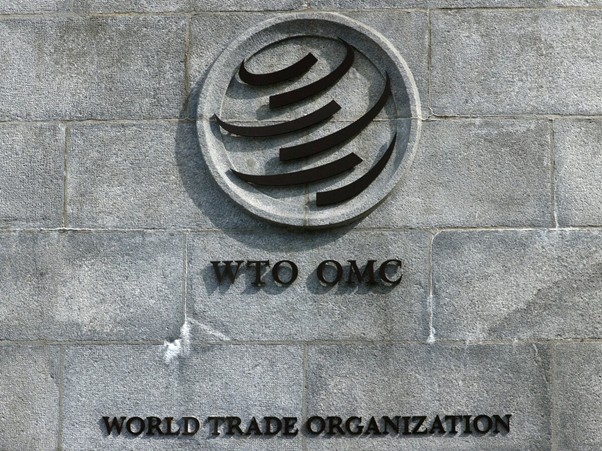
50 Nations Back India at the World Trade Organization! | Fight for Fishermen’s Rights Goes Global

by fishery 28/07/2025
written by fishery

India just got a MAJOR boost in its fight for fair fishery subsidy rules at the WTO!

Over 50 developing countries have come together to support India’s stand against unfair restrictions on fisheries subsidies. The goal? Protect the rights and livelihoods of small-scale fishers and coastal communities across the Global South.

India is leading the call for a 25-year transition period for developing nations – ensuring that traditional fishermen don’t lose out while developed nations continue deep-sea fishing with high-tech fleets.

“We need fair trade, not forced sacrifice. No one-size-fits-all!” — India at WTO.

What India Wants:
Special treatment for developing nations
Target illegal, unreported, and unregulated (IUU) fishing
Allow poor nations to support small fishers
Put equity at the heart of global rules

This isn’t just policy – it’s about justice for millions who depend on fishing for food and livelihood.

With over 50 nations on board, India is making waves for a fair and inclusive blue economy!

28/07/2025 0 comment
0 FacebookTwitterPinterestEmail
Picture
InternationalNews

Norwegian Company Raises ₹120 Crore to Build Robots for Fish Farms

by fishery 28/07/2025
written by fishery

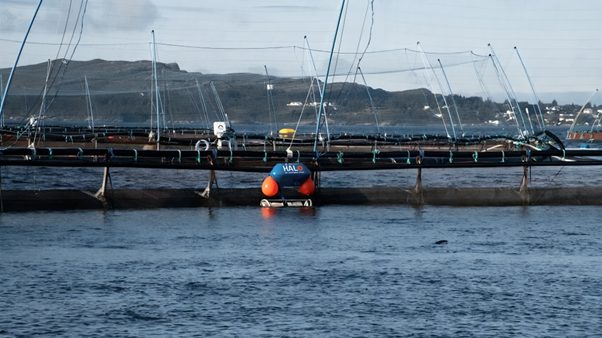
A company from Norway called Remora Robotics has raised ₹120 crore (around €13.7 million) to grow its business. This money will help them make more of their underwater robots that clean nets and check fish cages in big salmon farms.

These robots can work without boats or manual labour — and that’s a big saving for fish farmers.

What the Robot Does:
Cleans cage nets gently (no pressure washing)
Uses AI to check for damage and fish health
Collects water data from around the cages
Helps keep fish calm and healthy
Reduces risk of disease and improves survival rate

The result? Better fish, lower labour, and higher production.
Company Info:
Started in 2016, based in Stavanger, Norway
Works with big salmon farmers
Supported by research groups like SINTEF, Norwegian University of Science and Technology (NTNU), and Aquastructure Solutions Inc.
Already tested in the field and used in real farms

What’s Coming Next:
Their production is almost sold out for the next 6 months
At Aqua Nor expo (August), they will launch new software for live cage monitoring
The new system will include AI-based net inspection and real-time data tools for farmers

CEO Svein Erik Gregersen said:
“We’re proud of what the team built. Now we’ll grow faster and give even more value to fish farmers.”
This kind of tech is now common in Norway’s salmon farming.

Can we adapt something similar for India’s cage farms or shrimp hatcheries?
We’ll keep an eye on it.

28/07/2025 0 comment
0 FacebookTwitterPinterestEmail
Picture
InternationalNewsResearch and Innovation

Philippines’ Bold Move to Breed Sardines in Hatcheries – What India Can Learn

by fishery 28/07/2025
written by fishery

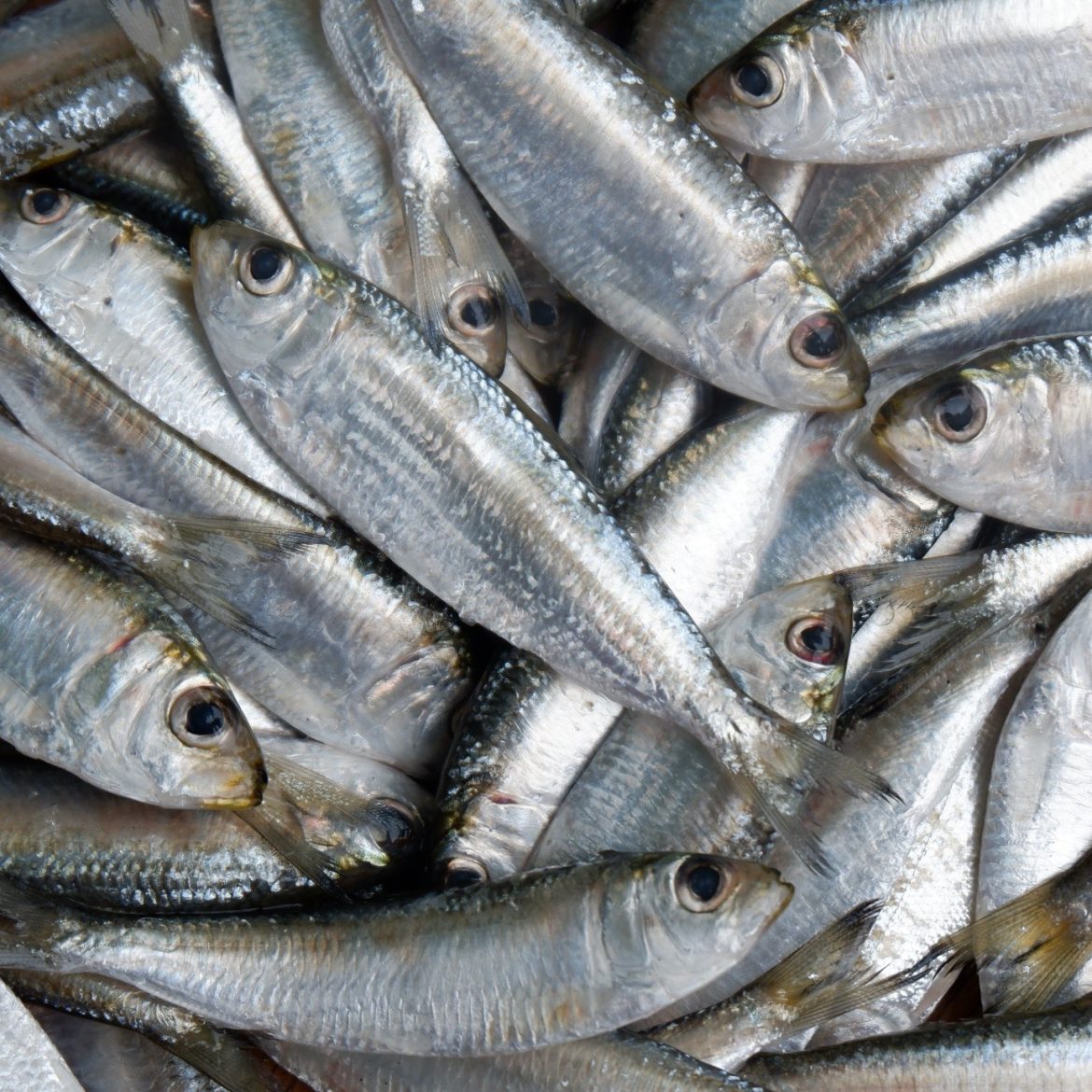
In the Philippines, tamban (Bali sardinella) is everywhere — cheap, abundant, and a staple for millions. But wild stocks have been under pressure.

Now, for the first time ever, the Philippines has started captive breeding of tamban — and it’s not just an experiment. It’s a seven-year national project aiming to shift tamban from wild-caught to hatchery-bred.

Why This Matters
Tamban = 314,000+ tonnes in 2023, worth ₹2,000+ crore.
16.7% of all Philippine fish production is sardines.
Until now: zero hatchery-based production.

What’s Happening on the Ground
232 tamban broodstock now in Taal (Batangas) and Tigbauan (Iloilo).
Fish have survived 378+ days in captivity — a big breakthrough.
Feed studies show tamban love copepods, phyto & zooplankton.
Led by NFRDI Training Division with support from BFAR MIMAROPA Regional Office Region 9 and Aquaculture Department, Southeast Asian Fisheries Development Center (SEAFDEC)/AQD.

The 3-Phase Plan (2024–2030)
Biology & Domestication – underway.
Broodstock development & spawning trials – 2026 onward.
Grow-out culture for commercial scale – 2029–30.

What This Means for India
Could this model work for Indian small pelagics like lesser sardines or mackerel? We’ve seen big progress in marine hatcheries — maybe it’s time to look at volume species, not just high-value ones.

We’ll be watching this closely. If tamban farming works, it could change how the whole region thinks about sardines.

28/07/2025 0 comment
0 FacebookTwitterPinterestEmail
DOLPHINS DEAD AFTER FUEL OIL SPILL IN KERCH STRAIT
InternationalNews

32 DOLPHINS DEAD AFTER FUEL OIL SPILL IN KERCH STRAIT

by Fishery News 06/01/2025
written by Fishery News

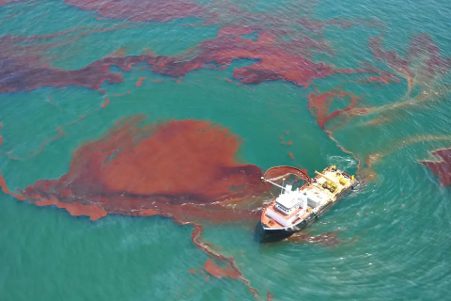
A devastating fuel oil spill from two storm-damaged tankers has led to the deaths of 32 dolphins, according to an animal rescue group. The Delfa centre, based in Russia, reported the deaths of 61 cetaceans, with 32 “most likely” caused by the spill that occurred three weeks ago in the Kerch Strait, which separates the Russia-occupied Crimean Peninsula from southern Russia’s Krasnodar region.

The centre confirmed that the majority of the dolphins killed were “Azov” dolphins, a type of harbour porpoise closely related to belugas and narwhals. They noted that most of the cetaceans likely perished within the first 10 days following the disaster, judging by the condition of the bodies.

Cetaceans, including whales, dolphins, and porpoises, are vulnerable to such environmental catastrophes, and the oil spill has caused severe harm to marine life in the area.

In response to the crisis, Russia’s Emergencies Ministry announced that over 96,000 tons of contaminated sand and soil had been cleared from affected shorelines in the Krasnodar region. Meanwhile, officials in Crimea declared a regional emergency after oil traces were found on the shores of Sevastopol, the peninsula’s largest city, located about 250 kilometers (155 miles) from the Kerch Strait.

06/01/2025 0 comment
0 FacebookTwitterPinterestEmail
RUSSIAN SCIENTISTS CRITICIZE INADEQUATE CLEANUP EFFORTS AFTER BLACK SEA OIL SPILL
InternationalNews

RUSSIAN SCIENTISTS CRITICIZE INADEQUATE CLEANUP EFFORTS AFTER BLACK SEA OIL SPILL

by Fishery News 30/12/2024
written by Fishery News

Credit: Sergey Pivovarov/Reuters

Russian scientists have expressed serious concerns over the inadequacy of cleanup operations following a massive oil spill from two tankers in the Black Sea. They have criticized the lack of proper equipment and resources, calling the response insufficient for the scale of the disaster.

The oil spill occurred on December 15 when two Russian tankers, the Volgoneft-212 and Volgoneft-239, were hit by a storm in the Kerch Strait. One vessel sank, while the other ran aground. The strait, which separates southern Russia from Crimea—a region annexed by Russia in 2014—witnessed a spill of approximately 40% of the 9,200 tonnes of fuel oil carried by the ships, according to Russian authorities.

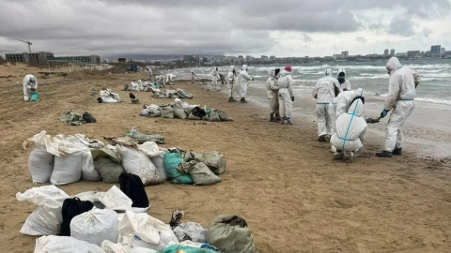
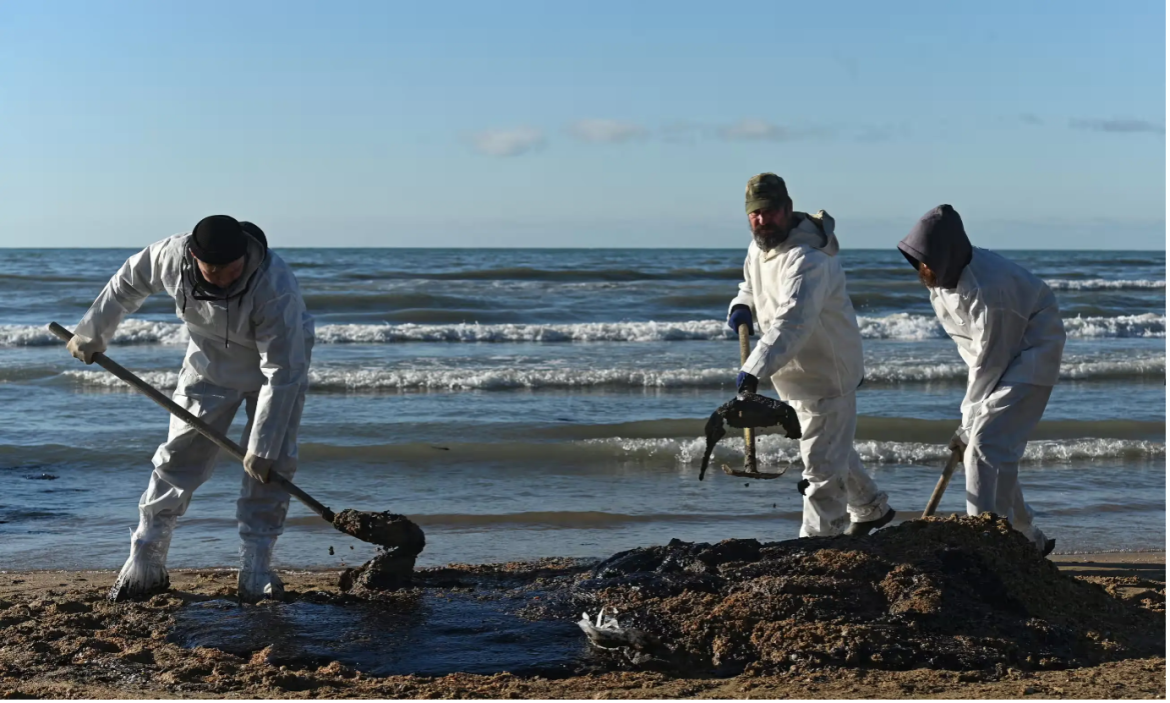
President Vladimir Putin has described the incident as an “ecological disaster.” In response, thousands of volunteers were mobilized to clean oil-soaked beaches. However, Viktor Danilov-Danilyan, the head of the Water Problems Institute of the Russian Academy of Sciences, criticized the lack of heavy machinery and proper tools during a recent news conference.

“There are no bulldozers, no trucks—practically no heavy machinery,” he stated. Volunteers are relying on shovels and flimsy plastic bags, which he described as “useless and prone to tearing.” The delays in collecting these bags risk allowing the oil to return to the sea during storms, he added.

Public criticism of Russian authorities is rare, but the scale of this ecological crisis has prompted outcry from experts. Russia’s Minister of Natural Resources reported on Monday that up to 200,000 tonnes of sand may be contaminated, with nearly 30,000 tonnes already removed. Krasnodar region governor Veniamin Kondratyev confirmed ongoing efforts but acknowledged the challenges.

Adding to the concern, Sergei Ostakh, a professor at the Russian Academy of Natural Sciences, warned that the oil could soon reach the shores of Crimea. “No one should have illusions it will stay clean,” he cautioned, urging swift action.

The Delfa dolphin rescue center has reported the deaths of 21 dolphins in the affected area, although further testing is required to determine whether the spill was the cause.

The cleanup efforts are under increasing scrutiny, with experts calling for immediate improvements to mitigate the environmental damage in the Black Sea region

Source: The Guardian

30/12/2024 0 comment
0 FacebookTwitterPinterestEmail
OIL SPILL IN KERCH STRAIT TONNES OF FUEL OIL FEARED LEAKED
InternationalNews

OIL SPILL IN KERCH STRAIT: 4,000 TONNES OF FUEL OIL FEARED LEAKED

by Fishery News 21/12/2024
written by Fishery News

Approximately 4,000 tonnes of oil products are believed to have leaked into the Kerch Strait following the sinking of two tankers during a storm, according to Russian Natural Resources Minister Alexander Kozlov. The exact figures remain uncertain as divers continue their investigation into the incident.

Extent of the Spill Under Investigation

Minister Kozlov noted that the estimate is based on the displacement of the sunken tankers, Volgoneft 212 and Volgoneft 239, which were carrying a total of 9,200 tonnes of fuel oil. “The final figures may change as the divers’ work progresses,” Kozlov told reporters on Friday.

Impact on the Environment

Fuel oil spills were discovered earlier on Friday in the Utrish natural reserve in the city of Anapa, near the Black Sea coast. Acting director Olga Shvab stated that the contaminated area is limited to 300 meters, with oil emissions found on rocks, not in contact with forested areas. Cleanup operations are set to begin on Saturday.

The Incident

The tankers wrecked in the Kerch Strait on Sunday during a severe storm, releasing an estimated 3,700 tonnes of fuel oil into the sea. The strait, a critical waterway connecting the Black Sea and the Sea of Azov, is now the site of a significant environmental concern.

Efforts to contain and mitigate the spill are ongoing, with authorities closely monitoring the situation to assess the environmental impact and plan the recovery process.


21/12/2024 0 comment
0 FacebookTwitterPinterestEmail
THAI SHRIMP PRODUCTION TO DECLINE BY % IN AMID DISEASE AND FALLING PRICES
InternationalNews

THAI SHRIMP PRODUCTION TO DECLINE BY 4% IN 2024 AMID DISEASE AND FALLING PRICES

by Fishery News 12/12/2024
written by Fishery News

Thailand’s shrimp production is forecasted to decrease by 4% year-on-year in 2024 due to disease outbreaks, unstable weather, and declining market prices, according to the Thai Shrimp Association.

Ekapoj Yodpinit, president of the association, stated that shrimp production is expected to drop to 270,000 tonnes, down from 280,000 tonnes last year. He attributed the decline to disease outbreaks, particularly early mortality syndrome (EMS), which has plagued farmers for over a decade, as well as adverse weather conditions affecting shrimp farming.

Falling prices have also discouraged many farmers, prompting delays in new farming cycles. In light of these challenges, the Agriculture and Cooperatives Ministry has identified the sea shrimp sector as a priority area under the national agenda.

The association has called on the government to allocate 2 billion baht to address issues within the shrimp industry. Effective disease management, Mr. Ekapoj noted, could boost production to 400,000 tonnes annually within three years, potentially mitigating over 600 billion baht in economic losses.

GLOBAL SHRIMP MARKET CHALLENGES

Thailand is not alone in facing a decline in shrimp production. Global output is expected to fall by 4% year-on-year in 2024, with major producers like China, Ecuador, India, and Vietnam also reporting decreases.

From January to October, Thailand exported 109,048 tonnes of shrimp worth 34 billion baht, marking a 1% drop in volume and a 6% decline in value compared to the previous year. For 2024, exports are projected to remain between 120,000-130,000 tonnes, valued at approximately 40 billion baht, similar to last year.

COMPETITION AND EXPORT MARKETS

Ecuador, the world’s largest shrimp producer, is emerging as a significant competitor for Thai shrimp exports. Ecuador produces around 1.3-1.4 million tonnes of shrimp annually, accounting for 20% of its GDP. Price dumping in the global market by major producers could further challenge Thailand’s position in key export markets, including Japan, the US, China, South Korea, and Taiwan.

The Thai shrimp industry is urging swift action to overcome these obstacles and ensure a sustainable recovery.

Source: Bangkok Post

12/12/2024 0 comment
0 FacebookTwitterPinterestEmail
Newer Posts
Older Posts
  • Recent
  • Popular
  • ICAR-CIFT Patents Rapid DNA Biosensor for Black Tiger Shrimp Authentication

    07/08/2026
  • Minister Holds Review Meeting with Fisheries Cooperative Leaders

    07/08/2026
  • Dry Fish Demand Surges Following Formalin Ban

    07/08/2026
  • Rohu Breeding: A Complete Step-by-Step Guide to Successful Seed Production

    07/08/2026
  • 1

    Trout Fish Stocking Initiative Enhances Fisheries and Tourism Potential in Shopian, Jammu and Kashmir

    17/12/2023
  • 2

    BIGGEST FISH MARKETS IN INDIA

    07/09/2024
  • 3

    Brazil’s Appetite for Vietnamese Tilapia Is Reshaping the Global Whitefish Trade

    28/07/2026
  • 4

    Introducing Future Aquaculture Magazine: A New Voice Shaping the Future of Seafood

    13/02/2026

About Fishery News

FN Logo

Fishery.News is India’s leading digital media platform dedicated to fisheries, aquaculture, seafood, and marine industries. We deliver trusted news, expert insights, market intelligence, technology updates, research, government policies, and success stories that help fish farmers, shrimp farmers, seafood businesses, researchers, and industry professionals stay informed and grow sustainably

Categories

  • News
  • Aquaculture
  • Aquatic Health and Disease Management
  • Research and Innovation
  • Technology & Equipments

Social Networks

Facebook Twitter Instagram Linkedin Youtube
  • Facebook
  • Twitter
  • Instagram
  • Linkedin
  • Youtube

© 2026 Fishery.News – A BLIV Media Venture. All Rights Reserved.


Back To Top
Fishery News
  • E – Magazine
    • Aquaculture
    • Aqua Health & Disease Management
    • News
      • National
      • International
    • Farming
    • Research and Innovation
    • Sustainability
    • Technology & Equipments
    • This is Africa
    • Trade
  • Publications
  • Events
    • Expos
    • Trainings
    • Events by Month
  • Business Listings
    • List Your Business
    • Business Listings
    • Buy & Sell
    • Get Consultation
  • Employment
  • About Us
    • Founder
  • Contact