• E – Magazine
    • Aquaculture
    • Aqua Health & Disease Management
    • News
      • National
      • International
    • Farming
    • Research and Innovation
    • Sustainability
    • Technology & Equipments
    • This is Africa
    • Trade
  • Publications
  • Events
    • Expos
    • Trainings
    • Events by Month
  • Business Listings
    • List Your Business
    • Business Listings
    • Buy & Sell
    • Get Consultation
  • Employment
  • About Us
    • Founder
  • Contact
Fishery News
Aquaculture Media & Marketing Hub
Home » This is Africa
Category:

This is Africa

SOUTH AFRICA AND CHILE SIGN MoU TO COMBAT IUU FISHING AND PROMOTE SUSTAINABLE AQUACULTURE
This is Africa

SOUTH AFRICA AND CHILE SIGN MoU TO COMBAT IUU FISHING AND PROMOTE SUSTAINABLE AQUACULTURE

by Fishery News 2024-11-27
written by Fishery News

South Africa and Chile have entered into a landmark Memorandum of Understanding (MoU) aimed at bolstering their fisheries and aquaculture sectors while intensifying efforts to combat illegal, unreported, and unregulated (IUU) fishing. The MoU represents a significant step in fostering collaboration between the two nations to promote sustainable practices and safeguard marine resources.

Key Areas of Collaboration

The agreement, announced in early November, outlines cooperation in the following areas:

  • Fisheries and Aquaculture Research: Sharing scientific advancements and sustainable practices.
  • Technology Exchange: Promoting modern aquaculture technology and responsible farming methods.
  • Capacity Building: Enhancing expertise in small-scale and industrial fisheries management, regulatory approaches, and enforcement measures.
  • Combating IUU Fishing: Joint initiatives to address fisheries-related crimes that threaten marine ecosystems.

In a statement, South Africa’s Department of Forestry, Fisheries, and the Environment (DFFE) said, “The agreement marks a significant step in the strengthening of bilateral relations and collaborative efforts between South Africa and Chile in promoting sustainable fisheries and aquaculture.”

The MoU builds on South Africa and Chile’s individual ratifications of the World Trade Organization agreement on fisheries subsidies—South Africa in March 2024 and Chile in December 2023—which bans support for IUU fishing and prohibits fishing of overexploited stocks.

Both nations face significant challenges from illegal fishing. South Africa loses an estimated USD 60 million annually to abalone poaching, with other species such as lobster and mud crab also under threat. Chile has historically struggled with overfishing of Patagonian toothfish, or Chilean sea bass, despite regulatory measures to protect the species.

The MoU aims to grow the contribution of fisheries and aquaculture to both countries’ economies by increasing seafood exports and boosting earnings for small-scale and commercial fishers.

To facilitate the implementation of the agreement, South Africa and Chile have established a joint technical team to oversee activities and create a roadmap for future initiatives. Regular bilateral meetings will further strengthen the partnership.

This collaboration underscores the commitment of both nations to sustainable development, preservation of marine biodiversity, and the economic empowerment of their fisheries communities.

Source: Seafoodsource

2024-11-27 0 comment
0 FacebookTwitterPinterestEmail
FAO and MFMR Validate Training and Market Assessments for Namibia’s Small Scale Fisheries
This is Africa

FAO and MFMR Validate Training and Market Assessments for Namibia’s Small-Scale Fisheries

by Fishery News 2024-10-21
written by Fishery News

Windhoek, Namibia– The Food and Agriculture Organization of the United Nations (FAO), in partnership with the Ministry of Fisheries and Marine Resources (MFMR), hosted a workshop on October 15, 2024, to validate the findings of a Training Needs Assessment (TNA) and market assessment for Namibia’s small-scale fisheries (SSF) sector.

Key stakeholders, including fishermen and women, vendors, ministry officials, and representatives of Small-Scale Fisheries Organisations (SSFOs), came together to identify local training priorities and discuss strategies for capacity-building. The workshop focused on addressing post-harvest challenges, particularly those impacting women, and promoting climate-smart handling techniques.

The event forms part of an FAO initiative under the Voluntary Guidelines for Securing Sustainable Small-Scale Fisheries (SSF Guidelines), endorsed in 2014. Namibia is a beneficiary of the Flexible Voluntary Contribution (FVC) project titled “Implementing the Small-Scale Fisheries Guidelines for Gender-Equitable and Climate-Resilient Food Systems and Livelihoods,” building on previous efforts funded by SIDA.

Assessments conducted across the Kavango East, Zambezi, Erongo, and //Kharas regions revealed challenges, including high spoilage rates due to inadequate preservation techniques and infrastructure gaps in cold storage and transport. Women, who play a crucial role in fish processing, were found to lack access to adequate training, resources, and market opportunities.

Market barriers such as high transport costs, limited cold storage, and competition from commercial fisheries were also identified. Participants called for improved market linkages, better infrastructure, and governance reforms within SSFOs to support small-scale fishers.

The workshop concluded with consensus on key priorities for future capacity-building, reinforcing Namibia’s commitment to sustainable, climate-resilient fisheries with a focus on gender equity.


2024-10-21 0 comment
0 FacebookTwitterPinterestEmail
Ghana to Introduce New Bill for Regulating Fisheries and Aquaculture
This is Africa

Ghana to Introduce New Bill for Regulating Fisheries and Aquaculture

by Fishery News 2024-09-27
written by Fishery News

The government of Ghana is working on a new Fisheries and Aquaculture Bill aimed at improving the regulation of marine fishing and aquaculture practices. Once passed, this legislation will modernize and harmonize the management of the fisheries sector while promoting sustainable aquaculture practices. It also seeks to address the effects of climate change and protect aquatic habitats from degradation.

Speaking at a two-day workshop in Kumasi, Mr. Eric Baah, Director of Policy Planning, Budgeting, Monitoring, and Evaluation at the Ministry of Fisheries and Aquaculture Development (MOFAD), emphasized the importance of enhancing regulations in the sector. He highlighted that the new law will encourage responsible fishing practices, support aquaculture development, and ensure compliance with both national and international standards.

The workshop provided an opportunity for local fishermen and industry stakeholders to contribute to the shaping of a legal framework that will guide the sustainable use of the country’s aquatic resources. This engagement was essential in gathering ideas to form more effective policies for the sector.

Mr. Baah pointed out that inland fisheries and aquaculture are vital for Ghana’s food security, rural livelihoods, and economic development. These sectors provide an essential source of protein for millions of people and support job creation across the country. However, their sustainability is increasingly threatened by challenges such as climate change, overfishing, and unregulated aquaculture practices, including the use of harmful chemicals that have disrupted fish reproduction.

The new Fisheries and Aquaculture Bill is designed to tackle these issues and bring about growth in the sector while safeguarding employment for approximately three million people who depend on marine resources. The law aims to boost the country’s food security and improve the well-being of families through the responsible management of fisheries.

Mr. Baah urged stakeholders to work together in charting a course toward a more prosperous future for the industry. He noted the sector’s potential for improving livelihoods if developed effectively.

Madam Doris Yeboah, a Legal Review Consultant for MOFAD, underscored the need for aquaculture operators to have waste disposal plans to minimize environmental damage. She stressed the importance of management and control measures to produce better outcomes in the sector. The Ministry, in collaboration with the Forestry Commission, Food and Drugs Authority, Environmental Protection Agency, and Wildlife Division, is working to protect wetlands, preserve aquatic environments, and promote fish regeneration.

Additionally, Madam Yeboah noted that efforts to register and license fishing boats and canoes would be intensified to curb illegal, unreported, and unregulated fishing in Ghana’s waters.

Mr. Issifu Basideen, an aquaculture operator from Tamale, shared concerns about the difficulties in marketing fish in the northern region due to cultural beliefs. He urged the government to integrate aquaculture products into the School Feeding Programme to ensure a stable market for their fish. He also called for regulation of fish feed prices, which are currently posing a challenge for operators.

This new bill is expected to bring significant improvements to Ghana’s fisheries and aquaculture sector, ensuring both sustainability and growth.

Source: GBN

2024-09-27 0 comment
0 FacebookTwitterPinterestEmail
Nigeria's Bonytongue Fisheries Get a Lifeline Through Innovative Genetic Study
This is Africa

Nigeria’s Bonytongue Fisheries Get a Lifeline Through Innovative Genetic Study

by Fishery News 2024-09-21
written by Fishery News

Credit: Adam russel- A cutting-edge genetic study is laying the foundation for the future conservation of African fisheries, with a particular focus on the African bonytongue fish. Tofunmi Oladimeji, Ph.D., a Nigerian scientist, is spearheading efforts to ensure that future generations in Nigeria will continue to benefit from fishing this vital species.

Oladimeji, a former visiting research assistant in the laboratory of Dr. Luis Hurtado, professor and evolutionary biologist at Texas A&M University, acquired advanced genetic techniques aimed at conserving the African bonytongue, a freshwater fish species that has significant commercial and subsistence value across Africa. Upon returning to Nigeria, she joined a team of researchers in completing a comprehensive genetic assessment of these fish populations, with the goal of guiding sustainable conservation efforts.

Dr. Hurtado’s study, titled Critically Small Contemporaneous Effective Population Sizes Estimated for Stocks of the African Bonytongue in Western Africa, sheds light on the alarming decline in bonytongue populations in West Africa due to overfishing and habitat degradation. The research spanned 12 genetically distinct populations in Nigeria, Benin, and Cameroon, identifying the critical state of nine populations that are on the brink of extinction.

The bonytongue species, Heterotis niloticus, is facing imminent genetic risks, with most populations suffering from dangerously low numbers. Hurtado warns that if these populations fall below 50 individuals, the risks of inbreeding and genetic instability will increase, which could lead to short-term extinction. Furthermore, 11 out of the 12 populations are at long-term risk due to their inability to adapt to environmental changes such as habitat loss and climate fluctuations.

Oladimeji emphasizes the urgent need for sustainable management strategies and expressed hope that this research will influence Nigerian fisheries regulations, which largely overlook inland waters. “Fish are essential to our diet, both locally and beyond,” she said, stressing that this study’s recommendations could mitigate overfishing and habitat destruction in freshwater ecosystems.

Success stories from local fisheries demonstrate that populations can recover when conservation measures are implemented. Both Oladimeji and Alphonse Adite, Ph.D., a colleague now based in Benin, are using the tools they developed at Texas A&M to work with local leaders and devise plans for these fisheries’ long-term sustainability.

Hurtado notes that international collaborations such as this are pivotal for sharing expertise and creating lasting change. The data gathered from the study not only provides insights into the genetic health of the African bonytongue but can also be applied more broadly to biodiversity conservation efforts across Africa. The genetic tools developed during this research will help guide recovery plans for fish populations, ensuring that future generations can continue to harvest these important species.

“This research has a global ripple effect,” said Hurtado. “It equips local scientists with the skills and data needed to drive impactful conservation efforts, both in their home countries and beyond. That’s deeply fulfilling as a scientist and mentor.”

This groundbreaking study holds the promise of a more sustainable future for West African fisheries, enabling local action and long-term solutions to protect these unique species and the communities that depend on them.

Source: Agrilife Today


2024-09-21 0 comment
0 FacebookTwitterPinterestEmail
AFRAQ to Showcase Aquaculture Advancements in Tunisia this November
This is Africa

AFRAQ24 to Showcase Aquaculture Advancements in Tunisia this November

by Fishery News 2024-09-16
written by Fishery News

The 3rd Annual International Conference and Exposition of the African Chapter of the World Aquaculture Society (AFRAQ24) is set to take place from November 19-22, 2024, in Hammamet, Tunisia. Hosted by Tunisia’s Ministry of Agriculture, Water Resources, and Fisheries, the event will attract thousands of global delegates to celebrate advancements in aquaculture across Africa and address the challenges facing the sector.

Tunisia, recognized as one of Africa’s fastest-growing aquaculture producers, will provide an ideal setting for discussions on aquaculture development, with an emphasis on the blue economy’s potential. The conference, themed Blue Farming: New Horizons for Economic Growth, will feature cutting-edge research, innovations, and investment opportunities that promise to drive further growth in Africa’s aquaculture sector.

The event will include a scientific forum with oral and poster presentations, a trade exhibition, industry forums, satellite workshops, student events, and organized meetings. Renowned keynote speakers from Africa and around the world are expected to attend. Attendees will also have the chance to visit Hammamet’s popular tourist attractions, as well as participate in special tours of nearby marine finfish, shellfish, and seaweed farms, which are connected to fish processing and aquafeeds.

Abstract submissions and registrations for the conference are currently open. Interested sponsors and exhibitors can contact mario@marevent.com for more information, while general inquiries regarding AFRAQ24 can be directed to worldaqua@was.org or africanchapter@was.org. More details are available at www.was.org.

AFRAQ24 promises to be a pivotal event for fostering collaboration and advancing aquaculture development across the African continent.

2024-09-16 0 comment
0 FacebookTwitterPinterestEmail
West Africa’s Fishery Crisis Illegal Chinese Trawlers Climate Change and Artisanal Overfishing Deplete Stocks
This is Africa

West Africa’s Fishery Crisis: Illegal Chinese Trawlers, Climate Change, and Artisanal Overfishing Deplete Stocks

by Fishery News 2024-09-16
written by Fishery News

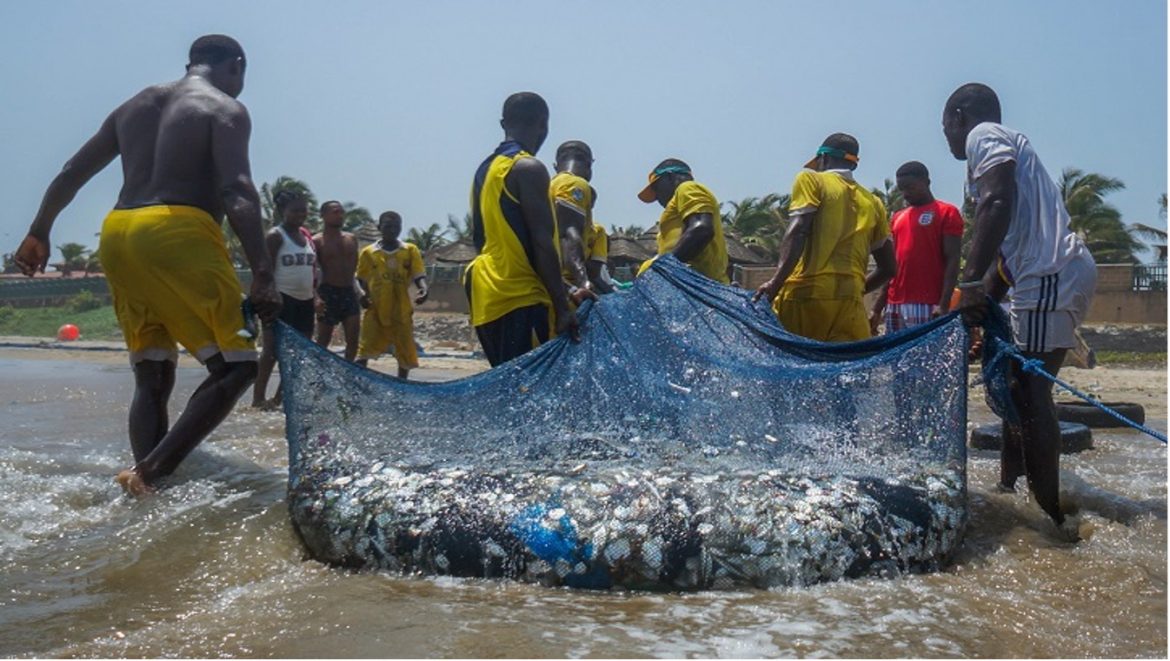
Accra, Ghana – Coastal communities along the Gulf of Guinea, spanning from Ivory Coast to Nigeria, are facing a severe fishery crisis. Fish stocks, particularly small pelagic species like sardines and anchovies, have been steadily declining over the past three decades, endangering the livelihoods of millions of people. The causes of this crisis are complex and multi-faceted, with the culprits ranging from illegal fishing by Chinese trawlers to the impacts of climate change and overfishing by local artisanal fleets.

Declining Fish Stocks and Threatened Livelihoods

Traditional fishing communities, which have relied on coastal waters for generations, are witnessing a dramatic reduction in their fish catches. In Ghana, the total landings of small pelagic fish dropped by 59% between 1993 and 2019. Sardinella aurita, once abundant, saw a decline from 119,000 tonnes in 1992 to just 11,834 tonnes by 2019. Similarly, Ivory Coast’s fish catches plummeted by nearly 40% between 2003 and 2020.

The consequences are dire for the more than 200,000 active fishers in Ghana and the over two million others involved in the fishing value chain. These communities, many already living at or below the international poverty line, face further income loss as fish stocks dwindle, pushing them deeper into poverty. Thousands of women who process and sell fish at markets along the coast are also at risk.

Climate Change’s Role in the Crisis

One of the lesser-known drivers of the crisis is climate change, particularly ocean warming. Roughly 90% of the heat trapped by greenhouse gases is absorbed into the ocean, leading to thermal expansion and sea-level rise. Warmer ocean waters hold less oxygen, endangering marine life, while fish species that are sensitive to temperature changes migrate to cooler waters, further reducing local fish stocks.

Scientific models predict that climate change will continue to have a significant impact on West Africa’s fisheries. By mid-century, Ghana, Ivory Coast, and Nigeria could see a 50% reduction in maximum catch potential due to ocean warming alone. Even with optimal fishery management, the Guinea Current System is projected to lose 30% or more of its catch potential by 2050.

The Impact of Illegal Chinese Trawlers

Illegal fishing by Chinese trawlers is another major contributor to the region’s fishery decline. Although countries like Ghana, Nigeria, and Ivory Coast have laws that restrict foreign trawlers from fishing within their exclusive economic zones (EEZs), Chinese companies bypass these regulations by partnering with local companies as legal “fronts.” Currently, over 90% of Ghana’s licensed bottom trawlers are owned by Chinese firms.

These trawlers are notorious for using illegal nets to catch undersized fish, including juveniles that have not yet reproduced, which further depletes fish stocks. Despite occasional fines for illegal practices, many Chinese trawlers continue to operate without losing their licenses, adding minimal value to local food supplies while exporting most of the fish they catch.

Artisanal Overfishing Compounds the Problem

While Chinese trawlers are often blamed for the crisis, the role of local artisanal fishers cannot be overlooked. The number of canoes involved in ocean fishing has increased seven-fold since 1950, with modern canoes equipped with larger nets, bigger crews, and powerful outboard engines. In Ghana alone, the number of canoes grew from 8,000 in 1990 to 13,650 by 2017.

This expansion of artisanal fishing is driven by rapid population growth and migration towards coastal areas. Cities like Accra and Abidjan have seen population increases of at least seven-fold since 1960, creating higher demand for fish while providing more labor for fishing and fish processing. Despite declining fish stocks, the number of canoes continues to rise, exacerbating the overfishing problem.

Searching for New Livelihoods

The future looks bleak for many traditional fishing communities, which will need to find alternative sources of income. However, this transition will be difficult, as roughly 40% of coastal fishers in Ghana and Nigeria have no formal education. While the fast-growing coastal economy may provide non-fishing jobs, the key to transitioning lies in education.

One policy solution to keep children in school is the use of conditional cash transfers. Such programs, already in place in West Africa, provide monthly payments to families based on school enrollment and attendance. Ghana’s Livelihood Empowerment Against Poverty (LEAP) program, which has been operational since 2008, offers cash and health insurance to poor families, the elderly, and disabled individuals. Expanding this program to include fishing families could help promote education and create a path to future livelihood protection.

A Path Forward

Addressing the crisis in West Africa’s fisheries requires a multi-pronged approach. Improved regulation and enforcement of fishing laws, better management of local artisanal fishing practices, and policies that promote education and alternative livelihoods will be critical in reversing the current trends. Without decisive action, millions of people who rely on coastal fisheries for their survival will continue to be pushed deeper into poverty, with lasting social and economic consequences for the region.


2024-09-16 0 comment
0 FacebookTwitterPinterestEmail
NaFAA and FAO Partner for Sustainable Fisheries Management in Liberian Waters
This is Africa

NaFAA and FAO Partner for Sustainable Fisheries Management in Liberian Waters

by Fishery News 2024-02-26
written by Fishery News

The effective partnership of NaFAA and FAO of the United Nations, as well as a month-long survey, was carried out to identify all fish stocks and trawlers permitted to operate in Liberia’s waters. In this regard, the purpose is to track the fish and marine lousy along the Atlantic coast, especially the coastal western region of Africa.

The signing ceremony, which is to be held on February 19 in FAO’s office in Monrovia, is a major milestone under sustainable fishery management and food security. The main goal of the cooperation between NaFAA and FAO is to enhance knowledge and create effective management of hake, seerfish, and mackerel resources in the Western Gulf of Guinea. With regard to the Memorandum of Understanding (MOU), the FAO will carry out operations around the analysis, and the IMR will provide the needed technical support according to the work plan. The survey will be performed by the research ship Dr. Fridtjof Nansen, which is managed by the Institute of Marine Research Bergen (IMR) under the FAO’s joint EAF-Nansen Programme.

The survey will be facilitated by NaFAA through obtaining the necessary clearances and authorizations from the Government of Liberia. These data will help inform artisanal fishing activities and be used to escalate the decision-making process about fisheries for sustainability. Through this collaboration, FAO and NaFAA saw the possibility of having scientific data that can improve governance and decision-making in the fisheries sector.


The Regional Demersal and Pelagic Resources Survey will contribute, hopefully, to the development of efficient fisheries management strategies and the preservation of marine resources in the long run. This collaboration manifests the dedication of both parties to foster sustainable fisheries and preserve the marine environment for the good of coastal communities.

2024-02-26 0 comment
0 FacebookTwitterPinterestEmail
UNCTAD and EU Collaborate to Empower Angolas Fisheries and Aquaculture Industry
This is Africa

UNCTAD and EU Collaborate to Empower Angola’s Fisheries and Aquaculture Industry

by Fishery News 2024-02-01
written by Fishery News

Partnering in a concerted effort to diversify Angola’s economy and realize its developmental objectives, the United Nations Conference on Trade and Development (UNCTAD) is joining forces with the European Union to bolster the nation’s fisheries and aquaculture sector through the EU-UNCTAD Joint Programme for Angola: Train for Trade II.

Endowed with a vast coastline and a plentiful workforce in the fisheries domain, Angola stands poised to capitalize on the projected global surge in fish trade, expected to reach 250 million tons by 2030. However, the country’s heavy dependence on crude oil, constituting 93 percent of its exports, underscores the imperative for economic diversification.

Paul Akiwumi, Director of UNCTAD’s division for Africa and least developed countries, underscores the transformative potential of the fisheries and aquaculture sector in Angola. Akiwumi emphasizes that this sector can serve as a catalyst for job creation, expanded trade opportunities, enhanced food security, and poverty alleviation, advocating for a concerted focus on leveraging the blue economy for sustainable growth.

With generous funding from the European Union, UNCTAD has already trained 2,700 stakeholders encompassing government officials, private sector actors, academia, and civil society. The training initiatives aim to address various challenges confronting Angola’s fisheries and aquaculture sector, including stock assessment, improved fishing regulations, entrepreneurial skill development, and compliance with safety and quality standards.

Jorge Quituta, Director General of Jorana, a prominent fisheries firm in Angola, underscores the pivotal role of capacity-building in empowering the private sector to play a more substantial role in Angola’s blue economy. Quituta acknowledges the invaluable support extended by UNCTAD and expresses optimism for continued collaboration to further fortify Angola’s fisheries and aquaculture sector.


2024-02-01 0 comment
0 FacebookTwitterPinterestEmail
Tanzanias President Unveils Strategic Plan to Fortify Fisheries Sector
This is Africa

Tanzania’s President Unveils Strategic Plan to Fortify Fisheries Sector

by Fishery News 2024-01-31
written by Fishery News

President Samia Suluhu Hassan of Tanzania has revealed a comprehensive roadmap to enhance the country’s fisheries sector, aiming to fully unlock its potential and contribute significantly to the national income.

During a recent event in Mwanza, President Samia outlined key initiatives, including the acquisition of vessels for deep-sea fishing and the introduction of cage fish farming across major lakes. These efforts underscore the government’s commitment to maximizing the benefits of Tanzania’s fisheries sector.

The President emphasized the importance of formalizing jobs in the fishing sector, particularly for young people and women engaged in informal employment. She urged beneficiaries of fishing equipment to take care of the provided resources and return interest-free loans to support other aspiring individuals.

Additionally, President Samia directed the Ministry of Livestock and Fisheries to closely monitor the progress of beneficiaries and provide professional advice to ensure compliance with laws and regulations for sustainable fishing practices.

Minister for Livestock and Fisheries, Abdallah Ulega, disclosed plans to distribute 500 boats in the fiscal year 2024/2025, highlighting the sector’s significant contribution to employment, with over four million Tanzanians currently employed in fisheries-related activities.

Furthermore, Minister Ulega highlighted the allocation of funds for various projects in the fishing sector, focusing on infrastructure, markets, and model farms. The distributed boats, equipped with fishing gear, GPS, and life jackets, aim to facilitate the growth of the sector.

The event also saw the distribution of fish cages, benefiting more than 1,200 young people and women. These initiatives reflect the government’s commitment to revitalizing the fisheries sector, fostering economic growth, job creation, and sustainable management of aquatic resources.

However, addressing concerns about the decline in fish population in Lake Victoria, Mwanza Regional Commissioner Amos Makalla attributed it to illegal fishing practices. The region has implemented measures to control illegal fishing and promote sustainable practices, aiming to address the decline in fish population in the lake.

2024-01-31 0 comment
0 FacebookTwitterPinterestEmail
Zimbabwe Launches Consultations on Groundbreaking Fisheries and Aquaculture Bill
This is Africa

Zimbabwe Launches Consultations on Groundbreaking Fisheries and Aquaculture Bill

by Fishery News 2024-01-25
written by Fishery News

Harare: Government officials, industry leaders, civil society representatives, and private sector stakeholders have initiated consultations on a pioneering fisheries and aquaculture bill for Zimbabwe. This landmark legislation represents a significant step forward for the Southern African nation in its efforts to strengthen and expand its fisheries and aquaculture sector.

Honourable Davis Marapira, Deputy Minister of Lands, Agriculture, Fisheries, Water, and Rural Development, highlighted the importance of the new bill during a meeting in Harare to kick off consultations. He emphasized that the legislation aims to consolidate regulations governing aquaculture production and conservation, streamlining the regulatory framework to facilitate growth and investment in the sector.

Marapira noted that the current regulatory landscape poses challenges for farmers and investors, with high compliance costs and multiple levies to government departments hindering progress. The proposed bill seeks to address these issues, aligning with Zimbabwe’s broader objectives of enhancing the ease of doing business and fostering economic development.

Organized by FISH4ACP, a global initiative supporting aquatic value chain development under the Organisation of African, Caribbean, and Pacific States (OACPS), the meeting in Harare focused on advancing Zimbabwe’s tilapia aquaculture sector. The aim is to create a productive, sustainable industry that contributes to poverty alleviation, food security, and economic growth within the country.

The new bill represents a pivotal moment for Zimbabwe’s fisheries and aquaculture sectors, signalling a concerted effort to enact comprehensive legislation that supports the industry’s growth and development.

2024-01-25 0 comment
0 FacebookTwitterPinterestEmail
Newer Posts
Older Posts
  • Recent
  • Popular
  • Introducing Future Aquaculture Magazine: A New Voice Shaping the Future of Seafood

    2026-02-13
  • Global Wisdom Meets Local Impact: Dr Manoj Sharma’s Powerful Keynote Ignites Change at APFA Symposium 2025.

    2025-08-07
  • Shocking! 40 Bonded Labourers Rescued from Shrimp Units in Andhra Pradesh Sent Home Safely With Wages Paid.

    2025-08-07
  • “Why Is Fish So Expensive in Goa?” CM Promises Subsidy & New Policy After Assembly Showdown!

    2025-08-07
  • 1

    Showcase Your GIS Talent: Best GIS Project Competition 2024 on Climate and Environmental Challenges

    2024-11-20
  • 2

    Tilapia Adapts to Ocean: New Research Uncovers Potential Threats

    2024-08-06
  • 3

    Aar Tangra Fish: A Flavorful Treasure from Eastern Indian Rivers

    2024-07-12
  • 4

    𝗧𝗿𝘂𝗺𝗽 𝗧𝗮𝗿𝗶𝗳𝗳𝘀 𝗛𝗶𝘁 𝗔𝗻𝗱𝗵𝗿𝗮 𝗛𝗮𝗿𝗱: ₹𝟰𝟬 𝗦𝗹𝗮𝘀𝗵𝗲𝗱 𝗽𝗲𝗿 𝗞𝗴 𝗼𝗳 𝗦𝗵𝗿𝗶𝗺𝗽, 𝗙𝗮𝗿𝗺𝗲𝗿𝘀 𝗦𝘁𝗿𝘂𝗴𝗴𝗹𝗲.

    2025-08-01

About Fishery News

FN Logo

Fishery.News is India’s leading digital media platform dedicated to fisheries, aquaculture, seafood, and marine industries. We deliver trusted news, expert insights, market intelligence, technology updates, research, government policies, and success stories that help fish farmers, shrimp farmers, seafood businesses, researchers, and industry professionals stay informed and grow sustainably

Categories

  • News
  • Aquaculture
  • Aquatic Health and Disease Management
  • Research and Innovation
  • Technology & Equipments

Social Networks

Facebook Twitter Instagram Linkedin Youtube

© 2026 Fishery.News – A BLIV Media Venture. All Rights Reserved.


Back To Top
Fishery News
  • E – Magazine
    • Aquaculture
    • Aqua Health & Disease Management
    • News
      • National
      • International
    • Farming
    • Research and Innovation
    • Sustainability
    • Technology & Equipments
    • This is Africa
    • Trade
  • Publications
  • Events
    • Expos
    • Trainings
    • Events by Month
  • Business Listings
    • List Your Business
    • Business Listings
    • Buy & Sell
    • Get Consultation
  • Employment
  • About Us
    • Founder
  • Contact