• E – Magazine
    • Aquaculture
    • Aqua Health & Disease Management
    • News
      • National
      • International
    • Farming
    • Research and Innovation
    • Sustainability
    • Technology & Equipments
    • This is Africa
    • Trade
  • Publications
  • Events
    • Expos
    • Trainings
    • Events by Month
  • Business Listings
    • List Your Business
    • Business Listings
    • Buy & Sell
    • Get Consultation
  • Employment
  • About Us
    • Founder
  • Contact
Fishery News
Home » Aquaculture » Page 12
Category:

Aquaculture

Secretary of Fisheries Unveils Ambitious Plan to Double Income of Fish Farmers
NationalAquacultureFarmingNews

Secretary of Fisheries Unveils Ambitious Plan to Double Income of Fish Farmers

by Fishery News 30/09/2023
written by Fishery News

Dr. Abhilaksh Likhi, Secretary of the Department of Fisheries, undertook a visit to shrimp farms in Lahli village, Rohtak, and the Regional Centre of ICAR-CIFE, Rohtak, Haryana. Engaging directly with shrimp farmers, Dr. Likhi delved into the grassroots challenges faced by those involved in saline water shrimp farming.

As part of the National Agricultural Higher Education Project (NAHEP) scheme, the Secretary distributed pedigreed common carp seed to selected farmers—an initiative pioneered by ICAR-CIFE. The move is set to bolster the aquaculture sector and enhance the quality of produce.

During discussions, Dr. Likhi underscored the imperative of converting barren land into lucrative aquafarming ventures. Scientists at ICAR-CIFE, during the visit, highlighted the extensive impact of groundwater salinization in inland states, affecting millions of hectares primarily in Haryana, Punjab, Rajasthan, and Uttar Pradesh. Proposing aquaculture as a sustainable solution, Dr. Likhi emphasized its economic viability, foreseeing it as a key player in generating income through fish, prawn, and shrimp crops.

Presently, the four north Indian states mentioned produce 8554.15 metric tons annually from 2167 hectares of saline water aquaculture. However, the untapped potential spans 58,000 hectares in these states. Under the Pradhan Mantri Matsya Sampada Yojana (PMMSY), the Department of Fisheries has approved a substantial project for the Genetic Improvement of Common Carp in Inland Saline Aquaculture, with an investment of Rs. 9.29 Crore.

Commending ICAR-CIFE for its commendable genetic improvement program, Dr. Likhi reviewed various activities undertaken by the institution. The Centre’s breakthrough technology, fortifying deficient ions in inland saline water, has been extended to thousands of acres across Haryana, Punjab, Rajasthan, and Uttar Pradesh, contributing to a significant increase in production areas.

Expressing congratulations for this technological breakthrough, Dr. Likhi urged for greater awareness and widespread adoption of the technology in the four states boasting suitable acreage for saline water aquaculture. This strategic initiative aligns with the Government of India’s commitment to harnessing the full potential of 58,000 hectares, with the ultimate goal of doubling the income of fish farmers. The plan aims to revolutionize aquaculture practices, breathing new life into saline areas, turning them into thriving hubs of sustainable fish and shrimp farming.

30/09/2023 0 comment
0 FacebookTwitterPinterestEmail
Indian Aqua Feed Sector Explores Benefits of Genetically Modified GM Crops for Enhanced Productivity
NationalAquacultureNews

Indian Aqua-Feed Sector Explores Benefits of Genetically Modified (GM) Crops for Enhanced Productivity

by Fishery News 30/09/2023
written by Fishery News

In a recent workshop organized by the Biotech Consortium India Ltd (BCIL) and the Central Marine Fisheries Research Institute (CMFRI) under the Indian Council of Agricultural Research, experts discussed the potential advantages of incorporating genetically modified (GM) crops and their derivatives in the Indian aqua-feed sector. The adoption of GM crops is seen as a strategic move to augment the supply of feeding ingredients, leading to improved growth, disease resistance in aqua products, and a reduction in overall production costs.

Dr. Vibha Ahuja, Chief General Manager of BCIL, highlighted the positive impact of using GM crops on aquatic yield. Specifically, she emphasized the role of dried distilleries grains with soluble (DDGS), a by-product of cereals in the distillery industry. DDGS, often derived from GM corn produced in other countries, has the potential to lower shrimp feed prices. Dr. Ahuja pointed out that local production of DDGS for shrimp farms could not only increase profits for feed producers but also contribute to the overall economic growth of the country.

Dr. A. Gopalakrishnan, Director of CMFRI, emphasized the nutritional benefits of incorporating GM crops into aqua-feed. He mentioned GM soybeans as an example, which can produce omega-3 fatty acids crucial for the growth and health of farmed fish. Given that feed constitutes a substantial portion (50-55%) of the total input cost in aquaculture, the efficient use of GM crops in feed production holds the potential to significantly reduce overall production costs.

The workshop participants collectively agreed that the adoption of GM crops in the aqua-feed sector could alleviate pressure on India’s fishmeal and fish oil sectors. This shift aligns with the goal of maintaining a sustainable aquaculture industry while simultaneously benefiting fish farmers and consumers.

30/09/2023 0 comment
0 FacebookTwitterPinterestEmail
Urgent Call for Action on Invasive Aquatic Species Scientists and Policymakers Advocate Policy Framework
NationalAquacultureInternationalNews

Urgent Call for Action on Invasive Aquatic Species: Scientists and Policymakers Advocate Policy Framework

by Fishery News 30/09/2023
written by Fishery News

In a one-day workshop at the Laboratory for the Conservation of Endangered Species (LaCONES-CCMB), scientists and policymakers emphasized the pressing need for an overarching policy to address the looming threat of invasive species, particularly in aquatic ecosystems. The workshop, titled “Collaborative Strategies for Managing Aquatic Biological Invasions,” was organized as part of the CSIR-Centre for Cellular and Molecular Biology (CCMB) ‘One Week, One Lab’ program, with participants calling for a comprehensive strategy to ensure a sustainable future.

“Invasive species, intentionally or otherwise, have caused havoc to the flora and fauna across the country, affecting even the pristine riverine systems in both eastern and western ghats, putting heavy pressure on biodiversity systems,” remarked S. Umapathy from CCMB. Alarming levels of African and American catfish among other aquatic species were noted as a cause for concern.

Karthikeyan Vasudevan, another expert from CCMB, highlighted the accidental introduction of invasive species, such as bullfrogs, spotted deers, giant snails, mynah, and house sparrows in the Andaman Islands, resulting in damage to local flora and fauna. Urging quick interventions, Vasudevan also acknowledged the ethical challenges in removing invasive species, emphasizing ongoing efforts in exploring biological controls.

Kallicharan S. Khartade from TS Biodiversity Board highlighted that 25 out of 432 aquatic species have been identified as invasive, underscoring the threats posed by pollution, over-exploitation, encroachments, and tourism-recreation to biodiversity preservation. While stressing the importance of community participation, Khartade called for improvements in the functioning of biodiversity management councils.

Special Chief Secretary Rajat Kumar expressed concern over the economic impact, stating that “biological invasions” have cost the country USD 127 billion, with only a fraction of invasive species studied. He emphasized the need for a concerted scientific effort to understand the comparative dangers posed by aquatic and terrestrial invasive species.


CSIR-CCMB Director Vinay K. Nandicoori highlighted the outcomes of LaCONES research, emphasizing the necessity for ground-level interventions to monitor and eradicate aquatic invasive species. The meeting, attended by over 60 participants from various scientific institutions and voluntary bodies, underscored the importance of protecting native biodiversity, safeguarding the rural economy, and promoting sustainable aquaculture practices.

30/09/2023 0 comment
0 FacebookTwitterPinterestEmail
Aquatic Invertebrates Unveil Potential as Wastewater Treatment Allies
NewsAquacultureFarming

Aquatic Invertebrates Unveil Potential as Wastewater Treatment Allies

by Fishery News 30/09/2023
written by Fishery News

A team of researchers has explored the promising role of aquatic creatures, including worms, non-biting midge larvae, and mussels, in enhancing the efficiency of wastewater treatment plants. Investigating their ability to degrade sludge, reduce greenhouse gas emissions, and eliminate excess nutrients, the study reveals a potential natural solution for the challenges faced by wastewater treatment facilities.

In conventional wastewater treatment processes, excess sludge is a notable byproduct, posing economic challenges due to the high cost of processing. However, the research, part of the Aquafarm project, demonstrates that invertebrates thriving in streams and ditches can play a pivotal role in breaking down this sludge, primarily composed of organic material.

Tom van der Meer, a researcher at Wageningen Environmental Research and a participant in the Aquafarm project, conducted a Ph.D. study to analyze the efficiency of various aquatic species in consuming excess sludge. The non-biting midge larvae emerged as particularly effective, accelerating sludge degradation up to five times compared to sludge without them. The introduction of different species further improved sludge degradation, and their burrowing activities introduced oxygen, mitigating the formation of the potent greenhouse gas methane.

The European Union’s Water Framework Directive mandates the improvement of water quality in member states by 2027. To achieve this, the directive emphasizes the reduction of nutrient levels, such as nitrogen and phosphorus, in surface water. Aquatic invertebrates, as highlighted in the research, can contribute to this goal by addressing excess nutrients and preventing the growth of harmful cyanobacteria.

Additionally, the study explored the combined efforts of algae, mussels, and floating plants like duckweed ferns in removing nutrients from water after the wastewater treatment process. The promising results suggest a nature-based approach for further enhancing water quality.

In a practical application of the findings, two Dutch water authorities are set to develop a pilot treatment facility capable of purifying approximately 75 cubic meters of wastewater per day. This marks a step toward implementing natural, cost-efficient solutions that could significantly contribute to improving water quality in Dutch nature.

Van der Meer envisions a future where sewage plants widely adopt these nature-based solutions, potentially revolutionizing wastewater purification processes in the next decade.

Source: Phys.org

30/09/2023 0 comment
0 FacebookTwitterPinterestEmail
Landmark NGT Ruling Puts Nationwide Aquaculture Industry Under Stricter Environmental Scrutiny
NationalAquacultureFarmingNewsSustainability

Landmark NGT Ruling Puts Nationwide Aquaculture Industry Under Stricter Environmental Scrutiny

by Fishery News 30/09/2023
written by Fishery News

National Green Tribunal (NGT), the aquaculture industry in India is set to face enhanced regulatory oversight with the application of Environment Impact Assessment Notification and inclusion under the consent regime of the Water Act. The NGT’s ruling, dated February 27, stems from an execution application filed by Mumbai-based NGO Vanashakti, which had previously secured an order in May 2021, prompting the formation of a committee to assess the sustainability of inland aquaculture practices.

The NGT has mandated comprehensive regulation, urging authorities to enforce environmental safeguards and scrutinize the impact of aquaculture on water bodies. The ruling emphasizes the need to align inland aquaculture practices with the Environment Impact Assessment regime.

Vanashakti, the NGO behind the legal efforts, underscored the lack of a policy in Maharashtra to regulate inland aquaculture, calling attention to the absence of provisions assessing environmental impacts before granting licenses. The expert committee formed by NGT found tangible evidence of environmental impact in Vadivale Lake, including elevated pollution levels attributed to cage aquaculture activities.

The NGT’s ruling directs the Central Pollution Control Board (CPCB) and Maharashtra Pollution Control Board (MPCB) to bring cage aquaculture under the consent regime within three months. Additionally, the NGT instructs the MPCB to take swift action against individuals contributing to pollution from such activities.

Stalin D, director of Vanashakti, praised the judgment, emphasizing the importance of adapting environmental laws to address emerging sources of pollution. Aquaculture, promoted for enhancing food security and livelihoods, will now undergo increased monitoring, reflecting the evolving landscape of environmental regulations in the country.

30/09/2023 0 comment
0 FacebookTwitterPinterestEmail
Fish Mint The Herb with Health Benefits Hidden in Its Unique Flavour
NewsAquacultureFarmingInternational

Controversy Surrounds Plans for World’s First Octopus Farm Amid Welfare Concerns

by Fishery News 28/09/2023
written by Fishery News

Scientists are expressing deep concerns over the well-being of highly intelligent octopuses in the wake of plans to establish the world’s first Octopus farm. Confidential documents, obtained by a media outlet, have revealed that the proposed farm, situated in Spain’s Canary Islands, aims to rear approximately one million octopuses annually for human consumption.

One of the main points of contention revolves around the proposed method of slaughtering these creatures in icy water, which some scientists deem as cruel. The company spearheading this initiative, Spanish multinational Nueva Pescanova, vehemently denies that the octopuses will endure any form of suffering. The campaign group Eurogroup for Animals has shared the confidential planning proposal documents with the public and the Canary Islands’ General Directorate of Fishing, the entity to which Nueva Pescanova submitted the proposal, has yet to issue a response.

Octopuses are commonly captured in the wild using various methods, including pots, lines, and traps, and are a popular food source in several regions, including the Mediterranean, Asia, and Latin America. Nevertheless, breeding them in captivity has proven to be a formidable challenge, primarily due to the need for live food for the octopus larvae and a meticulously controlled environment. In 2019, Nueva Pescanova claimed to have made a significant scientific breakthrough in this regard.

The proposed intensive farming of octopuses has already sparked opposition, with lawmakers in Washington State, USA, proposing a ban on the practice. Nueva Pescanova’s plans entail housing these usually solitary creatures in communal tanks alongside other octopuses, often subjecting them to continuous light. This would occur within a two-story building featuring approximately 1,000 tanks located at Las Palmas port in Gran Canaria. The octopuses would be euthanized by placing them in containers of water kept at a temperature of -3°C, as detailed in the documents.

Nueva Pescanova intends to produce 3,000 tonnes of octopus annually to cater to premium international markets, including the United States, South Korea, and Japan. According to Compassion in World Farming (CiWF), a campaign group that has scrutinized the plans, this would translate to roughly one million animals, with each cubic meter of tank accommodating 10-15 octopuses.

28/09/2023 0 comment
0 FacebookTwitterPinterestEmail
for 732 Artificial Reef Units to Promote Sustainable Coastal Fishing
NationalAquacultureNews

Indian Department of Fisheries Allocates Rs 126 Crore

by Fishery News 27/09/2023
written by Fishery News

In a significant move to promote sustainable fishing practices and boost coastal fisheries, the Indian Department of Fisheries has approved a budget of Rs 126 crore for the installation of 732 artificial reef units across 10 coastal states. This initiative falls under the “Integrated Modern Coastal Fishing Villages” program of the Centrally Sponsored Scheme (CSS) of Pradhan Mantri Matsya Sampada Yojana (PMMSY).

The projects are being executed in collaboration with technical support from the Fishery Survey of India (FSI) and the ICAR-Central Marine Fisheries Research Institute (CMFRI). As of now, all coastal states have completed their site selection process. Notably, the states of Kerala and Maharashtra have also completed the tendering process for the execution of the work. It is expected that all these projects will be completed by January 2024.

The installation of artificial reefs in coastal waters and the implementation of sea ranching programs are anticipated to revitalize coastal fisheries and replenish fish stocks. Artificial reefs are engineered interventions designed to rehabilitate and enhance natural habitats, increase productivity, and manage aquatic resources, including habitat enhancement. 

Advantages of Artificial Reefs:

  • The installation of artificial reefs offers a range of benefits, including:
  • Similar to natural reefs, artificial reefs are used to aggregate fish and provide a habitat for fish to thrive, reducing wave damage along the coasts.
  • They aid in the regeneration of marine ecosystems and act as carbon sinks, contributing to environmental sustainability.
  • According to the CMFRI, the installation of artificial reefs can lead to a two to three-fold increase in catch rates and efficiency. This translates to savings in fuel and energy costs, ultimately increasing income for fishers.
  • Artificial reefs provide a stable substrate for marine life, including corals, algae, and plankton, fostering sea ranching and serving as spawning and nursery grounds for fish.
  • They enhance opportunities for recreational fisheries, snorkelling, eco-tourism, and diving, creating suitable areas for these activities while reducing conflicts in fishing zones.
  • Importantly, artificial reef structures restrict bottom trawling in nearshore areas, aiding in the regeneration of the marine environment and allowing small-scale fishers to achieve higher catches. One artificial reef of 300m³ is expected to support 25-30 non-mechanized boats, as per the CMFRI.
  • The artificial reef initiative under PMMSY is a significant step towards addressing these challenges and revitalizing India’s coastal fisheries for a more sustainable and prosperous future.
27/09/2023 0 comment
0 FacebookTwitterPinterestEmail
Incredible Urban Planning Japans Pristine Drains House Koi Fish
NewsAquacultureInternational

Incredible Urban Planning: Japan’s Pristine Drains House Koi Fish!

by Fishery News 27/09/2023
written by Fishery News

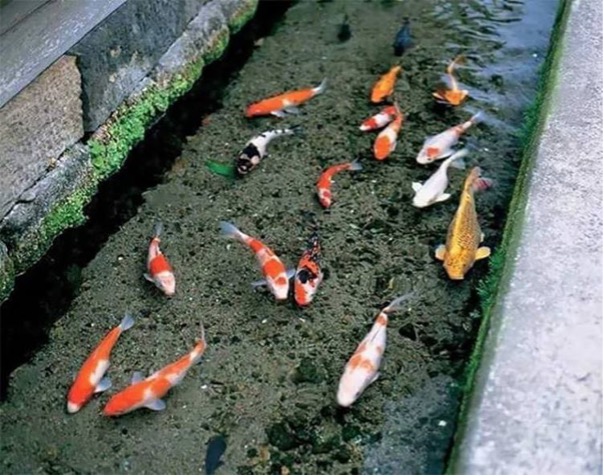
Japan, renowned for its advanced technology and infrastructure, is making headlines again. In a stunning display of urban planning, the country’s city drains have left the world in awe. A viral video on Instagram showcases these immaculate drains, so well-maintained that they resemble a vast aquarium.

The Cleanest Drains: In the video, a camera pans down into the drain, revealing a surprising sight—countless koi fish gracefully swimming within. The crystal-clear water in Japan’s drains has created an unexpected aquatic habitat.

Social media users are buzzing with amazement. One user praised Japan’s values, stating that it reflects a respectable society where cleanliness is ingrained from an early age. Others marveled at the contrast, with some having to use filters in their homes while these fish thrive in the city’s drains.

Amid the excitement, there are differing opinions. A user clarified that this isn’t a typical drain but rather a waterway used for rice cultivation, explaining the exceptional cleanliness.

Japan’s meticulous urban planning continues to impress the world, showcasing its commitment to cleanliness and innovation.

27/09/2023 0 comment
0 FacebookTwitterPinterestEmail
New Species of Vibrant Orange Deep Sea Fish Discovered off West Bengal Coast
NationalAquacultureNews

New Species of Vibrant Orange Deep-Sea Fish Discovered off West Bengal Coast

by Fishery News 26/09/2023
written by Fishery News

Scientists from the Zoological Survey of India (ZSI) have made a remarkable discovery – a new species of vibrant orange-colored deep-water marine fish found off the coast of Digha Mohana in West Bengal.

The newly identified species, which belongs to the family Triglidae and is commonly known as gurnards or sea-robins, has been named Pterygotrigla Intermedica. It exhibits characteristics closely resembling another species, Pterygotrigla Hemisticta, according to Anil Mohapatra, a senior scientist and the leader of the discovery team from ZSI’s Estuarine Biology Regional Center in Gopalpur, Odisha.

New Species of Vibrant Orange Deep Sea Fish Discovered off West Bengal CoastThis new discovery marks the fourth species of the Pterygotrigla genus reported in India to date, with a total of 178 species in the Triglidae family worldwide.

The fish specimen was caught by a local fisherman on October 20, 2018, alongside other marine life. The research team collected a total of 24 specimens from the Digha Mohana fishing harbor during their study of by-catch components along the northern part of India’s east coast.

Upon rigorous examination, the distinctive characteristics of this fish species became evident, setting it apart from other gurnard species. Notable distinctions included snout length, the shape of the internuchal space, and the size of the cleithral spine, as pointed out by Mohapatra.

Details about this new fish species have been published in the marine science journal Thalassas on September 20, 2023.

Of the 24 collected specimens, 23 have been preserved at ZSI’s Estuarine Biology Regional Center in Gopalpur, while one specimen is housed in the Marine Fish Section in Kolkata, where further studies will be conducted.

Among the key characteristics of the new species noted by scientists are a distinct pectoral-fin with black membranes on the inner surface, a white posterior margin, and three small white spots at its base. Each ray of the fin is creamy white.


The species also features a unique combination of traits, such as a long opercular spine and a very short cleithral spine, a lateral line, gill rakers on the upper limb and 12–13 on the lower limb of the first gill arch, as well as a prominent black blotch located between the 4th and 6th spines of the first dorsal fin, as outlined in the research findings.

26/09/2023 0 comment
0 FacebookTwitterPinterestEmail
Methuselah Beloved Australian Lungfish in San Francisco Estimated to be 92 Years Old
NewsAquacultureInternational

Methuselah, Beloved Australian Lungfish in San Francisco, Estimated to be 92 Years Old

by Fishery News 26/09/2023
written by Fishery News

Scientists at the California Academy of Sciences have utilized a groundbreaking DNA-based age determination method, revealing that Methuselah, the cherished Australian lungfish residing in San Francisco’s Steinhart Aquarium, is believed to be 92 years old.

This groundbreaking estimate surpasses the aquarium’s previous approximation of Methuselah’s age, which stood at 84 years. However, researchers caution that there is a nine-year margin of error, implying that Methuselah might potentially be as old as 101 years, according to a Live Science report.

Unlike conventional methods, which can be invasive and even lethal, the technique employed to assess Methuselah’s age is non-invasive and benign. It involves extracting a minuscule tissue sample from a fin clip measuring less than 0.5 centimeters.

Designated as a vulnerable species in its native habitat, the Australian lungfish holds immense importance to the Australian government. It is the last surviving member of a fish family that has endured since the era of dinosaurs, with fossil records tracing its existence back 100 million years.

This unique fish species also boasts substantial size, typically weighing around 88 pounds. Its aptly bestowed moniker, “lungfish,” is derived from its remarkable ability to respire air without relying on gills, showcasing its resilience and evolutionary significance.

26/09/2023 0 comment
0 FacebookTwitterPinterestEmail
Newer Posts
Older Posts
  • Recent
  • Popular
  • ICAR-CIFT Patents Rapid DNA Biosensor for Black Tiger Shrimp Authentication

    07/08/2026
  • Minister Holds Review Meeting with Fisheries Cooperative Leaders

    07/08/2026
  • Dry Fish Demand Surges Following Formalin Ban

    07/08/2026
  • Rohu Breeding: A Complete Step-by-Step Guide to Successful Seed Production

    07/08/2026
  • 1

    ICAR Scientists Crack the Breeding Code of Rare Himalayan Fish Channa andrao, Opening New Opportunities for Ornamental Fish Farming

    28/07/2026
  • 2

    Trout Fish Stocking Initiative Enhances Fisheries and Tourism Potential in Shopian, Jammu and Kashmir

    17/12/2023
  • 3

    BIGGEST FISH MARKETS IN INDIA

    07/09/2024
  • 4

    Introducing Future Aquaculture Magazine: A New Voice Shaping the Future of Seafood

    13/02/2026

About Fishery News

FN Logo

Fishery.News is India’s leading digital media platform dedicated to fisheries, aquaculture, seafood, and marine industries. We deliver trusted news, expert insights, market intelligence, technology updates, research, government policies, and success stories that help fish farmers, shrimp farmers, seafood businesses, researchers, and industry professionals stay informed and grow sustainably

Categories

  • News
  • Aquaculture
  • Aquatic Health and Disease Management
  • Research and Innovation
  • Technology & Equipments

Social Networks

Facebook Twitter Instagram Linkedin Youtube
  • Facebook
  • Twitter
  • Instagram
  • Linkedin
  • Youtube

© 2026 Fishery.News – A BLIV Media Venture. All Rights Reserved.


Back To Top
Fishery News
  • E – Magazine
    • Aquaculture
    • Aqua Health & Disease Management
    • News
      • National
      • International
    • Farming
    • Research and Innovation
    • Sustainability
    • Technology & Equipments
    • This is Africa
    • Trade
  • Publications
  • Events
    • Expos
    • Trainings
    • Events by Month
  • Business Listings
    • List Your Business
    • Business Listings
    • Buy & Sell
    • Get Consultation
  • Employment
  • About Us
    • Founder
  • Contact