• E – Magazine
    • Aquaculture
    • Aqua Health & Disease Management
    • News
      • National
      • International
    • Farming
    • Research and Innovation
    • Sustainability
    • Technology & Equipments
    • This is Africa
    • Trade
  • Publications
  • Events
    • Expos
    • Trainings
    • Events by Month
  • Business Listings
    • List Your Business
    • Business Listings
    • Buy & Sell
    • Get Consultation
  • Employment
  • About Us
    • Founder
  • Contact
Fishery News
Home » News » Page 135
Category:

News

Heavy Rainfall Turns a Trump card for Telangana Aquafarmers
NationalNews

Heavy Rainfall Turns a Trump card for Telangana Aquafarmers

by Fishery News 05/09/2023
written by Fishery News

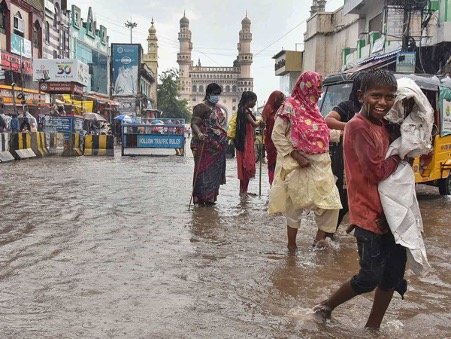
In the wake of Telangana’s recent spell of heavy rains, nature has unveiled an unexpected boon for farmers and fishermen alike. Lakes, ponds, and farmlands are now teeming with fish, a delightful consequence of abundant rains providing breeding opportunities for aquatic life. However, this phenomenon is not merely a stroke of luck but a testament to Telangana’s visionary efforts to boost fish production and support the sustainable livelihoods of fishermen. In this article, we explore Telangana’s “Blue Revolution” – a transformative initiative that has elevated the state’s status in freshwater fish production, benefiting both the environment and its people.

In Vemulawada town and nearby areas, the recent heavy rains have led to rivers, streams, and rivulets overflowing. This has resulted in a unique opportunity for local fishermen as large fish have become trapped in their nets. On July 28th, a significant gathering of fishermen and residents took place around Vemulawada temple Cheruvu, also known as Gudi Cheruvu and Moolavagu, to engage in fishing. Surprisingly, they managed to catch fishes weighing over 15 kilograms in the pond.

Karimnagar’s fishermen have also capitalized on the overflowing water bodies. They took the unconventional approach of laying down nets on main roads where water was overflowing, and this tactic proved highly successful. The video of their unconventional fishing method went viral on social media platforms recently.

The Genesis of Telangana’s Blue Revolution:

Telangana’s journey towards becoming a hub for freshwater fish production was carefully orchestrated. In 2017, the Telangana Government initiated the distribution of free fish seedlings in approximately 11,067 water bodies, setting in motion a chain of remarkable events. This endeavor involved stocking around 51.08 crore fish seedlings at a cost of Rs 44.6 crore, with a promising outcome of 2.62 lakh tonnes of fish production within 8-10 months. Since then, the state has witnessed a substantial increase in the release of fishlings and shrimp into its water bodies, including reservoirs and tanks.

Telangana’s Abundant Water Resources:

Telangana proudly boasts of being home to the country’s third-largest inland water spread, encompassing an expansive 5.73 lakh square km. This extensive network of water bodies, including reservoirs, forms the canvas upon which the “Blue Revolution” is painted. In 2023, the state initiated the release of fish seedlings as early as February, harnessing its water resources to the fullest. The government’s steadfast commitment to this initiative is evident in the substantial investment of Rs 415 crore allocated thus far.

The Phenomenal Growth in Fish Production:

The results of Telangana’s “Blue Revolution” are staggering. In 2022-23, the state ascended to the fifth position in India in terms of freshwater fish production, contributing to an estimated value of Rs 6,100 crore. This remarkable achievement signifies a three-fold growth compared to the fish production worth Rs 1,993 crore recorded in 2017-18. Over the past seven years, Telangana has witnessed a remarkable 195 percent increase in fish production.

Economic Upliftment through Aquaculture:

The Fisheries Department of Telangana has not only contributed to environmental sustainability but also catalyzed economic prosperity. In 2016-17, the department reported a revenue of a modest Rs 2,252 crore, which has surged to an impressive Rs 6,656 crore by 2022-23. Such remarkable growth in revenue is a testament to the state’s commitment to fostering sustainable aquaculture practices

Prawn Production:

Prawn production in Telangana has also experienced substantial growth, mirroring the broader success of the “Blue Revolution.” From a modest 7.78 tonnes valued at Rs 171.23 crore in 2017-18, prawn production has soared to a staggering 11,734 tonnes, worth approximately Rs 425 crore in 2022-23. This remarkable growth illustrates the diversified and inclusive approach of Telangana’s aquaculture initiatives.

Empowering Fishermen and Cooperative Societies:

Beyond statistics, the impact of Telangana’s aquaculture efforts is profoundly felt by the fishing community. Various intervention programs implemented by the State Government have significantly elevated both the average income levels of the Fishermen Cooperative Societies (FCS) and their members. The number of FCSs has surged by 15 percent from 4,002 in 2016-17 to 4,604 in 2020-21. Moreover, membership in these cooperatives has increased by eight percent during the same period, from 2.85 lakh in 2016-17 to 3.09 lakh in 2020-21. This surge in cooperative participation underscores the socio-economic impact of Telangana’s aquaculture initiatives, bringing economic empowerment to the grassroots level.

In totality, Telangana’s “Blue Revolution” is a remarkable testament to what strategic planning, environmental stewardship, and government commitment can achieve. It has transformed the state into a freshwater fish production powerhouse, benefiting farmers, fishermen, and the environment alike. As Telangana continues its journey towards sustainable aquaculture, it sets a precedent for other regions to emulate, demonstrating that harmonizing economic growth with environmental sustainability is not only possible but also imperative for the future. The “Blue Revolution” not only enriches the waters of Telangana but also the lives and aspirations of its people.

05/09/2023 0 comment
0 FacebookTwitterPinterestEmail
FarmingNews

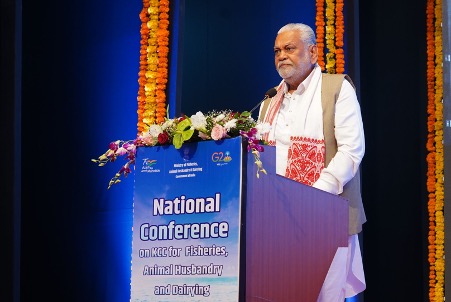
Kisan Credit Cards: A Boon to Aquafarmers

by Fishery News 05/09/2023
written by Fishery News

Agriculture, including aquaculture, is the backbone of India’s economy, providing livelihoods to millions of rural families. In recent years, the government has introduced various schemes to uplift and empower farmers, and the Kisan Credit Card (KCC) is a pivotal instrument in this endeavor. This article delves into what a Kisan Credit Card is, its significance for aqua farmers, eligibility criteria, age considerations, and the step-by-step process to obtain one.

The introduction of the Kisan Credit Card (KCC) scheme in August 1998 marked a significant milestone in India’s efforts to provide financial support to its farming community. The KCC scheme was conceived as a means to offer term loans tailored to the agricultural needs of farmers across the country. This visionary initiative was developed based on the model prepared by the National Bank for Agriculture and Rural Development (NABARD) and aligned with the recommendations of the RV Gupta Committee. Since its inception, the KCC scheme has become accessible through a wide network of banks, including Indian banks, regional rural banks, and cooperative banks. This article explores the inception and features of the Kisan Credit Card scheme, highlighting its role in transforming the financial landscape for farmers.

Only about 58 percent of farmers are currently taking advantage of Kisan Credit Cards, while the remaining 42 percent continue to borrow from moneylenders at high-interest rates. The government aims to expand the reach of KCC to include livestock/dairy farmers and fish farmers. Fish farmers, in particular, can benefit from KCC as it offers loans at a reduced interest rate. The standard interest rate for loans up to Rs 3 lakh taken through KCC is 9 percent. However, the government provides a subsidy of 2 percent, effectively reducing the rate to 7 percent.

Discount for Timely Repayment: Farmers who repay their loans on time can receive a further discount of 3 percent. This means that for honest and timely repaying farmers, the effective interest rate on KCC loans can be as low as 4 percent.

Understanding the Kisan Credit Card (KCC):

The Kisan Credit Card (KCC) is a financial tool introduced by the Government of India to provide short-term credit to farmers, enabling them to meet their agricultural expenses without resorting to high-interest loans from informal sources. It acts as a revolving credit facility, meaning that farmers can borrow, repay, and re-borrow funds within the sanctioned limit without the need for repeated loan applications.

Significance for Aqua Farmers:

Aqua farmers, like their counterparts in traditional agriculture, benefit immensely from Kisan Credit Cards. Here’s how:

  • Financial Inclusion: Many aqua farmers face financial exclusion, making it difficult to access formal credit channels. KCCs bridge this gap by bringing aqua farmers into the formal banking system, offering them credit facilities on reasonable terms.
  • Timely Investments: Aqua farming involves various expenses, including the purchase of fingerlings, feed, medicines, and equipment. KCCs ensure that farmers have access to funds when needed, allowing them to make timely investments in their farms
  • Risk Mitigation: Aqua farming is susceptible to environmental factors and disease outbreaks. With KCCs, farmers have the financial flexibility to manage unexpected challenges, minimizing the risks associated with their operations.

Eligibility Criteria for Kisan Credit Cards:

  • To obtain a Kisan Credit Card, farmers, including aqua farmers, must meet certain eligibility criteria:
  •  Ownership of Land: The applicant should be the owner or co-owner of the land being cultivated. In cases where the land is leased, a lease agreement may be required.
  • Age Requirement: The beneficiary should be between 18 to 75 years old.
  • Age Over 60: If the farmer is aged 60 or older, a co-applicant will be required.
  • Eligibility Check: If the farmer is under 60 years old, the bank employee will assess their eligibility for the Kisan Credit Card.
  • Fish Farming Requirements: For fish farming beneficiaries, the following conditions apply:
  • They must possess the necessary licenses for fish farming and fishing-related activities.
  • They should own or be engaged in fisheries-related activities like ponds, tanks, open water bodies, raceways, hatcheries, rearing units.
  • The eligibility may also depend on state-specific fisheries and allied activities
  • Aadhar Card: Possession of an Aadhar card is often a mandatory requirement for KCC applications as it aids in verifying.
  • Bank Account: The applicant should have an active savings or current account with the concerned bank.

The Process of Obtaining a Kisan Credit Card:

Obtaining a Kisan Credit Card involves a systematic process that can be broken down into the following steps:

Step 1: Visit the Nearest Bank Branch

The first step is to visit the nearest bank branch that offers Kisan Credit Cards. Typically, nationalized banks, cooperative banks, and some regional rural banks (RRBs) provide this facility. It’s essential to choose a bank that has a branch conveniently located near the aqua farm.

Step 2: Collect the Application Form

Once at the bank branch, inquire about the KCC application process. Bank officials will provide you with the necessary application form. Ensure that you carefully read and understand the instructions before filling out the form.

Step 3: Fill in the Application Form

Complete the application form with accurate and up-to-date information. Be prepared to provide details such as your name, contact information, land ownership status, Aadhar number, and bank account details.

Step 4: Attach Required Documents

  • The bank will require certain documents to support your KCC application. These documents may include:
  • Land ownership documents (land records, title deed, etc.)
  • Identity proof (Aadhar card, voter ID, passport, etc.)
  • Address proof (electricity bill, ration card, etc.)
  • Passport-size photographs
  • Any additional documents specified by the bank
  • Ensure that you provide legible photocopies of these documents along with your application form.

Step 5: Submit the Application

Submit the completed application form along with the necessary documents to the bank officials. They will review your application and verify the provided information.

Step 6: Verification and Processing

The bank will conduct a thorough verification process, which may include a physical inspection of your land and collateral assessment, if applicable. This verification process is crucial for determining your credit limit.

Step 7: Sanctioning of the KCC

Upon successful verification and assessment, the bank will sanction your Kisan Credit Card. The sanctioned credit limit will depend on factors such as the size of your landholding and your repayment capacity.

Step 8: Receive the KCC

Once your KCC is sanctioned, the bank will issue the card. It will resemble a regular credit or debit card and will be linked to your savings or current account.

Step 9: Avail Credit Facilities

You can now use your KCC to avail credit facilities for your aqua farming activities. You can withdraw funds as per your credit limit, repay the borrowed amount, and reuse the credit within the sanctioned limit.

Step 10: Repayment and Renewal

It’s essential to make timely repayments to maintain a good credit history. KCCs are typically valid for up to five years and can be renewed based on your repayment track record.

Conclusion:

The Kisan Credit Card has emerged as a crucial instrument for financial inclusion and support for aqua farmers in India. By offering access to formal credit at reasonable interest rates, it empowers farmers to make essential investments in their farms, manage risks, and improve their livelihoods. The eligibility criteria are inclusive, with no upper age limit, making it accessible to aqua farmers of all age groups. The step-by-step process outlined ensures that aqua farmers can obtain their Kisan Credit Cards efficiently, thus enhancing their financial resilience and prospects in the aquaculture sector.

05/09/2023 0 comment
0 FacebookTwitterPinterestEmail
Innovation and Sustainable Expansion
NationalNews

Advancing India’s Mariculture: Minister Calls for Innovation and Sustainable Expansion

by Fishery News 05/09/2023
written by Fishery News

In a visionary address during his visit to the Vizhinjam Regional Centre of the ICAR-Central Marine Fisheries Research Institute (CMFRI), India’s Fisheries Minister, Shri Parshottam Rupala unveiled a strategic vision for the evolution of India’s aquaculture sector. The minister articulated that the time had come to transcend the limitations of nearshore cage fish farming by venturing into offshore waters with advanced cage designs, boasting impressive diameters of 30 meters or more. These pioneering cages, capable of accommodating lakhs of juvenile fish, mark a revolutionary step towards transforming mariculture production in the country.

Currently, cage farming in India predominantly takes place in nearshore waters, employing cages with a modest 6-meter diameter. Shri Rupala highlighted that it was imperative for the CMFRI to spearhead research and development endeavors in creating these state-of-the-art cages. The expansion of cage farming into offshore waters holds immense promise, promising to catapult mariculture production to unprecedented heights.

“This strategic shift is poised to significantly elevate mariculture production in the country,” emphasized the minister, reflecting the far-reaching impact of such a transformation on India’s fisheries industry.

Innovation and Sustainable Expansion 2

In addition to pioneering cage designs, Shri Rupala underscored the importance of expanding seed production technologies for finfish across all coastal states, utilizing the synergy of public-private partnerships (PPPs). This collaborative approach aims to alleviate seed constraints and ensure a steady supply of quality seeds to fish farmers nationwide.

The minister also offered a glimpse into the central government’s forthcoming mariculture leasing policy, a strategic move to ensure the responsible and sustainable utilization of mariculture resources. He emphasized that this policy would designate suitable areas for mariculture operations while mitigating potential environmental repercussions.

“The objective is to harmonize mariculture activities with environmental conservation,” the minister explained, underlining the government’s commitment to fostering responsible aquaculture practices.

Shri Rupala, recognizing the untapped potential of pearl oyster production, urged the CMFRI to play a proactive role in expanding this sector. Highlighting the pivotal role of hatchery technologies in supporting large-scale pearl oyster production, he stressed the imperative need for research and innovation in this domain.

Furthermore, the minister proposed an ambitious sea ranching program, aimed at cultivating hatchery-produced pearl oyster spats along the Tuticorin coast. This groundbreaking initiative, to be executed under the guidance of the CMFRI, promises to rejuvenate the pearl oyster industry.

Effective marketing strategies also found their place in Shri Rupala’s vision. He suggested the development of robust marketing avenues for marine ornamentals and urged the CMFRI to collaborate with relevant stakeholders to devise and implement effective marketing strategies. This holistic approach is poised to elevate the marine ornamental sector, providing a well-deserved boost to India’s marine ornamental industry.

Shri Parshottam Rupala’s forward-looking directives signal a transformative phase for India’s aquaculture and mariculture sectors. With innovations in cage design, enhanced seed production, sustainable leasing policies, and a commitment to nurturing niche sectors like pearl oyster production and marine ornamentals, the vision outlined by the minister promises to reshape India’s aquaculture landscape and ensure a sustainable and prosperous future for the sector.

05/09/2023 0 comment
0 FacebookTwitterPinterestEmail
Disneys Startup Series Features Aquaconnect
News

Disney’s Startup Series Features Aquaconnect

by Fishery News 05/09/2023
written by Fishery News

The highly acclaimed series, ‘The Great Indian Disruptors,’ is back with its second season, shedding light on the journeys of five innovative startups that are reshaping the business landscape across diverse sectors while making a meaningful impact. The much-anticipated series commenced streaming on August 8, 2023, and is spotlighting the remarkable achievements of these startups, including Aquaconnect, a trailblazer in revolutionizing the aquaculture ecosystem and the seafood industry.

Rajamanohar Somasundaram, the founder and CEO of Aquaconnect, expressed his enthusiasm for being featured in ‘The Great Indian Disruptors’ Season 2. He remarked, “The Great Indian Disruptors (TGID) presents an exceptional platform that embodies the narrative of a rising India. We are thrilled to join Season 2, in the company of four inspiring startups that are redefining the dynamics of business and innovation. At Aquaconnect, we are pioneering AI and satellite remote sensing to bring efficiency and transparency to the aquaculture value chain. Through this show, we aim to bring our journey to life and demonstrate how technology serves as an enabler for the bigger change in aquaculture we envision.”

Barin Mukherjee, co-founder and CEO of Digital Refresh Networks, the force behind ‘The Great Indian Disruptors,’ shared his perspective on the show’s launch. He said, “The Great Indian Disruptors show was conceptualized with the objective of weaving together stories of ambitious Indians reshaping industries through their extraordinary endeavors. With the second season of this successful show, we have taken this thought ahead to not only showcase the disruptive forces at play but also bring forth the profound passion that propels each of these disruptors forward. Through the show, we are forging a new paradigm that will redefine the art of crafting brand narratives.”

‘The Great Indian Disruptors’ Season 2 promises to be a captivating journey into the world of pioneering startups, offering viewers a glimpse into the innovations and groundbreaking solutions that are reshaping India’s business landscape.

05/09/2023 0 comment
0 FacebookTwitterPinterestEmail
The Fisheries Sector in Andhra Pradesh A Comprehensive Overview
NationalNews

The Fisheries Sector in Andhra Pradesh: A Comprehensive Overview

by Fishery News 05/09/2023
written by Fishery News

Andhra Pradesh, with its extensive coastline, fertile rivers, and thriving aquaculture industry, has positioned itself as a prominent player in India’s fisheries sector. Over the years, the state has harnessed its aquatic wealth, encompassing marine, inland fisheries, and manufacturing capabilities, to create opportunities for economic growth and enhance the welfare of its fishing communities. In this comprehensive article, we will delve into the multifaceted fisheries sector of Andhra Pradesh, including its development, opportunities, manufacturing scene, and vital statistics such as production, catch, and exports.

Marine Fisheries: Sailing Towards Prosperity

Andhra Pradesh’s marine fisheries sector has been a cornerstone of economic growth, providing sustenance to coastal communities. The state’s vast coastline spanning 974 kilometers offers a diverse array of marine resources, making it a significant contributor to India’s marine fish production. In recent years, the sector has witnessed remarkable development, driven by several key factors. Sustainable fishing practices have taken precedence to ensure the long-term health of marine ecosystems. These practices, combined with increased mechanization and modernization of fishing vessels, have resulted in higher yields and greater revenue generation.

Key Statistics: Marine Fisheries

  • Let’s take a closer look at some crucial statistics that highlight the significance of marine fisheries in Andhra Pradesh:
  • Marine fish production in the state reached a remarkable 7.4 lakh metric tonnes during the fiscal year 2020-2021.
  • This prodigious production translated into a substantial gross value of approximately INR 12,000 crore.
  • Andhra Pradesh’s marine fisheries sector has been consistently ranked among the top contributors to India’s seafood exports, further solidifying its economic importance.

Inland Fisheries: The Bounteous Inland Waters

While marine fisheries often take the limelight, the inland fisheries of Andhra Pradesh are equally pivotal. The state’s rivers, lakes, ponds, and reservoirs provide fertile grounds for freshwater fish production. The cultivation of various fish species in these inland waters has been a catalyst for rural employment and a vital source of protein for the state’s population.

The government’s emphasis on promoting sustainable and scientific aquaculture practices has propelled the growth of the inland fisheries sector. Integrated fish farming systems, which combine aquaculture with other agricultural activities, have emerged as a model for maximizing productivity and diversifying income sources for farmers.

Key Statistics: Inland Fisheries

  • Here are some vital statistics that underscore the importance of inland fisheries in Andhra Pradesh:
  • The state recorded an impressive production of approximately 4.1 lakh metric tonnes of freshwater fish during the fiscal year 2020-2021.
  • This substantial inland fish production translated into revenue streams totaling INR 4,000 crore, further bolstering rural economies.
  • Inland fisheries have been instrumental in providing employment opportunities to local communities, particularly in rural areas.

Opportunities Abound: Exploring the Fisheries Sector

The fisheries sector in Andhra Pradesh offers a plethora of opportunities for individuals, entrepreneurs, investors, and organizations looking to engage and invest. These opportunities encompass various facets of the sector, each presenting its own potential for growth and contribution to the state’s economy.

The Fisheries Sector in Andhra Pradesh A Comprehensive Overview 2

Aqua Culture: With a thriving aquaculture industry, there is ample scope for shrimp and fish farming. The state’s supportive policies, coupled with its robust infrastructure, make it an attractive destination for aquaculture ventures.

Processing and Export: Andhra Pradesh’s marine catch can be processed and exported, tapping into the global seafood market. There is considerable potential for value addition and export-oriented activities, bolstering the state’s foreign exchange earnings.

Research and Technology: Fisheries research and technology adoption are essential for sustainable growth. Individuals and organizations engaged in research and technology development can contribute to the sector’s advancement by enhancing breeding techniques, developing disease-resistant strains, and promoting responsible aquaculture practices.

Manufacturing in Fisheries: A Value-Adding Dimension

The manufacturing sector in Andhra Pradesh’s fisheries industry plays a pivotal role in adding value to the seafood products before they reach domestic and international markets. This value addition not only enhances product quality but also increases the revenue generated from the sector.

The state boasts a network of modern seafood processing units that adhere to stringent quality and hygiene standards. These units are equipped with state-of-the-art machinery and technologies for cleaning, filleting, freezing, and packaging seafood products. Additionally, there is a growing emphasis on developing value-added seafood products such as ready-to-cook and ready-to-eat items to cater to changing consumer preferences.

Key Statistics: Manufacturing in Fisheries

  • To appreciate the significance of the manufacturing sector in Andhra Pradesh’s fisheries, let’s delve into some notable statistics:
  • The state houses a substantial number of seafood processing units, contributing significantly to the state’s industrial landscape.
  • The processing units employ a large workforce, creating employment opportunities across various skill levels, from manual labor to skilled technicians.
  • The value-added seafood products, including frozen fillets, marinated seafood, and seafood snacks, have gained popularity in both domestic and international markets, increasing the sector’s revenue.

Welfare Schemes: Empowering Fishing Communities

The government of Andhra Pradesh, under the visionary leadership of Chief Minister Y.S Jaganmohan Reddy, has introduced several welfare schemes to empower those engaged in the fisheries sector. These schemes not only provide economic support but also enhance social security for fishermen and aquaculturists. These initiatives reflect the government’s commitment to ensuring the well-being of the fishing community.

Key Welfare Schemes

  • YSR Matsyakara Nestham: Launched in 2019, this scheme provides financial assistance to fishermen during fishing ban periods, offering them INR 10,000 annually. This support helps them sustain their families during these lean periods.
  • YSR Matsyakara Bharosa: This scheme offers comprehensive insurance coverage to fishermen and their families, providing up to INR 10 lakh in case of accidents, natural disasters, or losses at sea. This safety net provides a sense of security to the fishing community, reducing the financial burden during challenging times.
  • Loan Subsidies: Subsidies on loans for aquaculture ventures encourage investment in modern, sustainable aquaculture practices. This financial support enables entrepreneurs and farmers to adopt advanced technologies and expand their operations.
  • Infrastructure Development: The government continues to invest in the development of fishing harbors, landing centers, and fish markets to improve the infrastructure for fishermen. This ensures that they have access to modern facilities and equipment to enhance their productivity.
  • Training and Skill Development: Skill development programs are conducted to train fishermen and aquaculturists in best practices, modern fishing techniques, and aquaculture methods. These programs empower them with the knowledge and skills required to succeed in their endeavors.

Crucial Statistics: Production, Catch, and Exports

  • To gain a comprehensive understanding of the fisheries sector in Andhra Pradesh, it’s essential to consider key statistics related to production, catch, and exports:
  • The combined fish production (marine and inland) in the state exceeded 11.5 lakh metric tonnes during the fiscal year 2020-2021, marking a significant contribution to the country’s seafood production.
  • Andhra Pradesh’s catch from the sea, comprising a wide variety of fish species, caters to both domestic and international markets.
  • The state’s seafood exports have consistently ranked among the highest in India. The export of products such as shrimp, fish fillets, and value-added seafood items has contributed substantially to the state’s foreign exchange earnings.
  • The sector’s contribution to employment is noteworthy, with numerous individuals engaged in various aspects of fisheries, including fishing, aquaculture, processing, and marketing.

A Flourishing Fisheries Sector

The fisheries sector in Andhra Pradesh, encompassing marine and inland fisheries, manufacturing, and welfare schemes, stands as a robust contributor to the state’s economy and the welfare of its communities. With a commitment to sustainable practices, modernization, and the empowerment of fishing communities, Andhra Pradesh’s fisheries sector has evolved into a dynamic engine of economic growth.

As opportunities continue to abound in aquaculture, processing, and export, the sector offers a promising future for entrepreneurs, investors, and local communities alike. The government’s welfare schemes ensure that the fishing community enjoys both social security and economic stability, fostering a thriving and sustainable fisheries sector.

With a rich tapestry of aquatic resources, responsible management practices, and a commitment to inclusive development, Andhra Pradesh’s fisheries sector continues to chart a course of prosperity for itself and the state as a whole.

05/09/2023 0 comment
0 FacebookTwitterPinterestEmail
Innovative Solution Alligator DNA Injected into Catfish to Boost Disease Resistance
NewsAquacultureInternationalResearch and Innovation

Innovative Solution: Alligator DNA Injected into Catfish to Boost Disease Resistance

by Fishery News 03/09/2023
written by Fishery News

In the United States, where catfish is a popular choice for consumption, fish farms produced approximately 307 million pounds of catfish for human consumption in 2021. However, infections and diseases pose a significant challenge to aquaculture, leading to the loss of millions of farmed fish annually.

Researchers have now introduced a novel solution to this problem: injecting alligator DNA into farm-raised catfish to enhance their disease resistance.

While this innovation may sound like the premise of a Southern gothic horror thriller, the scientists leading the project assure the public that there is no cause for alarm.

In initial trials, the introduction of alligator genes appeared to increase the catfish’s resistance to infection. In the future, this approach could potentially reduce the environmental impact of fish farming, decrease waste, and make the process more resource-efficient. Importantly, experts suggest that diners are unlikely to notice any difference when consuming genetically modified catfish.

“I would eat it in a heartbeat,” says Rex Dunham, an aquaculture scientist at Auburn University, who contributed to the project.

Although their work has yet to undergo peer review, the scientists have published a paper detailing their findings on the preprint server bioRxiv.

Alligators possess a gene responsible for producing an antimicrobial protein known as cathelicidin. This protein helps prevent infections in wounds sustained by alligators during combat.

The researchers hypothesized that this same gene could enhance catfish’s ability to resist diseases. To test their theory, they used the CRISPR gene-editing tool to insert the alligator gene containing the blueprint for cathelicidin into the genomes of catfish.

To prevent the genetically modified catfish from reproducing, which could have ecological consequences if released into the wild, the researchers strategically injected the alligator gene into the part of the catfish genome regulating a hormone necessary for spawning.

In experiments assessing disease resistance, the genetically modified catfish demonstrated survival rates two to five times higher than their unedited counterparts when exposed to two types of bacteria known to cause infections.

However, gene editing is a complex and challenging process, and repeating it for each new generation of fish may be necessary. Furthermore, gaining approval from the U.S. Food and Drug Administration for the consumption of genetically modified catfish will require a lengthy and rigorous process. Convincing consumers to embrace transgenic fish may also prove to be a challenge.

Despite these obstacles, experts see promise in this concept. While it remains uncertain whether genetically modified catfish will find their way to dinner plates, this research represents a “breakthrough in aquaculture genetics,” according to the scientists. Last year, Auburn researchers also mapped the genome of the blue catfish for the first time.

Beyond catfish, gene-editing technologies have been applied to improve various areas, including agriculture, disease treatment, and cancer research, though they remain the subject of ethical and regulatory discussions.

03/09/2023 0 comment
0 FacebookTwitterPinterestEmail
Newer Posts
Older Posts
  • Recent
  • Popular
  • ICAR-CIFT Patents Rapid DNA Biosensor for Black Tiger Shrimp Authentication

    07/08/2026
  • Minister Holds Review Meeting with Fisheries Cooperative Leaders

    07/08/2026
  • Dry Fish Demand Surges Following Formalin Ban

    07/08/2026
  • Rohu Breeding: A Complete Step-by-Step Guide to Successful Seed Production

    07/08/2026
  • 1

    Trout Fish Stocking Initiative Enhances Fisheries and Tourism Potential in Shopian, Jammu and Kashmir

    17/12/2023
  • 2

    BIGGEST FISH MARKETS IN INDIA

    07/09/2024
  • 3

    Brazil’s Appetite for Vietnamese Tilapia Is Reshaping the Global Whitefish Trade

    28/07/2026
  • 4

    Introducing Future Aquaculture Magazine: A New Voice Shaping the Future of Seafood

    13/02/2026

About Fishery News

FN Logo

Fishery.News is India’s leading digital media platform dedicated to fisheries, aquaculture, seafood, and marine industries. We deliver trusted news, expert insights, market intelligence, technology updates, research, government policies, and success stories that help fish farmers, shrimp farmers, seafood businesses, researchers, and industry professionals stay informed and grow sustainably

Categories

  • News
  • Aquaculture
  • Aquatic Health and Disease Management
  • Research and Innovation
  • Technology & Equipments

Social Networks

Facebook Twitter Instagram Linkedin Youtube
  • Facebook
  • Twitter
  • Instagram
  • Linkedin
  • Youtube

© 2026 Fishery.News – A BLIV Media Venture. All Rights Reserved.


Back To Top
Fishery News
  • E – Magazine
    • Aquaculture
    • Aqua Health & Disease Management
    • News
      • National
      • International
    • Farming
    • Research and Innovation
    • Sustainability
    • Technology & Equipments
    • This is Africa
    • Trade
  • Publications
  • Events
    • Expos
    • Trainings
    • Events by Month
  • Business Listings
    • List Your Business
    • Business Listings
    • Buy & Sell
    • Get Consultation
  • Employment
  • About Us
    • Founder
  • Contact