
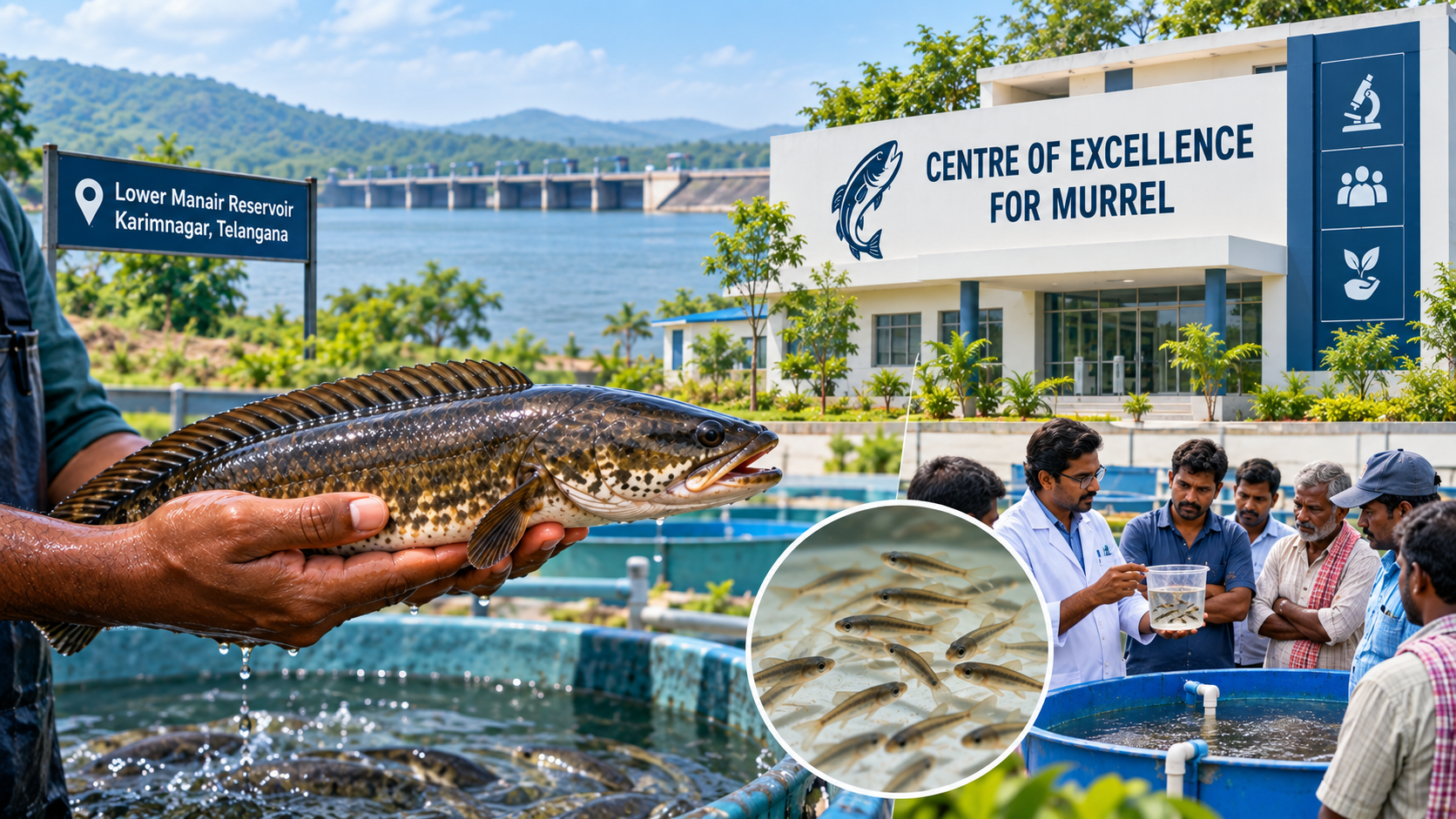
Korra Meenu, popularly known as Murrel, is one of the most recognised freshwater fish species in Telangana. Known for its consumer demand and market value, the species has created growing interest among farmers looking to explore new opportunities in freshwater aquaculture.
In a significant development for Murrel farming, a Centre of Excellence for Murrel is being planned at the Lower Manair Reservoir in Karimnagar, Telangana, with an investment of ₹2.50 crore. The initiative is expected to focus on Murrel research, breeding, seed production, scientific farming practices and farmer training.
The project could play an important role in developing a more organised ecosystem for Korra Meenu farming and supporting farmers with better technical knowledge.
What Is the Centre of Excellence for Murrel?
A Centre of Excellence is a specialised facility established to focus on the research, development and promotion of a particular sector or species.
In this case, the focus is Murrel. The proposed centre is expected to support activities related to scientific breeding, seed production, farming practices and technology development.
For farmers, such a specialised facility can become an important source of technical knowledge and practical exposure. It can help connect fisheries experts, researchers and farmers through training, demonstrations and knowledge-sharing activities.
As interest in Murrel farming continues to grow, access to reliable scientific information becomes increasingly important.
Why Korra Meenu Farming Matters
Korra Meenu has both cultural and commercial importance in Telangana. It is recognised as the State Fish of Telangana and is popular among consumers.
Its market demand and value have encouraged many farmers to consider Murrel farming. However, successful aquaculture requires more than market demand. Farmers also need proper knowledge about seed selection, stocking, feeding, water management and fish health.
Scientific farming practices can help farmers better understand the requirements of the species and make informed decisions during different stages of production.
This makes research and technical support important for the future development of Murrel aquaculture.
Focus on Quality Seed Production
Quality seed is one of the important foundations of successful aquaculture.
Farmers depend on the availability of healthy and suitable fingerlings to begin their farming operations. Limited access to reliable seed can create challenges for farmers who want to start or expand Murrel farming.
The proposed Centre of Excellence is expected to support the development of scientific breeding and seed production systems for Murrel.
A stronger seed production ecosystem can help improve the availability of Murrel seed and support the expansion of farming activities. It can also create opportunities for hatchery development and other businesses connected to the Murrel value chain.
Bringing Scientific Knowledge to Farmers
Research and infrastructure become meaningful when their benefits reach farmers.
Murrel farming involves several stages, and farmers need practical knowledge to manage production effectively. Understanding the species, its farming requirements and different management practices can help farmers make better decisions.
The Centre of Excellence can provide opportunities for demonstrations and practical training. Farmers may gain exposure to improved techniques related to breeding, seed rearing and farm management.
According to the information shared about the initiative, 60 farmers have already completed special training.
Such programmes can help farmers interact with technical experts, learn from demonstrations and gain a better understanding of scientific Murrel farming practices.
Why the Lower Manair Reservoir Location Is Important
The Lower Manair Reservoir is an important water resource in the Karimnagar region and has significance for fisheries activities.
Establishing a specialised Murrel facility in this region can help connect fisheries development, research and farmer training.
The location can potentially support demonstrations, training programmes and other species-focused activities. However, the long-term success of the initiative will depend on how effectively the knowledge and technology developed through the centre reach farmers.
Building the Murrel Farming Ecosystem
The growth of Murrel farming depends on several connected factors.
Research can generate knowledge and improved technologies. Scientific breeding can support seed production. Quality seed can reach farmers, while training can help them understand and adopt better farming practices.
These elements need to work together.
The proposed Centre of Excellence for Murrel has the potential to connect research, seed production and farmer training within a more organised system.
For existing farmers, this could mean better access to technical knowledge and improved practices. For new farmers, specialised training could help them understand the requirements of Murrel farming before entering the sector.
The initiative could also create opportunities in related areas such as hatchery operations, seed production and other activities connected to the Murrel aquaculture value chain.
A New Development for Korra Meenu Farming
The proposed ₹2.50 crore Centre of Excellence for Murrel at Lower Manair Reservoir in Karimnagar is an important development for Telangana’s fisheries and aquaculture sector.
Its importance goes beyond the construction of a facility. The real impact will depend on its ability to support research, strengthen Murrel seed production, provide practical farmer training and bring scientific knowledge closer to the farming community.
With Korra Meenu already enjoying strong consumer demand, the development of better breeding systems, technical knowledge and organised farming practices could support the future growth of Murrel aquaculture in Telangana.
