• E – Magazine
    • Aquaculture
    • Aqua Health & Disease Management
    • News
      • National
      • International
    • Farming
    • Research and Innovation
    • Sustainability
    • Technology & Equipments
    • This is Africa
    • Trade
  • Publications
  • Events
    • Expos
    • Trainings
    • Events by Month
  • Business Listings
    • List Your Business
    • Business Listings
    • Buy & Sell
    • Get Consultation
  • Employment
  • About Us
    • Founder
  • Contact
Fishery News
Home » News » Page 22
Category:

News

Bridging the Gap Enhancing Fish Consumption in India through Policy Market Linkages and Technology
EDITORIALNews

Bridging the Gap: Enhancing Fish Consumption in India through Policy, Market Linkages, and Technology

by Fishery News 05/10/2024
written by Fishery News

India’s fishery sector holds immense significance for the country’s domestic food and nutritional security. As a crucial source of protein, fish provides essential nutrients to millions, yet the potential of the sector is far from fully realized. While the annual per capita fish consumption reached 13 kg in 2022-23, a notable rise from previous years, it still falls short of the international standard set by organizations like the OECD and FAO. With global per capita consumption hovering around 20.5 kg in 2019-20, India has substantial ground to cover if it is to meet the projected 21.4 kg per capita by 2031. This gap represents both a challenge and an opportunity—one that can be addressed through a combination of critical policy support, improved market linkages, and the integration of advanced technology into the sector.

Fish Consumption in India: An Overview

A study conducted by the National Council of Applied Economic Research (NCAER) in 2022-23 highlights the positive trajectory of fish consumption in India. Over a ten-year span, the monthly fish consumption per household has nearly doubled from 2.66 kg in 2011-12 to 4.99 kg in 2022-23. This significant growth is a testament to the sector’s expansion, driven by improved market networks and the increased availability of a wider variety of fish. Yet, despite this upward trend, the per capita consumption of 13 kg remains considerably below the global average.

The NCAER study, which surveyed 13,000 households across 105 districts in 24 states, provides valuable insights into the growing demand for fish. The findings indicate that India’s fish-eating population has seen a marked increase, with per capita consumption rising from 7 kg in 2011-12 to 13 kg in 2022-23. This growth is particularly encouraging, but it underscores the need for continued efforts to further augment consumption levels to match global standards.

One key factor contributing to the rise in fish consumption is the availability of more fish varieties in the marketplace. Around 56% of households surveyed reported that the increased variety of fish has made it easier for them to incorporate fish into their diets. This is a critical insight, as it suggests that expanding market access and diversifying the types of fish available can directly impact consumption patterns.

However, the study also revealed that price remains a significant consideration for many households, particularly those in lower-income groups. Around 19% of households noted that lower fish prices have played a role in increasing their consumption, while 28% of households reported an overall increase in fish consumption over the past five years. These findings highlight the complex interplay between market access, pricing, and consumer behavior—a dynamic that must be addressed through targeted interventions.

Income Disparities and Fish Consumption

The disparity in fish consumption across different income groups presents one of the sector’s most pressing challenges. For low-income households, limited purchasing power is a significant barrier to consuming fish regularly. According to the survey, 73% of district officials identified low purchasing power as the primary reason for the low fish consumption among low-income groups. This highlights the need for policy interventions that focus on making fish more affordable and accessible to this demographic.

In middle-income groups, the challenge shifts from affordability to awareness. Approximately 44% of respondents in this group cited a lack of knowledge about the health benefits of fish as the main reason for their low consumption. This suggests that education and awareness campaigns could play a vital role in boosting demand in this segment. By highlighting the nutritional advantages of fish, such as its high protein content, omega-3 fatty acids, and essential vitamins and minerals, policymakers and industry stakeholders can drive home the message that fish is a healthy and sustainable source of nutrition.

For high-income households, the issue is not price or awareness, but rather the cleanliness and hygiene of fish markets. A significant 54% of respondents in this group reported that they avoid purchasing fish due to the poor sanitary conditions of local markets and concerns about the freshness of the products. This presents an opportunity for investment in modernizing fish markets, ensuring that they meet the hygiene standards expected by consumers. Creating clean, well-maintained marketplaces will not only attract higher-income consumers but also improve overall public health and food safety.

Marketing and Distribution: Overcoming Sectoral Challenges

One of the primary challenges faced by India’s fishery sector is the lack of efficient marketing and distribution networks. Farmers frequently cite low prices, inadequate transportation options, and high post-harvest losses as major obstacles to selling their products. In many cases, fish farmers are not equipped with the skills or resources needed to navigate the complexities of marketing their products effectively. Without access to proper market linkages, farmers struggle to connect with consumers, resulting in missed opportunities for both the producers and the market as a whole.

For farmers, the marketing process is where they finally realize a return on their investment. Effective marketing involves more than just selling the fish; it encompasses a wide range of activities designed to move the product from the farm to the consumer. This includes handling, processing, packaging, and distributing the fish, as well as ensuring that it reaches the market in a fresh and consumable state. Unfortunately, many small-scale farmers lack the infrastructure and resources needed to carry out these activities efficiently.

One potential solution to this problem is the establishment of door-to-door fish vending services and mobile vending centers in both urban and rural areas. By bringing fish directly to consumers, these initiatives can bypass many of the logistical challenges that farmers face, while also making it easier for households to purchase fresh fish. Additionally, the creation of retail fish kiosks, particularly in busy areas like railway stations and bus terminals, could help drive demand by making fish more accessible to consumers on the go.

In rural areas, the establishment of hatcheries, processing plants, and mobile fish kiosks could provide a much-needed boost to the local economy while ensuring that consumers have access to a wider variety of fish. By investing in infrastructure at the block and panchayat levels, policymakers can help create a more robust distribution network that benefits both farmers and consumers alike.

The Role of Technology: A Game Changer for Fish Marketing

As the fishery sector looks to expand its reach, technology offers a powerful tool for improving efficiency and transparency across the supply chain. One promising development is the introduction of the Fish Market and Price Information System (FMPIS), a web-based platform that provides real-time information on fish prices, availability, and market trends. By giving stakeholders—fishermen, farmers, processors, wholesalers, and retailers—access to accurate and up-to-date market data, FMPIS can help reduce the information asymmetry that often leads to price volatility and exploitation.

In addition to improving market transparency, FMPIS can also help policymakers make more informed decisions about the management and regulation of seafood markets. By collecting comprehensive market data, the platform can provide valuable insights into consumer behavior, price trends, and market demand. This information can be used to develop more effective policies aimed at promoting sustainable and efficient seafood markets.

Beyond FMPIS, the integration of AI-driven solutions into the fishery sector holds immense potential for reducing waste, improving logistics, and expanding market access. AI can be used to predict consumer demand, optimize supply chains, and identify new market opportunities. For example, AI-powered analytics can help farmers determine where to sell their products based on real-time demand, thus minimizing spoilage and maximizing profits. Additionally, e-commerce platforms and online marketplaces can connect fish farmers directly with consumers, creating new channels for selling fresh, processed, or packaged fish.

However, the adoption of these technologies poses challenges for small and mid-sized farmers, who often lack the resources and technical expertise needed to implement modern systems. To overcome this barrier, there must be a concerted effort to provide training and support for farmers, as well as investments in infrastructure that enable the widespread use of technology across the sector. Government bodies, private organizations, and research institutions must work together to create an enabling environment that fosters innovation and empowers farmers to embrace these new tools.

Policy Recommendations: A Path Forward

To fully capitalize on the potential of India’s fishery sector, a multi-pronged approach is necessary. First, there must be substantial investment in infrastructure to improve the marketing and distribution of fish. This includes the construction of modern, hygienic fish markets, the establishment of mobile vending centers, and the development of cold storage facilities to preserve the freshness of fish during transport. Additionally, policymakers should focus on increasing consumer awareness about the health benefits of fish through mass media campaigns and targeted outreach efforts.

Furthermore, the government should prioritize the implementation of technology solutions like FMPIS and AI-driven analytics to improve market transparency and efficiency. By providing farmers with access to real-time market data and predictive tools, policymakers can help reduce waste, improve profits, and ensure a more stable supply of fish to meet growing demand.

Finally, there is a need for targeted interventions aimed at making fish more affordable and accessible to lower-income households. This could include subsidies or financial incentives for fish farmers, as well as programs designed to increase the availability of low-cost fish in local markets. By addressing the specific needs of different income groups, policymakers can create a more inclusive and equitable market that benefits both producers and consumers.

Final Word

India’s fishery sector is at a critical juncture. While the country has made significant strides in increasing fish consumption, there is still much work to be done to reach global standards. By addressing the challenges of market linkages, integrating technology, and providing targeted policy support, India can unlock the full potential of its fishery sector. With the right investments and interventions, the country can not only bridge the gap between its current consumption levels and global benchmarks but also ensure that fish continues to play a vital role in the nation’s food and nutritional security.

05/10/2024 0 comment
0 FacebookTwitterPinterestEmail
Indian Fishermen Released Amid EAM Jaishankar's Diplomatic Visit to Sri Lanka
InternationalNews

50 Indian Fishermen Released Amid EAM Jaishankar’s Diplomatic Visit to Sri Lanka

by Fishery News 05/10/2024
written by Fishery News

Colombo: During his visit to Sri Lanka, External Affairs Minister S. Jaishankar met with President Anura Kumara Dissanayake on Friday, reaffirming the importance of Sri Lanka in India’s “Neighbourhood First” policy and its “SAGAR” (Security and Growth for All in the Region) vision.

Expressing his appreciation for the warm welcome he received, Jaishankar posted on X, “Honoured to call on President Anura Dissanayake today in Colombo. I conveyed the warm greetings of President Droupadi Murmu and Prime Minister Narendra Modi. I value his positive sentiments and guidance regarding India-Sri Lanka relations, and we discussed strategies to enhance our cooperation for the mutual benefit of our nations and the region.”

This marks Jaishankar’s first official visit to Sri Lanka since Dissanayake took office as the ninth Executive President on September 23, following a coalition victory in the presidential elections.

In his post on X, President Dissanayake shared insights from their discussions, stating, “Met Indian External Affairs Minister S. Jaishankar today during his official visit to Sri Lanka. Our talks centered on enhancing collaboration in tourism, energy, and investment. Dr. Jaishankar reiterated India’s commitment to supporting Sri Lanka’s economic recovery. We also addressed the importance of ongoing cooperation in fisheries, security, and national unity.”

Notably, prior to the meeting with Dissanayake, it was announced that 50 Indian fishermen arrested by the Sri Lankan Navy for crossing the International Maritime Boundary Line (IMBL) would be released and repatriated to Tamil Nadu later this week. The Indian High Commission in Colombo stated, “Returning home! Fifty Indian fishermen from Mayiladuthurai, Pudukottai, and Nagapattinam have been released today.”

Jaishankar’s itinerary also includes a meeting with Prime Minister Harini Amarasuriya during his day-long visit. Upon arrival at Colombo Airport, he was welcomed by Sri Lankan Foreign Secretary Aruni Wijewardane and engaged in detailed discussions with the newly appointed Foreign Minister, Vijitha Herath, at the Ministry of Foreign Affairs.

Jaishankar remarked, “Concluded wide-ranging and detailed talks with FM Vijitha Herath today in Colombo. I congratulated him once again on his new responsibilities. We reviewed various dimensions of the India-Sri Lanka partnership and assured him of India’s steadfast support for Sri Lanka’s economic rebuilding efforts. Our Neighbourhood First Policy and SAGAR outlook will continue to guide the advancement of India-Sri Lanka ties.”

05/10/2024 0 comment
0 FacebookTwitterPinterestEmail
Armed Patrols and Traditional Canoes to Defend Goa’s Waters from Cross Border Fishing Threats
NationalNews

Armed Patrols and Traditional Canoes to Defend Goa’s Waters from Cross-Border Fishing Threats

by Fishery News 05/10/2024
written by Fishery News

From October 5, Goa’s traditional fishing canoes will take on a crucial role in a new coastal security initiative aimed at preventing illegal fishing by neighboring states. Under the supervision of the Directorate of Fisheries, these boats will be pivotal in enforcing cross-border fishing laws and protecting Goa’s waters.

To ensure constant surveillance, Chief Minister Pramod Sawant has instructed the Goa Police to deploy six armed officers on each patrol boat, providing 24-hour coverage of the coastline. Fisheries Director Nilkanth Halarnkar confirmed that the department’s lone patrol vessel will also be part of the mission, staffed by a fisheries superintendent, two department officials, and police personnel for enforcement.

Local fishers, particularly traditional ramponkars, are being urged by Halarnkar to report any sightings of unauthorized fishing vessels from other states. “We must collaborate to safeguard our waters. Neighbouring fishermen can pose unpredictable risks, especially if they are armed, but our police are ready to address any potential threats,” he stated.

The initiative follows growing reports from the local fishing community about sightings of Malpe canoes near Baina Beach, which have raised concerns about illegal fishing operations in Goa’s waters.


05/10/2024 0 comment
0 FacebookTwitterPinterestEmail
Tamil Nadu Fishermen and Families Observe Hunger Strike Over Arrests by Sri Lankan Navy
NationalNews

Tamil Nadu Fishermen and Families Observe Hunger Strike Over Arrests by Sri Lankan Navy

by Fishery News 04/10/2024
written by Fishery News

On Thursday, October 3, 2024, fishermen and their families in Thangachimadam near Rameswaram, Tamil Nadu, held a one-day hunger strike, protesting the Union government’s perceived indifference to the ongoing conflict between the fishermen of the state and the Sri Lankan Navy. The repeated arrests of Tamil Nadu fishermen on charges of poaching have become a “regular occurrence,” according to the protesters.

Since the fishing season reopened after the annual ban in June, over 200 fishermen from Tamil Nadu have been detained by the Sri Lankan Navy, with more than 50 mechanized and country boats confiscated. Recently, Sri Lankan authorities have also begun levying fines, increasing penalties for any delays in payment, creating further challenges for the fishermen.

Last month, the situation took a grim turn when five fishermen were reportedly forced to shave their heads by Sri Lankan officials, an incident that sent shockwaves through the fishing community. Sesu Raja, a prominent leader among the fishermen, expressed disappointment over the Union government’s silence. “If Prime Minister Narendra Modi had condemned the incident,” Raja argued, “the situation could have been different.” The fishermen are demanding the immediate release of all those detained, including 17 arrested on September 30. They also urged the Indian government to initiate talks with the newly formed Sri Lankan government to find a permanent solution to this long-standing issue.

The fishing community highlighted the economic contribution of their sector, which generates hundreds of crores in foreign exchange. However, the continued arrests and mounting insecurity have left many fishermen in financial distress, resulting in psychological strain on both the fishers and their families.

Fishermen leaders and representatives from various welfare unions of mechanized and traditional boats participated in the hunger strike. Sesu Raja further noted that this conflict, ongoing for nearly four decades, has yet to be resolved. “For generations, traditional fishermen have plied their trade in the Palk Strait. Despite India’s support to Sri Lanka during its recent economic crisis, the island nation seems unwilling to reciprocate when it comes to addressing the fishermen’s plight,” he added.


04/10/2024 0 comment
0 FacebookTwitterPinterestEmail
Fisheries Department Boosts Productivity in Pong Reservoir with Lakh Fish Seeds
NationalNews

Fisheries Department Boosts Productivity in Pong Reservoir with 65 Lakh Fish Seeds

by Fishery News 04/10/2024
written by Fishery News

In a significant move to enhance fish productivity in Pong Reservoir, also known as Maharana Pratap Sagar in the lower Kangra hills, the state Fisheries Department has initiated the release of 65 lakh fish seeds by the end of this month. The reservoir will be stocked with fish seeds of Katla, Mori, and Grass Carp species, each measuring over 70 mm in size.

The primary objective of this initiative is to support the local fishing community by increasing fish stocks, thereby improving their livelihood. As part of its annual practice, the Fisheries Department enforces a ban on fishing in all state reservoirs and water bodies from June 15 to August 15 to allow for fish breeding.

This year, the department plans to release 30 lakh Katla seeds, 20 lakh Rohu seeds, 5 lakh Mori seeds, and 10 lakh Grass Carp seeds into the reservoir. The process is being carried out at a designated spot on the banks of the reservoir under the supervision of department officials, with participation from local fisheries cooperative societies and elected representatives of gram panchayats.

The department had set a fish production target of 340 tonnes for the Pong reservoir by March last year. In comparison, 330 tonnes were produced by March of the current year.

Pong Reservoir, a man-made water body covering 24,000 hectares, is home to around 3,338 fishermen from 15 registered cooperative societies. These fishermen rely on the reservoir for their livelihoods, and during the off-season, they receive a financial relief of Rs 4,500 for two months. Additionally, they benefit from free accidental insurance coverage of Rs 5 lakh, along with subsidised fishing nets and boats.

The local Fisheries Societies Association has been advocating for the reinstatement of the Centre-sponsored Neel Kranti Awas Yojana, which previously provided housing assistance to poor fishermen. However, the scheme was discontinued by the central government.


04/10/2024 0 comment
0 FacebookTwitterPinterestEmail
ASSAM FOREST DEPARTMENT INTERCEPTS SMUGGLED CRITICALLY ENDANGERED FISH AT GUWAHATI RAILWAY STATION
NationalNews

ASSAM FOREST DEPARTMENT INTERCEPTS SMUGGLED CRITICALLY ENDANGERED FISH AT GUWAHATI RAILWAY STATION

by Fishery News 04/10/2024
written by Fishery News

Photo Credit: Assam Forest Department/X

In a significant operation on October 2, 2024, personnel from the Assam Forest Department, the Wildlife Crime Control Bureau (WCCB), and the Government Railway Police Force (GRPF) successfully recovered 31 live specimens of the critically endangered Channa Barca fish. The rescue took place at Guwahati Railway Station, where authorities intercepted the smuggled fish hidden in two sealed cartons.

Channa Barca, an ornamental fish highly prized for its rarity, is valued between Rs 22-23 lakh per specimen in the international market. According to sources from the Assam Forest Department, these fish were being smuggled from Orang to West Bengal, with the ultimate destination suspected to be South Asia. The three individuals involved in the smuggling operation were arrested and remanded to judicial custody. Each fish weighed approximately 700 grams.

The Kamrup (M) Forest Department, in collaboration with Orang National Park, has launched a thorough investigation into the case. Channa Barca, known locally as Pipli Cheng or Ceng Garaka, is native to the upper Brahmaputra basin and parts of Bangladesh. Its population has been severely affected by habitat loss and illegal fishing, leading to its classification as “critically endangered” by the International Union for Conservation of Nature (IUCN).

Authorities have yet to reveal the intended destination or full details about the origins of the seized fish, but investigations are ongoing.

04/10/2024 0 comment
0 FacebookTwitterPinterestEmail
CONSULTATION MEETING STRESSES MARINE FISHERIES AS KEY TO BANGLADESH'S BLUE ECONOMY
InternationalNews

CONSULTATION MEETING STRESSES MARINE FISHERIES AS KEY TO BANGLADESH’S BLUE ECONOMY

by Fishery News 01/10/2024
written by Fishery News

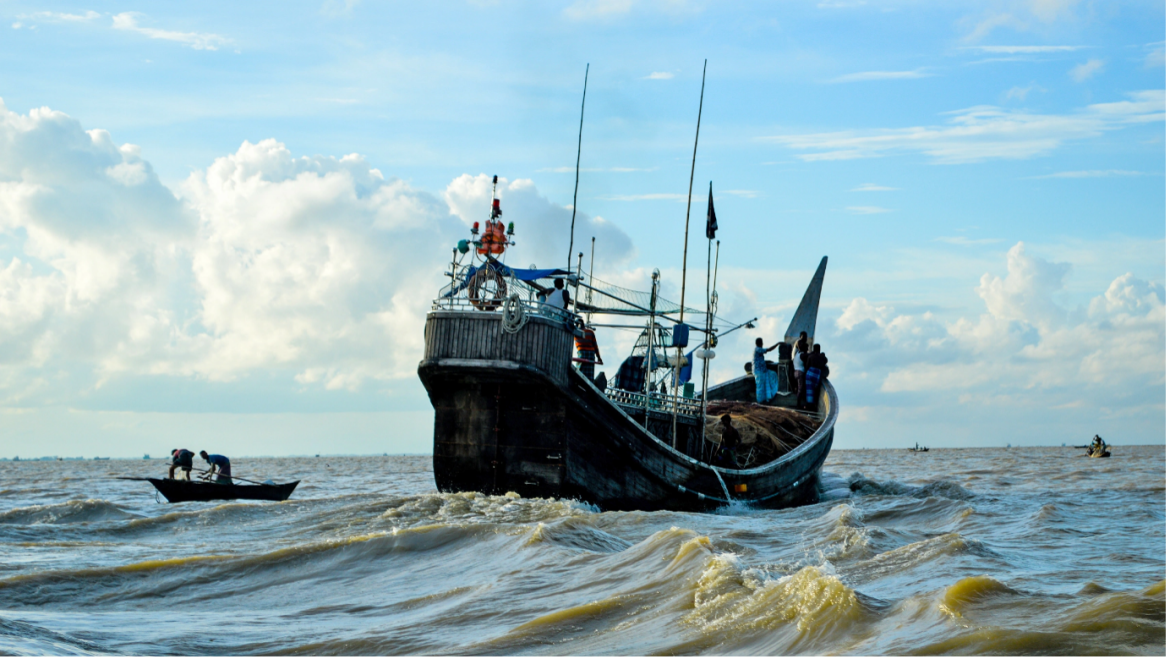
A consultation meeting held in Dhaka highlighted the significant role marine fisheries can play in harnessing the potential of Bangladesh’s largely untapped blue economy. Experts at the event called for greater emphasis on advancing the marine fisheries sector and bolstering conservation efforts to ensure sustainable development.

The meeting, hosted by USAID’s Enhanced Coastal Fisheries in Bangladesh II (ECOFISH II) Activity, implemented by WorldFish Bangladesh, took place at the Golden Tulip the Grandmark Dhaka, Banani. It gathered key stakeholders to discuss the future of Bangladesh’s marine and coastal fisheries, with a focus on the blue economy, fisheries co-management, and the designation of marine protected areas (MPAs).

Md. Zillur Rahman, Director General of the Department of Fisheries, attended as the chief guest, while Aditya Sood, Environment Officer at USAID Bangladesh, was a special guest. Dr. Benoy Kumar Barman, Interim Country Representative of WorldFish Bangladesh, chaired the event.

Discussions during the meeting centered on three critical themes: exploring the opportunities and challenges for Bangladesh’s fisheries blue economy, developing organizational structures for landing center-based fisheries co-management committees (LFCCs), and assessing site suitability for new MPAs.

Participants included representatives from the Department of Fisheries (DoF), Bangladesh Fisheries Research Institute (BFRI), Bangladesh Fisheries Development Corporation (BFDC), FAO, various NGOs, academia, and development partners. The meeting facilitated open dialogue, encouraging collaboration for the sustainable management of marine resources.

The event featured presentations by experts and fostered discussions on innovative strategies and potential partnerships for enhancing fisheries management in Bangladesh.

Source: Bangladesh Post

01/10/2024 0 comment
0 FacebookTwitterPinterestEmail
TELANGANA GOVERNMENT LAUNCHED FREE FISH SEED DISTRIBUTION ACROSS THE STATE
NationalNews

TELANGANA GOVERNMENT LAUNCHED FREE FISH SEED DISTRIBUTION ACROSS THE STATE

by Fishery News 01/10/2024
written by Fishery News

Telangana government has successfully launched its prestigious fish seed distribution program across the state today, aiming to support the livelihoods of fishermen and enhance the state’s aquaculture sector. The Fisheries Department had meticulously planned and made all the necessary arrangements for this free fish seed distribution, which is seen as a significant step towards strengthening the fisheries industry. This program will provide a boost to rural economies by ensuring access to high-quality fish seeds, which will improve fish farming yields and ultimately benefit the local communities dependent on fishing for their income.

In the first phase, the program began today in the districts of Hanumakonda, Warangal, Mulugu, Mahabubabad, Jayashankar Bhupalpally, Karimnagar, Khammam, Bhadradri Kothagudem, and Jogulamba Gadwal. Various local leaders, including district ministers, Members of the Legislative Assembly (MLAs), Members of the Legislative Council (MLCs), District Chairpersons, Members of Parliament (MPs), and District Collectors, took part in the inauguration ceremonies across these districts. These leaders addressed the public, emphasizing the importance of this initiative for the development of the local fishing industry, and praised the government’s efforts in supporting the fishermen.

The program’s second phase will commence on October 7, covering the remaining 23 districts in the state. The government has already issued instructions to ensure a smooth and efficient distribution process in these areas as well. The Fisheries Department has called upon fishermen and members of fisheries cooperative societies to take full advantage of this initiative, urging them to participate in large numbers to make the program a resounding success. Director of Fisheries Priyanka Ala expressed confidence that this initiative would greatly benefit the fishing communities and improve the overall production of fish in the state.

During the launch, BC Welfare Minister Ponnam Prabhakar highlighted the government’s commitment to enhancing agriculture-related sectors under the leadership of Chief Minister Revanth Reddy. He explained that the fish seed distribution is part of a broader strategy to increase productivity in the fisheries sector, which is a crucial source of income for many rural families. The Minister instructed the officials to ensure that only high-quality fish seeds are distributed in the tanks and reservoirs, as this would lead to better growth rates and healthier fish populations, thereby ensuring higher profits for fishermen.

Minister Ponnam Prabhakar further noted that this year’s distribution program was particularly special because of the abundant rains that have filled reservoirs, tanks, and water bodies across the state. He expressed his hope that this would create ideal conditions for fish farming and result in a bountiful harvest, improving the financial well-being of thousands of fishing families. He likened the annual fish seed distribution to a festival celebrated by fishing communities, emphasizing that the joy of this year’s program would be even greater due to the favorable conditions.

In his remarks, the Minister revealed that he had personally appealed to Chief Minister Revanth Reddy to ensure that the fish seed distribution program is carried out in all the tanks and reservoirs that have been replenished by the recent rains. The Chief Minister responded positively, immediately instructing officials to proceed with the distribution started today.

The Fisheries Department ensured that all preparations were completed on time, and the launch went off smoothly. This initiative is expected to significantly contribute to the state’s fish production and bring prosperity to fishing families across Telangana. By supplying high-quality fish seeds to local water bodies, the government is taking concrete steps to support fishermen and promote sustainable aquaculture practices across the region.


01/10/2024 0 comment
0 FacebookTwitterPinterestEmail
Fishing Boat Engulfed in Fire Off Vizag Coast; Fishermen Escape Unharmed
NationalNews

Fishing Boat Engulfed in Fire Off Vizag Coast; Fishermen Escape Unharmed

by Fishery News 30/09/2024
written by Fishery News

A mechanized fishing boat from Vizag’s fishing harbour was destroyed by a fire while at sea, from the coast of Visakhapatnam on Sunday. Fortunately, all five fishermen aboard managed to escape without any serious injuries.

According to reports from local fisherfolk, the group had ventured out for a routine fishing trip when the boat’s engine caught fire. The blaze quickly spread to other parts of the vessel, forcing the fishermen to abandon the boat and leap into the sea to save their lives. They were rescued by a nearby fishing boat that was operating in the vicinity.

The fire, suspected to have been caused by an electrical short circuit, completely destroyed the boat, resulting in an estimated loss of ₹35 lakh.

Officials from the fisheries department, fire services, and other concerned agencies are expected to conduct a thorough investigation to determine the exact cause of the fire. In the meantime, leaders of local fishermen’s associations have urged the Andhra Pradesh government to provide financial assistance to the boat owner, whose livelihood has been severely affected by the incident.

Source: Deccan Chronicle


30/09/2024 0 comment
0 FacebookTwitterPinterestEmail
Fishermen Insured Without Certificates in Prayagraj; UP Minister Orders Investigation
NationalNews

7,000 Fishermen Insured Without Certificates in Prayagraj; UP Minister Orders Investigation

by Fishery News 30/09/2024
written by Fishery News

In a troubling development, Uttar Pradesh Fisheries Minister Sanjay Nishad revealed on Sunday that 7,000 fishermen in Prayagraj have been left without their insurance certificates, despite having their insurance applications processed. The lapse has raised significant concerns about the welfare and security of the fishermen, prompting the minister to call for an immediate investigation into the issue.

Speaking at a press conference held at the Circuit House in Prayagraj, Nishad disclosed that although the insurance policies for 7,000 fishermen had been approved and coverage initiated, the certificates confirming their insured status were never issued. As a result, these fishermen were left unaware of their insurance protections, putting them at risk of not being able to claim benefits in case of accidents or other unfortunate events.

The Fisheries Minister expressed his disappointment over the administrative failure, emphasizing the seriousness of the situation. “It is unacceptable that the fishermen, who depend on these protections for their livelihoods, have been left in the dark about their insurance status. We have initiated an inquiry to identify the officer responsible for this gross negligence,” Nishad stated.

The investigation will focus on the specific reasons behind the delay or failure in issuing the insurance certificates and will examine the processes followed by the concerned officer. The minister assured the public that corrective measures would be taken swiftly, and appropriate action will be implemented based on the findings of the inquiry.

Nishad also reiterated his government’s commitment to safeguarding the interests of fishermen across the state, ensuring that such lapses do not happen in the future. The outcome of the investigation is expected to be closely watched, as it could lead to broader scrutiny of insurance processes within the fisheries department.

The insurance scheme in question is designed to provide financial security to fishermen, offering coverage in the event of accidents, natural disasters, or other risks associated with their work. The lack of insurance certificates, therefore, not only compromises the fishermen’s protection but also undermines confidence in the administrative systems meant to serve vulnerable communities.

As the inquiry unfolds, affected fishermen and local stakeholders are anxiously awaiting the outcome, hoping for swift justice and resolution to the administrative failure.

Source: Deccan Herald

30/09/2024 0 comment
0 FacebookTwitterPinterestEmail
Newer Posts
Older Posts
  • Recent
  • Popular
  • ICAR-CIFT Patents Rapid DNA Biosensor for Black Tiger Shrimp Authentication

    07/08/2026
  • Minister Holds Review Meeting with Fisheries Cooperative Leaders

    07/08/2026
  • Dry Fish Demand Surges Following Formalin Ban

    07/08/2026
  • Rohu Breeding: A Complete Step-by-Step Guide to Successful Seed Production

    07/08/2026
  • 1

    National Coastal Mission Scheme (NCM) Enhances Coastal Management Efforts

    07/08/2024
  • 2

    Trout Fish Stocking Initiative Enhances Fisheries and Tourism Potential in Shopian, Jammu and Kashmir

    17/12/2023
  • 3

    BIGGEST FISH MARKETS IN INDIA

    07/09/2024
  • 4

    Introducing Future Aquaculture Magazine: A New Voice Shaping the Future of Seafood

    13/02/2026

About Fishery News

FN Logo

Fishery.News is India’s leading digital media platform dedicated to fisheries, aquaculture, seafood, and marine industries. We deliver trusted news, expert insights, market intelligence, technology updates, research, government policies, and success stories that help fish farmers, shrimp farmers, seafood businesses, researchers, and industry professionals stay informed and grow sustainably

Categories

  • News
  • Aquaculture
  • Aquatic Health and Disease Management
  • Research and Innovation
  • Technology & Equipments

Social Networks

Facebook Twitter Instagram Linkedin Youtube
  • Facebook
  • Twitter
  • Instagram
  • Linkedin
  • Youtube

© 2026 Fishery.News – A BLIV Media Venture. All Rights Reserved.


Back To Top
Fishery News
  • E – Magazine
    • Aquaculture
    • Aqua Health & Disease Management
    • News
      • National
      • International
    • Farming
    • Research and Innovation
    • Sustainability
    • Technology & Equipments
    • This is Africa
    • Trade
  • Publications
  • Events
    • Expos
    • Trainings
    • Events by Month
  • Business Listings
    • List Your Business
    • Business Listings
    • Buy & Sell
    • Get Consultation
  • Employment
  • About Us
    • Founder
  • Contact