• E – Magazine
    • Aquaculture
    • Aqua Health & Disease Management
    • News
      • National
      • International
    • Farming
    • Research and Innovation
    • Sustainability
    • Technology & Equipments
    • This is Africa
    • Trade
  • Publications
  • Events
    • Expos
    • Trainings
    • Events by Month
  • Business Listings
    • List Your Business
    • Business Listings
    • Buy & Sell
    • Get Consultation
  • Employment
  • About Us
    • Founder
  • Contact
Fishery News
Home » News » Page 28
Category:

News

NHRC Open House at DSNLU Highlights Key Recommendations to Protect Fishermen's Rights
NationalNews

NHRC Open House at DSNLU Highlights Key Recommendations to Protect Fishermen’s Rights

by Fishery News 02/09/2024
written by Fishery News

An open house discussion focused on the rights of fishermen, organized by the National Human Rights Commission (NHRC) in partnership with Damodaram Sanjivayya National Law University (DSNLU), concluded at the DSNLU Visakhapatnam campus, yielding crucial recommendations to advance the human rights of fishermen. The session, chaired by Smt. Vijaya Bharathi Sayani, Acting Chairperson of NHRC, emphasized the critical role that fishermen play in bolstering India’s economy, underscoring the need to protect their rights to ensure their dignified livelihood. She reiterated the NHRC’s commitment to safeguarding fishermen’s rights, including the protection of seafarers. Highlighting the Commission’s diverse interventions and advisories to central and state authorities, she discussed its broader efforts to uphold the rights of vulnerable groups.

The event commenced with a welcome address by Prof. D. Surya Prakasa Rao, Vice Chancellor of DSNLU, who outlined the structure of the discussions across three technical sessions. The first session addressed human rights violations within India’s fishing communities, spotlighting the economic significance of fisheries and the persistent challenges, including hazardous working conditions. The speakers called for heightened awareness, sustainable fishing practices, climate resilience, and international collaboration to safeguard fishermen’s rights and livelihoods. Prof. E. Udaya Bhasker Reddy from Andhra University emphasized the right to a healthy environment, focusing on pollution impacts, while Dr. Deepa Suman from the National Fisheries Development Board (NFDB) highlighted the benefits of the Pradhan Mantri Matsya Sampada Yojana in enhancing the safety and welfare of the fishing community.

The second session on fishing rights and environmental issues featured insights from Dr. Joe K. Kizhakudan of ICAR-CMFRI, who contrasted the challenges faced by Andhra Pradesh’s fishermen with better conditions in other states like Maharashtra and Tamil Nadu. He noted the migration of Srikakulam fishermen to Odisha due to adverse conditions. Dr. S.S. Raju, also from ICAR-CMFRI, discussed the entrenched socio-economic challenges within the fishing community, including generational entrapment, poor living conditions, and environmental degradation caused by industrial waste. He advocated for the introduction of Minimum Support Prices (MSP) and enhanced safety measures for fishermen. Other speakers, including Dr. Divya Karnad from Ashoka University and Prof. V. Raja Lakshmi, formerly of Andhra University, stressed the importance of protecting traditional fishermen’s rights and the need for a community-based approach to welfare initiatives.

The third session explored social security measures and welfare schemes for fishermen. Dr. Ch. Benarji, Dean and Professor of Law at VIT-AP University, highlighted the legal challenges faced by Indian fishermen who are often arrested when crossing into Bangladeshi waters. He emphasized the necessity for education on maritime laws and the law of the sea, urging institutions like DSNLU to take an active role in outreach efforts for the fishermen. He also discussed the complexities of unclear sea boundaries, particularly around Katchatheevu, and called for legal frameworks and insurance schemes to protect fishermen who inadvertently cross international borders.

The concluding session provided a platform for representatives from the fishing community to voice their concerns, including limited awareness of government programs and the negative impacts of illegal coastal development and pollution. Key suggestions from the discussions included the need for increased education and awareness on maritime laws, promotion of sustainable fishing, greater dissemination of information on government welfare programs, and the empowerment of fishermen to ensure safe working conditions and fair compensation. The participants also emphasized the importance of collaboration among coastal states to adopt best practices and mitigate interstate migration of fishermen.

The event saw participation from representatives of the Department of Fisheries, Government of India, academic experts from Andhra University, Ashoka University, and ICAR-CMFRI, along with national and international NGOs, civil society organizations, and private institutions. Around 50 fishermen and their families also actively participated in the discussions.

Source: Pib.gov.in

02/09/2024 0 comment
0 FacebookTwitterPinterestEmail
Unlocking the Potential of Ornamental Fish Culture in National Capital Region
NationalNews

Unlocking the Potential of Ornamental Fish Culture in National Capital Region

by Fishery News 31/08/2024
written by Fishery News

Recently, a comprehensive four-day training program at CIFA-ICAR, Bhubaneswar, shed light on the vast potential of ornamental fish culture and breeding. This workshop, attended by industry enthusiasts and experts, emphasized the global popularity of ornamental fish keeping, which ranks as the second most popular hobby after photography.

Ornamental fish culture is more than just a hobby; it’s a burgeoning industry with immense scope for growth, particularly in the National Capital Region (NCR). The workshop covered various aspects of ornamental fish culture, from breeding techniques to sustainable practices, highlighting its economic viability and the opportunities it presents for entrepreneurs.

With the knowledge gained from this program, plans are underway to establish a new vertical within PVRAQUA dedicated to ornamental fish culture. This initiative aims to tap into the growing market demand in NCR, leveraging the region’s resources and consumer interest.

The ornamental fish industry in India has been steadily growing, and NCR is poised to become a major hub. The increasing urbanization and rising disposable income in the region have led to a surge in demand for ornamental fishes. By creating a dedicated vertical, PVRAQUA aims to cater to this demand, offering high-quality ornamental fishes bred under expert supervision.

This new venture aligns with PVRAQUA’s commitment to innovation and sustainability, ensuring that the ornamental fish industry in NCR thrives. With a focus on both local and global markets, PVRAQUA is set to lead the way in ornamental fish culture, contributing to the region’s economic growth and offering hobbyists and collectors a wide range of choices.

This initiative not only enhances PVRAQUA’s portfolio but also positions it as a leader in the rapidly growing ornamental fish industry in India.

31/08/2024 0 comment
0 FacebookTwitterPinterestEmail
ICAR CIBA Collaborates with Indian Immunologicals Limited for Commercial Production of 'Nodavac R' Vaccine
NationalNews

ICAR-CIBA Collaborates with Indian Immunologicals Limited for Commercial Production of ‘Nodavac-R’ Vaccine

by Fishery News 30/08/2024
written by Fishery News

The ICAR-Central Institute of Brackishwater Aquaculture (ICAR-CIBA) in Chennai has entered into a partnership with Indian Immunologicals Limited (IIL), based in Hyderabad, to commercialize the production of the “Nodavac-R” vaccine. This vaccine, developed by ICAR-CIBA, targets Viral Nervous Necrosis (VNN), a critical disease affecting various finfish species.

Viral Nervous Necrosis, also known as Viral Encephalopathy and Retinopathy (VER), is a serious viral infection impacting marine, brackishwater, and freshwater fishes. The disease is highly lethal during the larval and early juvenile stages, with mortality rates reaching up to 100%. Although adult fish may not show symptoms, they can carry the virus and pass it on to their offspring through eggs and gonadal fluids.

The “Nodavac-R” vaccine is a recombinant monovalent vaccine, specifically designed to protect Asian Seabass against VNN. Through this partnership, IIL, a leading vaccine manufacturer in India, will oversee the large-scale production of the vaccine, which is expected to play a crucial role in preventing the vertical transmission of the virus and reducing mortality rates in juvenile fish.

Dr. Kuldeep K. Lal, Director of ICAR-CIBA, emphasized the vaccine’s significance, stating, “Viral Nervous Necrosis is a substantial challenge for finfish aquaculture due to its wide range of hosts. The VNN vaccine we’ve developed can effectively prevent the transmission of the virus to offspring and significantly reduce mortality in fingerlings. This vaccine has the potential to greatly reduce the impact of VNN not only in India but also across other Asian countries.”

Dr. M. Makesh, Principal Investigator of the project, mentioned that the project also includes the development of diagnostic tools to detect the virus and monitor immune responses in fish, which will support the effective use of the vaccine.

Dr. K Anand Kumar, Managing Director of Indian Immunologicals Limited, discussed the importance of this collaboration, noting, “Indian Immunologicals is pioneering fish vaccine development in India. We are addressing the needs of various types of fish and culture environments, and although we face challenges as the first movers in this field, we are committed to establishing clear pathways for the commercial development of fish vaccines.”

Dr. Priyabrata Pattnaik, Deputy Managing Director of IIL, further added, “As a leader in ‘One Health,’ IIL is dedicated to developing vaccines that tackle various fish pathogens. Our goal is to reduce the reliance on antibiotics in aquaculture, thereby addressing the broader issue of antimicrobial resistance in the environment.”

India is currently the world’s second-largest producer of aquaculture, with an annual output of 12.12 million tonnes. The industry faces significant challenges from bacterial, viral, fungal, and parasitic infections, which result in substantial economic losses. Presently, these infections are managed through various conventional methods, including anti-infectives, which have limited effectiveness. With increasing concerns about antimicrobial resistance and the demand for chemical-free food products, there is a growing need for improved disease control measures in aquaculture. The commercial availability of fish vaccines like “Nodavac-R” represents a significant step forward in meeting these challenges and advancing the industry.

Source: ICAR-CIBA


30/08/2024 0 comment
0 FacebookTwitterPinterestEmail
KUFOS Expands Partnership with Fisheries Department to Boost Native Fishery Resources in Reservoirs
NationalNews

KUFOS Expands Partnership with Fisheries Department to Boost Native Fishery Resources in Reservoirs

by Fishery News 30/08/2024
written by Fishery News

The Kerala University of Fisheries and Ocean Studies (KUFOS) has taken a significant step in its efforts to enhance native fishery resources by strengthening its collaboration with the Department of Fisheries. This extended partnership was formally announced by Vice-Chancellor Dr. T. Pradeep Kumar on August 29, during a ceremonial event at the KUFOS headquarters. The initiative is part of the broader Fish Production and Development Project in Dams 2024-25, which aims to increase the population of native fish species in the State’s reservoirs.

As a symbolic start to this project, Dr. Kumar distributed native fish seeds, underscoring the university’s commitment to advancing sustainable fishery practices. The Department of Fisheries has strategically selected the endangered species Manjakuri, which is recognized on the IUCN Red List, for the initial phase of the project. This species will be stocked in the Peringalkuthu reservoir, located in the Chalakudy River, as part of a targeted effort to revive and protect vulnerable fish populations in Thrissur district.

The event also marked a crucial milestone in the project, with the formal handover of fish fingerlings to Ms. Tasleema, the Fisheries Officer at Chalakudy Malsya Bhavan. This gesture signified the commencement of the first phase of the stocking process. During the ceremony, Vice-Chancellor Dr. Kumar reaffirmed KUFOS’s unwavering support for the Department of Fisheries, emphasizing the university’s commitment to expanding the initiative to other dams across Kerala.

The event was well-attended by notable figures, including Registrar in Charge Mr. Dinesh Kaipilli, Project Investigator Mr. M.K. Sajeevan, Dr. Anvar Ali P.H., Dr. Rajeev Raghavan, and Farm Manager Ms. Bindumol Abraham. Their presence highlighted the collaborative effort and shared vision between the university and the Fisheries Department in ensuring the success of this vital project aimed at preserving Kerala’s aquatic biodiversity.

Source: The Hindu

30/08/2024 0 comment
0 FacebookTwitterPinterestEmail
GRADUATE RESEARCH ASSISTANTSHIP OPPORTUNITIES FOR MSc AND PhD
InternationalNews

GRADUATE RESEARCH ASSISTANTSHIP OPPORTUNITIES FOR MSc AND PhD

by Fishery News 30/08/2024
written by Fishery News

The Whelan Lab at Auburn University, in collaboration with the U.S. Fish and Wildlife Service Southeast Conservation Genetics Lab (SECGL), is currently accepting applications for Graduate Research Assistantship positions (MSc and PhD). We are offering at least one MSc and one PhD position with start dates available in January or August 2024.

RESEARCH AREAS

Potential research projects include:

  • Conservation Genetics and Molecular Ecology: Focus on freshwater mollusks.
  • Phylogenetics and Systematics: Study of freshwater gastropods.
  • Environmental DNA (eDNA): Assay design and applied distributional studies.

Students interested in eDNA research are especially encouraged to apply. Research will involve work in museum, lab, and field environments.

Southeast Conservation Genetics Lab at Auburn University
Contact: Dr. Nathan Whelan | Email: nathan_whelan@fws.gov, nwhelan@auburn.edu
Website: www.nathanwhelan.com
Lab Information: Southeast Conservation Genetics Lab


ABOUT THE LAB

SECGL is a joint research lab between the U.S. Fish and Wildlife Service and Auburn University, located at Swingle Hall on Auburn’s main campus. Our lab conducts both basic and applied science, collaborating with government researchers and conservation scientists. Students will have the opportunity to engage in cutting-edge research while working directly with conservation practitioners.

CURRENT RESEARCH PROJECTS

Our ongoing research projects include:

  • Phylogenomics of Freshwater Gastropods (Pleuroceridae)
  • Conservation Genomics and Molecular Ecology of threatened and endangered mollusks
  • Taxonomy of terrestrial snails, freshwater mussels, and snails
  • Freshwater Gastropod Life History Evolution
  • Conservation Genomics of threatened freshwater fishes
  • Black Bass Genetics Management
  • eDNA Research: Assay design and environmental studies

FACILITIES & EQUIPMENT

SECGL boasts state-of-the-art facilities for both lab- and field-based research, including:

  • Modular clean rooms and purpose-built eDNA lab space
  • Equipment for next-generation library prep and molecular data generation
  • Bioinformatics resources including high-performance computing
  • Fieldwork equipment, including a 4WD SUV

ABOUT AUBURN UNIVERSITY

Auburn University is a leading public land-, sea-, and space-grant institution recognized for its research and academic excellence. Located in Auburn and nearby Opelika, Alabama, the area offers a vibrant community with an excellent quality of life and affordable living costs.

FUNDING & START DATES

  • Stipend: $2,500/month ($30,000/year)
  • Tuition Waiver: Provided
  • Start Dates: January or August 2024

HOW TO APPLY

Interested candidates should submit the following:

  • Letter of Interest
  • Current CV
  • Contact Information for 2-3 References
  • Unofficial Transcripts

Application Email: Dr. Nathan Whelan at nathan_whelan@fws.gov.

.


30/08/2024 0 comment
0 FacebookTwitterPinterestEmail
ICAR CIFT and Ecogenie Biotech Collaborate to Transform Silkworm Pupae Waste into Valuable Chitin
NationalNews

ICAR-CIFT and Ecogenie Biotech Collaborate to Transform Silkworm Pupae Waste into Valuable Chitin

by Fishery News 29/08/2024
written by Fishery News

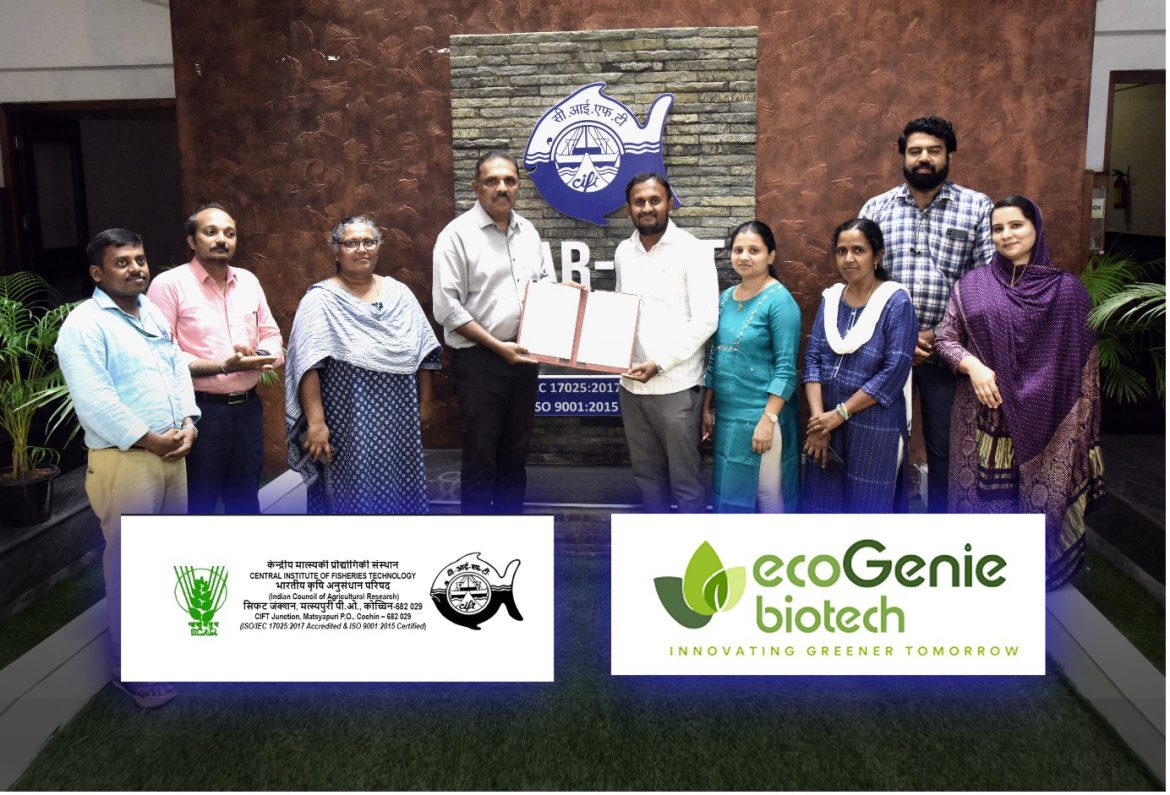
In an exciting development towards sustainable biotechnology, ICAR-Central Institute of Fisheries Technology (ICAR-CIFT) has teamed up with Bengaluru-based startup Ecogenie Biotech. This partnership aims to revolutionize the production of chitin and chitosan from silkworm pupae, marking a significant step forward in eco-friendly biotechnological processes.

Chitin and chitosan are essential biopolymers typically extracted from crustacean shells and are widely used in agriculture, healthcare, and food processing. India is a major silk producer, but a large quantity of spent silkworm pupae, which is usually discarded, remains underutilized. This collaboration seeks to repurpose these pupae into valuable products, enhancing the circular economy and promoting sustainable practices.

Under the Memorandum of Agreement signed on 29 August 2024, ICAR-CIFT will apply its expertise in conventional chemical extraction processes to derive chitin and chitosan from silkworm pupae. This adaptation will ensure that the products meet high-quality standards, while also minimizing waste and environmental impact.

Dr. George Ninan, Director of ICAR-CIFT, expressed enthusiasm about the partnership, saying, “This collaboration with Ecogenie Biotech demonstrates our commitment to advancing sustainable practices. By modifying our technology for silkworm pupae, we are paving the way for eco-friendly production that aligns with global environmental goals.”

The project will be led by ICAR-CIFT’s scientific team, including Dr. Elavarasan K., Dr. Jeyakumari A., and Dr. C.O. Mohan. This partnership underscores the importance of combining research and industry expertise to drive technological and environmental progress.

As India continues to excel in silk production, this innovative approach has the potential to transform waste management and sustainability practices, setting a new standard for biotechnological advancements.

29/08/2024 0 comment
0 FacebookTwitterPinterestEmail
Punjab Fish Farmers Gather to Address Climate Challenges and Boost Productivity
NationalNews

Punjab Fish Farmers Gather to Address Climate Challenges and Boost Productivity

by Fishery News 29/08/2024
written by Fishery News

Ludhiana, Punjab : Fish farmers from across Punjab gathered at the College of Fisheries (COF) in Ludhiana for the monthly meeting of the Innovative Fish Farmers Association (IFFA). The meeting focused on enhancing fish productivity and profitability, especially during the monsoon season.

COF scientists shared their expertise on topics such as alternate fish species, natural food production, and climate-smart aquaculture. The goal was to equip farmers with the knowledge needed to overcome challenges posed by climate change and ensure food safety.

The IFFA president and vice president discussed the association’s activities and addressed concerns raised by fish farmers. Dr. Meera D. Ansal, Dean of COF, emphasized the importance of IFFA in connecting farmers with the university for technical guidance and support.

The meeting also approved a proposal to hold IFFA meetings in different districts to expand the association’s reach and connect more stakeholders with the university. Dr. Parkash Singh Brar, Director of Extension Education, supported this initiative, stating that it would strengthen the association and promote capacity building.

Dr. Inderjeet Singh, Vice Chancellor, highlighted the university’s commitment to empowering livestock sectors through technology and fostering strong connections with farmers. By sharing knowledge and providing support, the university aims to help fish farmers adopt new technologies and improve their practices.

SOURCE – INDIA NEWS CALLING


29/08/2024 0 comment
0 FacebookTwitterPinterestEmail
New Integrated Farming Unit Benefits Tribal Communities in Gujarat
NationalNews

New Integrated Farming Unit Benefits Tribal Communities in Gujarat

by Fishery News 29/08/2024
written by Fishery News

Navsari, Gujarat: A new integrated farming unit has been established in Sultanpur Village, Navsari District, to benefit local tribal communities. The unit is a joint effort by the ICAR-Navsari Gujarat Research Centre and the ICAR-Central Institute of Brackishwater Aquaculture.

The unit covers 1.5 hectares of land, including a brackishwater pond, poultry and goat sheds, and areas for growing vegetables. It also includes a nursery for raising high-value fish and mud crabs.

Dr. Z. P. Patel, Vice Chancellor of Navsari Agricultural University, officially inaugurated the unit. Dr. Kuldeep Lal, Director of ICAR-CIBA, Chennai, was also present. A meeting was held to discuss livelihood opportunities for the tribal community, with experts from various institutions participating.

Over 150 tribal people from nearby villages attended the program. The unit will provide them with new skills and opportunities to improve their livelihoods. It will also help to promote sustainable agriculture and animal husbandry in the region.


29/08/2024 0 comment
0 FacebookTwitterPinterestEmail
Climate Change Fuels Illegal Fishing and Human Rights Crisis for Indian Fish workers
NationalNews

Climate Change Fuels Illegal Fishing and Human Rights Crisis for Indian Fish workers

by Fishery News 29/08/2024
written by Fishery News

Climate change is having a devastating impact on Indian fish workers. As the seas warm, fish are moving further away from the coast. This means that fish workers have to travel farther and farther out to find their catch.

This increased distance has made fishing a much riskier job. It takes longer to reach the fishing grounds, and there’s a greater chance of encountering bad weather or getting caught in foreign waters.

When Indian Fish workers cross into foreign waters, they risk being arrested and their boats confiscated. This can have a devastating impact on their families, who often rely on fishing for their livelihood.

The Indian government has been trying to help fish workers by promoting deep-sea fishing. However, this is a risky proposition, and it can lead to conflicts with other countries.

Climate Change Fuels Illegal Fishing and Human Rights Crisis for Indian Fish workers

Climate Change Fuels Illegal Fishing and Human Rights Crisis for Indian Fish workers

Climate change is also making it harder for Fish workers to catch enough fish. As the seas warm, fish populations are declining. This is making it difficult for Fish workers to make a living.

The Indian government needs to do more to help Fish workers adapt to climate change. This could include providing them with better boats and equipment, as well as training them on how to fish in deeper waters.

It is also important to address the issue of maritime boundaries. The Indian government needs to work with other countries to establish clear boundaries and rules for fishing.

Climate change is a major challenge for Indian fishworkers. However, there are things that the government can do to help them adapt to this new reality.

SOURCE – IPS UN Bureau Report

29/08/2024 0 comment
0 FacebookTwitterPinterestEmail
KARNATAK UNIVERSITY ADMISSION NOTICE FOR POST GRADUATE DIPLOMA AND CERTIFICATE PROGRAMMES
NationalNews

KARNATAK UNIVERSITY ADMISSION NOTICE FOR POST-GRADUATE, DIPLOMA, AND CERTIFICATE PROGRAMMES 2024-25

by Fishery News 27/08/2024
written by Fishery News

Karnataka University invites applications from eligible candidates for admission to the following Post-Graduate Degree, PG Diploma, Advanced Diploma, Diploma, and Certificate programmes for the Academic Year 2024-25.

Date: 19.08.2024

Subject: Admission to Post-Graduate Degree Programmes (Semester) with Choice Based Credit System (CBCS)/PG Diploma/Advanced Diploma/Diploma & Certificate Programmes for the Academic Year 2024-25

KARNATAK UNIVERSITY, PAVATE NAGAR, DHARWAD-580 003


Submission of Application Forms and Fees:

  1. Eligible candidates must apply through the UUCMS portal: https://uucms.karnataka.gov.in/ on or before 14.09.2024.
  2. Candidates who have appeared for the Final Semester Examination are also eligible to apply.
  3. Download and print the filled-in UUCMS application form, attach all necessary enclosures, including the Bank acknowledgment of the fees paid through SB Collect, and submit it to the Chairman/Coordinator of the concerned Departments at Karnatak University, Dharwad, by 17.09.2024.
  4. The downloaded UUCMS application form may also be sent via post.
  5. Applications submitted outside the UUCMS portal will not be accepted.
  6. Candidates applying for more than one programme must apply separately through the UUCMS portal and submit each form to the respective department.
  7. Fees must be paid separately for each programme applied for.
  8. Fees Details:
    • PG/PGDCA/PG Dip. in Entrepreneurial Finance (including application processing and entrance test):
      • General Merit: Rs. 665/-
      • SC/ST/C-I: Rs. 335/-
    • PG Diploma/Diploma/Advanced Diploma/Certificate Programmes (application processing):
      • General Merit: Rs. 265/-
      • SC/ST/C-I: Rs. 135/- (separately for each programme applied)
    • UG B.P.Ed. Course Application Processing Fees:
      • General Merit: Rs. 500/-
      • SC/ST/C-I: Rs. 250/-
  1. If the number of admissions is less than 10 for PG programmes or less than 05 for Diploma/Certificate programmes, such programmes will not be continued for the Academic Year 2024-25 and may be kept in abeyance.


27/08/2024 0 comment
0 FacebookTwitterPinterestEmail
Newer Posts
Older Posts
  • Recent
  • Popular
  • ICAR-CIFT Patents Rapid DNA Biosensor for Black Tiger Shrimp Authentication

    07/08/2026
  • Minister Holds Review Meeting with Fisheries Cooperative Leaders

    07/08/2026
  • Dry Fish Demand Surges Following Formalin Ban

    07/08/2026
  • Rohu Breeding: A Complete Step-by-Step Guide to Successful Seed Production

    07/08/2026
  • 1

    ICAR Scientists Crack the Breeding Code of Rare Himalayan Fish Channa andrao, Opening New Opportunities for Ornamental Fish Farming

    28/07/2026
  • 2

    Trout Fish Stocking Initiative Enhances Fisheries and Tourism Potential in Shopian, Jammu and Kashmir

    17/12/2023
  • 3

    BIGGEST FISH MARKETS IN INDIA

    07/09/2024
  • 4

    Introducing Future Aquaculture Magazine: A New Voice Shaping the Future of Seafood

    13/02/2026

About Fishery News

FN Logo

Fishery.News is India’s leading digital media platform dedicated to fisheries, aquaculture, seafood, and marine industries. We deliver trusted news, expert insights, market intelligence, technology updates, research, government policies, and success stories that help fish farmers, shrimp farmers, seafood businesses, researchers, and industry professionals stay informed and grow sustainably

Categories

  • News
  • Aquaculture
  • Aquatic Health and Disease Management
  • Research and Innovation
  • Technology & Equipments

Social Networks

Facebook Twitter Instagram Linkedin Youtube
  • Facebook
  • Twitter
  • Instagram
  • Linkedin
  • Youtube

© 2026 Fishery.News – A BLIV Media Venture. All Rights Reserved.


Back To Top
Fishery News
  • E – Magazine
    • Aquaculture
    • Aqua Health & Disease Management
    • News
      • National
      • International
    • Farming
    • Research and Innovation
    • Sustainability
    • Technology & Equipments
    • This is Africa
    • Trade
  • Publications
  • Events
    • Expos
    • Trainings
    • Events by Month
  • Business Listings
    • List Your Business
    • Business Listings
    • Buy & Sell
    • Get Consultation
  • Employment
  • About Us
    • Founder
  • Contact