• E – Magazine
    • Aquaculture
    • Aqua Health & Disease Management
    • News
      • National
      • International
    • Farming
    • Research and Innovation
    • Sustainability
    • Technology & Equipments
    • This is Africa
    • Trade
  • Publications
  • Events
    • Expos
    • Trainings
    • Events by Month
  • Business Listings
    • List Your Business
    • Business Listings
    • Buy & Sell
    • Get Consultation
  • Employment
  • About Us
    • Founder
  • Contact
Fishery News
Home » News » Page 99
Category:

News

Puducherry Government and CMFRI Collaborate to Introduce Artificial Reefs for Enhanced Fish Breeding
NationalNews

Puducherry Government and CMFRI Collaborate to Introduce Artificial Reefs for Enhanced Fish Breeding

by Fishery News 01/12/2023
written by Fishery News

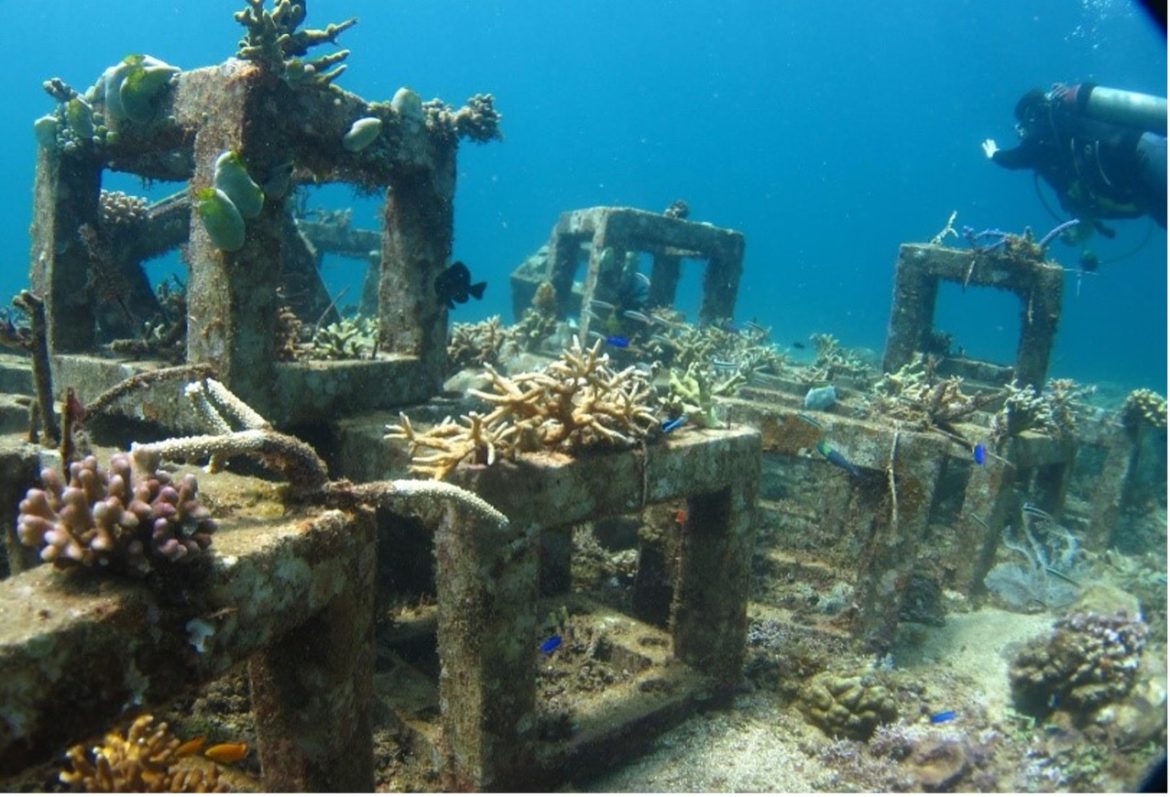
In a joint initiative, the Puducherry government and the Central Marine Fisheries Institute (CMFRI) in Visakhapatnam plan to install artificial reefs along the Union Territory’s coastline. The project, executed under the Pradhan Mantri Matsya Sampada Yojana (PMMSY), aims to promote fish breeding and improve the livelihoods of traditional fishermen. Artificial reefs are human-built structures designed to replicate natural habitats, providing a self-sustaining production system on the seabed.

The estimated cost for erecting 14 artificial reefs along the Puducherry coastline this year is ₹4.34 crore, with each reef costing ₹31 lakh. The entire project will be fully funded by the Centre, as outlined in the PMMSY. The plan includes an additional 25 reefs next year, with the possibility of further extension based on the Union Territory’s requirements.

Joe K. Kizhakudan, principal scientist and Head of CMFRI, Vishakapatnam, highlighted the success of artificial reef experiments in various states, including the completion of 131 reefs in Tamil Nadu over the last 15 years. He emphasized that this ecosystem-building model, used globally in countries such as France, Italy, Japan, and the U.S., creates a natural prevention of ground flow, offering shelter for invertebrates and small larvae to aggregate.

Stakeholder workshops were conducted by a team led by Mr. Kizhakudan in coastal hamlets, educating fishermen about the potential benefits of artificial reefs. The deployment sites will be identified by the Puducherry government and CMFRI, with different models erected based on the local ground and habitat conditions. The reefs will be placed at specified locations, five nautical miles from the shore and in the wave-breaking zone.

The submerged artificial reefs, anchored for stability, are expected to attract marine flora and various fish species, benefiting small-scale fishers with increased fish availability at lower operation costs. Over 300 species can coexist in a settled artificial reef habitat, including commercial varieties such as breams, groupers, snappers, perches, cobia, sea bass, rabbit fish, silver biddies, seer fish, barracuda, mackerel, trevallies, and queen fish.
01/12/2023 0 comment
0 FacebookTwitterPinterestEmail
Equipment Failure Causes 5 Million Loss in Atlantic Salmon at Nova Scotias Sustainable Blue Salmon Farm
NewsInternational

Equipment Failure Causes $5 Million Loss in Atlantic Salmon at Nova Scotia’s Sustainable Blue Salmon Farm

by Fishery News 01/12/2023
written by Fishery News

An equipment failure at the Sustainable Blue land-based salmon farm in Nova Scotia resulted in the loss of 100,000 Atlantic salmon valued at $5 million earlier this month, the company confirmed on Tuesday. The incident occurred when a filter responsible for removing carbon dioxide from holding tanks experienced a “structural collapse” on November 4, rendering the facility unable to supply customers until June 2024.

Sustainable Blue’s land-based salmon farm, the only one in North America with zero waste discharge, utilizes a proprietary water filtration system that continuously recirculates water on-site. The malfunction occurred in the newest production building at the Sustainable Blue complex in Centre Burlington, Hants County, near the Minas Basin.

While fish inside five other buildings remained unaffected, the malfunction led to a 20% loss in production. The affected salmon, weighing between four and eight kilograms each, were market-ready. CEO Kirk Havercroft described the incident as a setback but expressed confidence in recovering from it. The cause of the equipment failure, specifically the carbon dioxide stripper, is currently under investigation.

The failed equipment plays a crucial role in the water filtration system, eliminating carbon dioxide released by fish. The company produces 1,000 metric tonnes of salmon annually and anticipates repairing the issue and resuming operations by early March 2024.

Havercroft emphasized that the failure was a construction issue and not a technology performance problem. While the company has insurance, the extent of coverage remains unclear. Sustainable Blue has received substantial support from the federal government, with approximately $3.5 million in funding provided since 2006. Despite the setback, Havercroft expressed optimism about the viability of the land-based salmon farm and its potential recovery.

01/12/2023 0 comment
0 FacebookTwitterPinterestEmail
World Bank Greenlights 176 Million Loan for Philippine Fisheries Project
NewsInternational

World Bank Greenlights $176 Million Loan for Philippine Fisheries Project

by Fishery News 01/12/2023
written by Fishery News

The World Bank has granted approval for a $176 million loan to fund the Philippine Fisheries and Coastal Resiliency Project (FISHCORE), as announced in a statement recently. This initiative aims to enhance fisheries management and production in the Philippines, aligning with the nation’s commitment to sustainable practices in fishing and aquaculture expansion.

Ndiamé Diop, the World Bank Country Director for Brunei, Malaysia, Philippines, and Thailand, emphasized the project’s goal of improving incomes for those engaged in the fishing industry, encompassing production, processing, and marketing.

FISHCORE is designed to create new opportunities for fishery products, secure a reliable fish supply for national food security, and enhance the competitiveness of small and medium-sized fishery enterprises. The project is expected to have a positive impact on over 1.15 million fisherfolk, small-to-medium businesses, and residents in coastal communities.

Despite contributing approximately 1.3% to the country’s GDP and employing around 4% of the labour force (1.6 million jobs), the fisheries sector has faced challenges, with fish stocks declining by an average of 20% over the past decade due to various factors such as overexploitation, destructive fishing methods, habitat degradation, and negative impacts from land-based activities.

FISHCORE will support investments in expanding aquaculture and fish farming, fostering the creation of businesses among fishers’ associations, and providing livelihood grants to eligible beneficiaries. The project will be implemented in Fisheries Management Areas (FMA) 6 and 9, covering coastal waters including Pagudpud Bay, Subic Bay, Manila Bay, Bohol Sea, Panguil Bay, Iligan Bay, Gingoog Bay, Butuan Bay, and Sogod Bay.

Jingjie Chu, World Bank Senior Environmental Economist, highlighted that FISHCORE will aid the Philippine government in designing and establishing improved fisheries management systems in the selected FMAs’ coastal and municipal waters.

As of 2021, the World Bank represented the third-largest source of official development assistance (ODA) for the Philippines, contributing 24% of the total ODA or $7.66 billion.

01/12/2023 0 comment
0 FacebookTwitterPinterestEmail
Electricity Woes Pose Threat to Coastal Fishing Industry in Karnataka
NationalNews

Electricity Woes Pose Threat to Coastal Fishing Industry in Karnataka

by Fishery News 01/12/2023
written by Fishery News

A power crisis which is looming large in the maritime stretches of Dakshina Kannada, Uttara Kannada, and Udupi districts is significantly impacting the fisheries sector in Karnataka . The vitality of local fisheries hinges on the freshness of the catch, with ice playing a paramount role in preserving it. Unfortunately, these coastal areas are grappling with heightened challenges, given that the majority of power plants are situated outside the districts, leading to more frequent interruptions.

The ongoing year has witnessed an exacerbated issue due to reduced production and uneven power distribution. These coastal areas often bear the brunt of power shortages whenever Bengaluru faces electricity deficits. The Mangalore Electricity Supply Company attributes the vulnerability of coastal districts to wheeling problems during shortages.

Since the onset of the power crisis in August, ice plants in coastal regions are functioning at a mere 30% of their capacity. This has significant repercussions for local fishermen, who are now compelled to sell low-value fish varieties at discounted rates due to inadequate ice availability. The situation has also impacted the transformation of certain fish varieties into high-value, ready-to-eat products for domestic and export markets.

The power shortage has particularly affected the 165 ice plants on the coast, with half of them experiencing disruptions. The Karnataka Coastal Ice Plant and Cold Storage Owners’ Association reported that the daily ice production capacity of 2,200 tonnes has now reduced to 1,900 tonnes.

Beyond the economic impact, the power crisis is affecting the hygiene of the fish. Inconsistent power supply leads to irregular ice formation, fostering a breeding ground for microbes that can contaminate the catch. The quality of ice used becomes paramount, as lower-grade ice poses challenges for local fish transporters, vending houses, and storage units, diminishing the shelf value of the catch.

This issue is not only jeopardizing the livelihoods of the approximately 4.5 lakh seafaring fishermen and the extensive support network but is also exerting pressure on the overall economic dynamics of these coastal districts. The need for a consistent power supply for ice plants and crusher units underscores the urgency for attention from both local authorities and stakeholders in the fisheries industry to address this critical situation.

Source: NEWS CLICK

01/12/2023 0 comment
0 FacebookTwitterPinterestEmail
Tamil Nadu Extends Fishing Vessel Licences to Three Years Adjusts Fees in Recent Amendment
NationalNews

Tamil Nadu Extends Fishing Vessel Licences to Three Years; Adjusts Fees in Recent Amendment

by Fishery News 01/12/2023
written by Fishery News

The Government of Tamil Nadu has prolonged the validity of fishing vessel licenses registered in the state from one year to three years. The amendment, incorporated into the Tamil Nadu Marine Fishing Regulation Rules, 2020, also brings about adjustments in the fees associated with obtaining and renewing these licenses.

For mechanized fishing vessels measuring up to 15 meters in overall length, the new license fee stands at ₹3,500, with a renewal fee of ₹1,500. Vessels ranging from 15 to 20 meters will incur a fee of ₹4,500 for the license and ₹2,250 for renewal. Larger vessels exceeding 20 meters will have a license fee of ₹6,000, while renewal will cost ₹3,000.

Motorized country craft will be subject to a license fee of ₹1,500 and a renewal fee of ₹750, whereas non-motorized country craft will have a fee of ₹600 for a license and ₹300 for renewal.

This amendment aligns with the earlier announcement made by the Minister for Animal Husbandry, Dairying, Fisheries, and Fishermen Welfare in the Assembly earlier this year, reflecting a comprehensive effort by the state government to streamline and regulate the fishing industry.

01/12/2023 0 comment
0 FacebookTwitterPinterestEmail
Coast Guard Heroics Save 11 Fishermen as Boat Engulfed in Flames Near Kakinada
NationalNews

Coast Guard Heroics Save 11 Fishermen as Boat Engulfed in Flames Near Kakinada

by Fishery News 01/12/2023
written by Fishery News

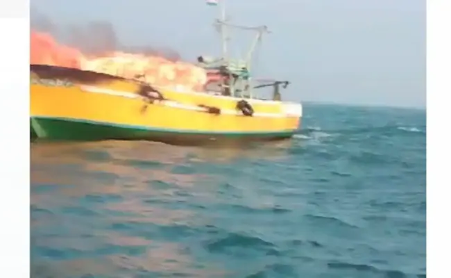
In a dramatic rescue operation near Kakinada in Andhra Pradesh, a fishing boat faced a massive fire today after a gas cylinder leak left the fishermen trapped. The quick actions of the fishermen, who promptly informed the patrolling Coast Guard personnel, averted a potential disaster.

Responding swiftly, the Coast Guard team successfully rescued all eleven fishermen, but the boat succumbed to the flames and ultimately sank at sea.

This incident comes on the heels of a recent tragedy in Visakhapatnam, where 30 fishing vessels were destroyed due to a careless act— a discarded cigarette butt on a boat triggered a massive fire at the jetty. The situation escalated to the point where an Indian Navy vessel had to be deployed to bring the fire under control, as conventional fire engines struggled to douse the flames.

The cost of each fishing boat, amounting to nearly 15 lakh, translates to an estimated overall loss in the range of ₹4-5 crores. These incidents underscore the importance of fire safety measures in the fishing industry, as well as the critical role played by emergency responders in ensuring the safety of those at sea.

01/12/2023 0 comment
0 FacebookTwitterPinterestEmail
SKUAST Kashmir Empowers Youth with Entrepreneurship Awareness on Fish Processing
NationalNews

SKUAST-Kashmir Empowers Youth with Entrepreneurship Awareness on Fish Processing

by Fishery News 01/12/2023
written by Fishery News

Sher-e-Kashmir University of Agricultural Sciences and Technology (SKUAST-K) recently orchestrated a daylong entrepreneurship awareness program at Degree College Banihal, focusing on the lucrative domain of fish processing. The event, titled ‘Fish Processing: An Entrepreneurial Opportunity for Livelihood and Income Generation,’ was conducted by SKUAST-K’s Division of Post Harvest Technology, Faculty of Fisheries, with sponsorship from the Ministry of Micro Small & Medium Enterprise.

The program’s core objective was to instill an entrepreneurial mindset among the youth, encouraging them to explore opportunities in fish processing and value addition. Dr. Inaytullah Chesti, Head of the Division of Aquaculture at SKUAST-K, delivered an insightful presentation on entrepreneurship possibilities in fish culture, emphasizing its significance. Dr. Faisal Rashid, the Program Coordinator, provided an overview of the fish value chain and various business models.

Prof Bashir Ahmad, Principal of Government Degree College Banihal, conveyed sincere gratitude to the Faculty of Fisheries at SKUAST-K for organizing this pivotal awareness program. He urged participants to capitalize on such initiatives to enhance their skills and avenues for sustainable livelihoods.

This initiative by SKUAST-K showcases a commitment to nurturing entrepreneurial spirit and empowering the youth with practical knowledge in a key sector, furthering the region’s economic development.

01/12/2023 0 comment
0 FacebookTwitterPinterestEmail
Innovative Sea Wall in China Includes Special Corridor for Crab Migration
NationalNews

Innovative Sea Wall in China Includes Special Corridor for Crab Migration

by Fishery News 01/12/2023
written by Fishery News

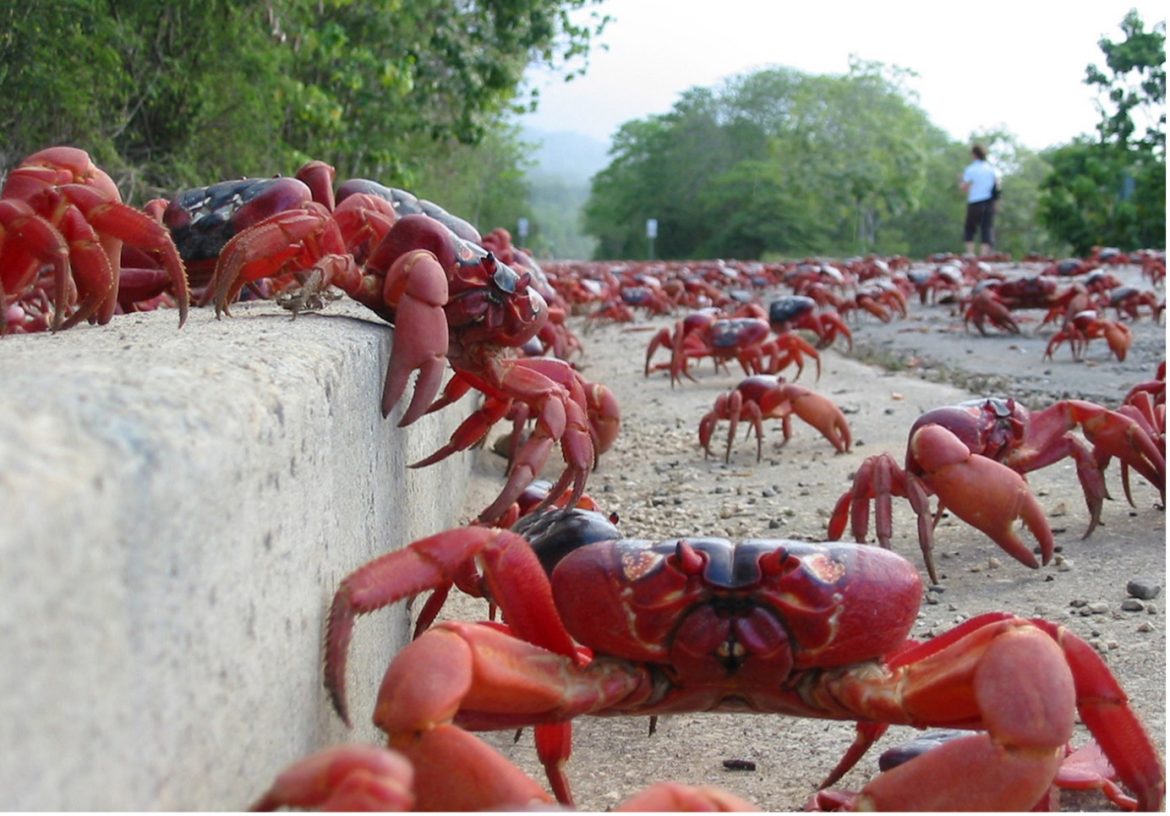
Haining City, Zhejiang Province — China is pioneering the construction of a unique sea wall in Haining city, Zhejiang province, featuring a groundbreaking biological migration corridor. This innovative corridor, designed by the Zhejiang Institute of Hydraulics and Estuary, is specially crafted to facilitate the migration of a local species of crab across the tidal barrier while maintaining the structure’s integrity.

The 1m wide and 80cm deep corridor boasts a carefully designed ascending walled passage, allowing crustaceans to traverse the sea wall effortlessly. This pioneering project marks a significant step for wildlife preservation and ecosystem balance in the region.

Mr. Xu Chao, leading the 14.4km sea wall construction project in the Jianshan section, highlighted the importance of incorporating such corridors for various animals. Future plans include constructing similar pathways for hedgehogs, rabbits, and other wildlife needing unhindered access between habitats.

Construction of the corridor, initiated in March, mimics the natural conditions required for the crabs’ migration. The zigzagging path employs pebbles as stepping stones, and the entire corridor is lined with bricks, with scattered soil, vegetation, and even rotting meat crumbs to provide sustenance for the crabs.

The Jianshan section along the Qiantang River boasts a silted, convex bank with abundant beach resources and natural plant communities, creating an ideal habitat for crabs. Previously, the lack of crossing corridors on the sea wall hindered ecological migration, leading to unfortunate incidents of crab fatalities due to exposure to the sun or being crushed.

This forward-thinking initiative ensures the safety and well-being of local wildlife, setting a precedent for future ecological projects in the region. The construction not only protects the diverse ecosystem but also addresses the unique needs of the inhabitants, fostering harmony between infrastructure development and environmental conservation.


01/12/2023 0 comment
0 FacebookTwitterPinterestEmail
EU Faces Allegations of Bribery in Indian Ocean Over Fishing Regulations
NewsInternational

EU Faces Allegations of Bribery in Indian Ocean Over Fishing Regulations

by Fishery News 30/11/2023
written by Fishery News

The European Union (EU) is being accused of leveraging sustainability funding to influence developing nations and impede efforts to regulate overfishing in the Indian Ocean. Environmentalists claim that the EU is misusing sustainability funding to thwart attempts by developing nations to implement fishing regulations, particularly those challenging European dominance in the lucrative tuna sector.

European vessels have historically held a dominant position in tuna fishing in the Indian Ocean, backed by proactive EU lobbying against measures aiming to limit their market share. This stance is increasingly at odds with the interests of Indian Ocean-bordering nations, which have expressed concerns about the potential collapse of fish stocks and announced plans to regulate overfishing-related technologies.

During a meeting of the Indian Ocean Tuna Commission (IOTC) in Kenya in February, 11 nations led by Indonesia agreed to restrict the use of fish-aggregating devices, a favoured method employed by European trawlers. Following the IOTC’s proposal, the EU has reportedly directed significant funds labelled as “sustainable fisheries partnerships” to nations supporting its position, potentially influencing them to reconsider their stance.

Critics argue that the EU is employing funding channels to exert pressure on developing countries, lobbying against proposed regulations under the guise of protecting the fishing industry and promoting environmentally friendly practices. Sustainable funds form a cornerstone of European fishing policy, allocating financial support to specific recipients.

An investigation by the sustainable fishing group BLOOM has uncovered allegations that the EU is using delegations and industrial lobbyists to stall overfishing regulations in East Africa. Brussels is also accused of engaging in direct industrial collusion to maintain its dominance in tuna fishing in the Indian Ocean. The EU’s diplomatic delegation to fishing negotiations in the region has been reportedly influenced by corporate lobbyists, according to a Guardian expose.

Frédéric Le Manach, the scientific director of BLOOM, condemns the EU’s actions, asserting that EU public authorities and industrial lobbies have merged into a body that not only harms marine ecosystems but also negatively impacts developing economies, labelling it as economic neocolonialism through the weaponization of sustainability funding.

African nations, in particular, are struggling to compete with European fishing fleets, with local fishermen finding it challenging to grow their fleets. Mohamoud Badrudiin, the director-general of Somalia’s fisheries ministry, highlights that diminishing tuna stocks pose an existential threat to the war-ravaged country.

Amid accusations of abuse of local fish stocks and bribery of local officials by European fishing vessels in Africa, a corruption scandal involving an Icelandic fishing company and Namibia further rocks the regional industry.

Brussels recently announced a new round of funding for sustainable fishing in the Indian Ocean, criticized by opponents as a cover for pursuing the EU’s strategic interests. European fishing lobbyists opposing the proposed reforms argue that there is no scientific consensus on the regulations.

As environmental funding increasingly becomes a part of EU foreign policy, the accusations against the EU in the Indian Ocean fishing dispute exemplify the complex intersection between purported environmentalism and real-world geopolitics. The situation underscores a growing assertiveness among developing nations in pursuing their own interests against Western influence.

30/11/2023 0 comment
0 FacebookTwitterPinterestEmail
Cyclone Michaung Alert Seven Coastal Districts in Odisha Brace for Impact
NationalNews

Cyclone Michaung Alert: Seven Coastal Districts in Odisha Brace for Impact

by Fishery News 30/11/2023
written by Fishery News

Bhubaneswar: As a low-pressure area looms over the South Andaman Sea, at least seven coastal districts in Odisha have been placed on high alert, anticipating its intensification into a cyclone named Michaung by December 2. Proposed by Myanmar, this marks the fourth tropical storm in the Bay of Bengal and the sixth in Indian seas this year.

In response to the potential threat, Special Relief Commissioner Satyabrata Sahoo has issued a warning to collectors of Balasore, Bhadrak, Kendrapara, Jagatsinghpur, Puri, Khurda, and Ganjam districts. The commissioner’s letter emphasizes the need for preparedness and proactive measures in light of the developing weather system.

Fishermen have been strongly advised against venturing into the sea from the morning of December 1. Sahoo’s letter underscores the importance of discouraging fishing activities during this period and urges those already at sea to return by the specified date. The directive has also been communicated to the state Fisheries and Animal Resources Department.

The exact trajectory of the impending cyclone will become clearer as the low-pressure area transforms into a depression, according to HR Biswas, the Director of Bhubaneswar Meteorological Centre. Anticipating the development, the letter warns of wind speeds reaching 40-50 kmph over the central Bay of Bengal from December 1, potentially increasing to 50-60 kmph on December 2.

As a precautionary measure, fishermen are instructed to stay ashore starting December 1 due to expected very rough sea conditions. Sahoo emphasizes the role of the Fisheries and Animal Resources Department in disseminating warning and alert messages to fishermen, ensuring regular communication about the return of boats and fishermen.

Moreover, residents in some areas, including Koraput, Rayagada, Gajapati, Ganjam, Puri, and Jagatsinghpur, should brace for light to moderate rains and thundershowers on December 3, according to Bhubaneswar Meteorological Centre forecasts.

With authorities closely monitoring the situation, the coastal districts are taking proactive steps to mitigate potential risks and ensure the safety of residents in the wake of Cyclone Michaung.

30/11/2023 0 comment
0 FacebookTwitterPinterestEmail
Newer Posts
Older Posts
  • Recent
  • Popular
  • ICAR-CIFT Patents Rapid DNA Biosensor for Black Tiger Shrimp Authentication

    07/08/2026
  • Minister Holds Review Meeting with Fisheries Cooperative Leaders

    07/08/2026
  • Dry Fish Demand Surges Following Formalin Ban

    07/08/2026
  • Rohu Breeding: A Complete Step-by-Step Guide to Successful Seed Production

    07/08/2026
  • 1

    BIGGEST FISH MARKETS IN INDIA

    07/09/2024
  • 2

    Trout Fish Stocking Initiative Enhances Fisheries and Tourism Potential in Shopian, Jammu and Kashmir

    17/12/2023
  • 3

    ICAR Scientists Crack the Breeding Code of Rare Himalayan Fish Channa andrao, Opening New Opportunities for Ornamental Fish Farming

    28/07/2026
  • 4

    Introducing Future Aquaculture Magazine: A New Voice Shaping the Future of Seafood

    13/02/2026

About Fishery News

FN Logo

Fishery.News is India’s leading digital media platform dedicated to fisheries, aquaculture, seafood, and marine industries. We deliver trusted news, expert insights, market intelligence, technology updates, research, government policies, and success stories that help fish farmers, shrimp farmers, seafood businesses, researchers, and industry professionals stay informed and grow sustainably

Categories

  • News
  • Aquaculture
  • Aquatic Health and Disease Management
  • Research and Innovation
  • Technology & Equipments

Social Networks

Facebook Twitter Instagram Linkedin Youtube
  • Facebook
  • Twitter
  • Instagram
  • Linkedin
  • Youtube

© 2026 Fishery.News – A BLIV Media Venture. All Rights Reserved.


Back To Top
Fishery News
  • E – Magazine
    • Aquaculture
    • Aqua Health & Disease Management
    • News
      • National
      • International
    • Farming
    • Research and Innovation
    • Sustainability
    • Technology & Equipments
    • This is Africa
    • Trade
  • Publications
  • Events
    • Expos
    • Trainings
    • Events by Month
  • Business Listings
    • List Your Business
    • Business Listings
    • Buy & Sell
    • Get Consultation
  • Employment
  • About Us
    • Founder
  • Contact