• E – Magazine
    • Aquaculture
    • Aqua Health & Disease Management
    • News
      • National
      • International
    • Farming
    • Research and Innovation
    • Sustainability
    • Technology & Equipments
    • This is Africa
    • Trade
  • Publications
  • Events
    • Expos
    • Trainings
    • Events by Month
  • Business Listings
    • List Your Business
    • Business Listings
    • Buy & Sell
    • Get Consultation
  • Employment
  • About Us
    • Founder
  • Contact
Fishery News
Home » Trade » Page 5
Category:

Trade

eFishery Successfully Completes Commercial Pilot in India Paving the Way for Global Expansion
Trade

eFishery Successfully Completes Commercial Pilot in India, Paving the Way for Global Expansion

by Fishery News 14/12/2023
written by Fishery News

eFishery, a leading aquaculture company based in Indonesia, has announced the successful completion of its commercial pilot project in India. The pilot, initiated in March of this year, covered over 1,000 acres of ponds, facilitating the distribution of more than 3,000 metric tons of feed. This accomplishment positions the firm to extend its presence to five new Indian states by the conclusion of 2024.

The pilot project not only signifies eFishery’s growing footprint in Southeast Asia but also marks the beginning of a broader international expansion strategy. The company adopts a methodical, one-country-at-a-time approach to ensure sustainability and assess impact. Following its success in India, eFishery is eyeing opportunities in one or two countries in Asia and Latin America within the next year, while maintaining its focus on exporting shrimp products globally.

CEO and co-founder of eFishery, Gibran Huzaifah, emphasized the strategic importance of India in the company’s overall growth plan. He stated, “Beginning with the Indian pilot project, I take pride in our global impact, unlocking the potential of aquaculture worldwide through Indonesian-made technology.” Huzaifah highlighted the positive impact of eFishery’s technology, resulting in a substantial increase in farmers’ profits.

The aquaculture industry in India, valued at over US$15 billion, has experienced an impressive >8% Compound Annual Growth Rate (CAGR) for the last three decades. Despite its vast potential, small and medium farmers face challenges such as poor market linkage, pricing issues, delayed payments, and a lack of technological support. eFishery aims to address these challenges by empowering farmers with a comprehensive ecosystem, including high-quality inputs, IoT technologies, production SOPs, and guaranteed market off-take.

Neil Wendover, eFishery’s International Expansion Lead, highlighted the company’s commitment to enhancing farmers’ profitability in every market it enters. He stated, “Our business objectives are centered on solving problems for the farmers and improving profitability through heightened productivity and efficiency. Rather than dividing the aquaculture pie, we are essentially doubling the size.”

Commencing operations in Andhra Pradesh, a state contributing to 35% of India’s total aquaculture production, eFishery has strategically grown its local team to 50 employees. The company has collaborated with government entities and input suppliers to navigate the unique challenges of the Indian aquaculture sector. Wendover expressed satisfaction with the progress, stating, “I am pleased that our strategic efforts have paid off, and we are on track to achieve a 10x growth, aligning with our international expansion business objective.”

14/12/2023 0 comment
0 FacebookTwitterPinterestEmail
Chile Formally Embraces WTO Agreement on Fisheries Subsidies to Boost Global Conservation Efforts
Trade

Chile Formally Embraces WTO Agreement on Fisheries Subsidies to Boost Global Conservation Efforts

by Fishery News 13/12/2023
written by Fishery News

Chile has formally embraced the Agreement on Fisheries Subsidies by depositing its instrument of acceptance on December 12. The Undersecretary of International Economic Relations, Claudia Sanhueza Riveros, presented the instrument to WTO Director-General Ngozi Okonjo-Iweala.

The move signifies Chile’s commitment to curbing harmful subsidies in the fishing industry, considering its prominent role as one of the world’s leading fishing nations.

Director-General Okonjo-Iweala welcomed Chile’s acceptance, recognizing the country’s significance in the fishing sector, which plays a vital role in job creation. She emphasized the importance of regulating fisheries subsidies to preserve marine resources and protect the livelihoods of those dependent on sustainable fisheries.

Sanhueza expressed Chile’s satisfaction with depositing the agreement on the elimination of industrial fisheries subsidies, emphasizing its importance for Pacific countries grappling with overexploitation of marine ecosystems. The agreement addresses global challenges related to environmental sustainability and ocean preservation.

Chile’s acceptance brings the total number of WTO members officially supporting the Agreement to 53, nearly half of the required number for it to become effective (two-thirds of WTO membership).

The Agreement on Fisheries Subsidies, adopted at the WTO’s 12th Ministerial Conference in June 2022, establishes binding multilateral rules to combat harmful subsidies, a major contributor to the depletion of global fish stocks. The accord takes into account the needs of developing and least-developed countries, offering a fund for technical assistance and capacity building to help them meet their obligations.

The agreement specifically outlaws support for illegal, unreported, and unregulated (IUU) fishing, prohibits subsidies for overfished stocks, and terminates support for fishing on the unregulated high seas.

Members also agreed to continue negotiations on unresolved issues, aiming to make recommendations by the 13th Ministerial Conference scheduled for February 2024 in Abu Dhabi, United Arab Emirates, with the goal of further enhancing the Agreement’s effectiveness.

13/12/2023 0 comment
0 FacebookTwitterPinterestEmail
Trans American Aquaculture Secures Exclusive Status as Key Broodstock Provider for Indian Shrimp Aquaculture
Trade

Trans American Aquaculture Secures Exclusive Status as Key Broodstock Provider for Indian Shrimp Aquaculture

by Fishery News 09/12/2023
written by Fishery News

Trans American Aquaculture (TAA) has achieved official recognition as the exclusive broodstock supplier for the thriving shrimp aquaculture industry in India. TAA, an industry trailblazer in shrimp genetics, earned this esteemed status due to its steadfast commitment to groundbreaking innovation, uncompromising quality, and a resolute dedication to sustainable practices within the realm of shrimp genetics.

With a storied legacy of excellence and a reputation for pioneering research, TAA has emerged as a global frontrunner in the competitive shrimp genetics market. The endorsement as the preferred broodstock provider for India signifies a pivotal achievement for the company, highlighting its steadfast support for the expansion and evolution of the aquaculture sector in the region.

TAA houses a cutting-edge broodstock centre at its facilities in Texas, exclusively devoted to shrimp genetics research and development. Utilizing advanced technologies and a team of seasoned geneticists, the company consistently delivers top-tier broodstock, enhancing the overall robustness, productivity, and disease resistance of shrimp populations.

Expressing his enthusiasm, Adam Thomas, CEO of TAA, remarked, “We are honoured and thrilled to be acknowledged as the preferred broodstock supplier for the dynamic aquaculture industry in India. Our gratitude extends to the Coastal Aquaculture Authority for placing their trust in our ability to provide world-class animals and genetics to our Indian partners.

This approval reaffirms our dedication to advancing shrimp genetics and contributing to the sustainable expansion of aquaculture in the region. We eagerly anticipate collaborating with our Indian partners to elevate shrimp farming practices and foster the overall prosperity of the industry.”

With its exclusive broodstock provider status, TAA is strategically positioned to furnish Indian aquaculture enterprises with access to superior genetics, enabling the optimization of production efficiency, increased yields, and the enduring viability of shrimp farming operations.

09/12/2023 0 comment
0 FacebookTwitterPinterestEmail
Ghana and Norway Collaborate to Boost Aquaculture Through Innovative Fish Feed Development
Trade

Ghana and Norway Collaborate to Boost Aquaculture Through Innovative Fish Feed Development

by Fishery News 07/12/2023
written by Fishery News

Ghana and Norway are joining forces to advance the development of on-farm fish feed using locally available ingredients, aligning with Ghana’s ambitious Aquaculture Development Plan. The plan sets a goal to elevate the country’s fish farming output from 89,376 tonnes to an impressive 211,697 tonnes by the end of 2028, reflecting a remarkable growth of 136%.

Mrs. Mavis Hawa Koomson, the Minister of Fisheries and Aquaculture Development, unveiled this vision during the 39th National Farmers’ Day Celebration in Tarkwa, Western Region. The plan underscores the importance of providing high-quality, affordable feed to all fish farmers, leveraging the rich sources of fish feed ingredients within the country.

The collaboration with Norway is anticipated to be pivotal in achieving this goal, offering innovative solutions to enhance the national aquaculture output. Mrs. Koomson emphasized that these efforts would significantly reduce the cost of producing cultured fish, ultimately boosting profit margins for fish farmers.

While locally produced and imported feeds are available, the expense often deters small pond farmers, leading them to resort to self-formulated feeds, noted Mrs. Koomson.

In addition to the collaboration with Norway, the government has taken positive steps, such as implementing trawl gear specifications to curb the catching of juvenile and small pelagic fish by industrial trawlers. To address the decline in fish populations and bridge the gap between demand and supply, a three-year moratorium on new canoe entrants has been imposed, subject to annual review, to tackle fleet overcapacity and relieve pressure on fisheries resources.

Ghana is also implementing comprehensive solutions, including the construction of the National Aquaculture Centre and Commercial Farms. These facilities will provide training in various aspects of aquaculture, including production, farm management, fish health, feed formulation, and processing.

Speaking on behalf of President Nana Addo Dankwa Akufo-Addo at the awards ceremony, Vice-President Alhaji Dr Bawumia outlined the government’s commitment to ensuring food security in the country. The event, held under the theme “Delivering Smart Solutions for Food Security and Resilience,” recognized the pivotal role of farmers and fishermen in the Ghanaian economy. Charity Akortia was named the 2023 National Best Farmer and received a one million Ghana Cedis cash prize, alongside other awardees in various categories.

07/12/2023 0 comment
0 FacebookTwitterPinterestEmail
Norway and Russia Conclude Fisheries Agreement for 2024 Amidst Ongoing Challenges and Collaborate on Innovative Fishing Initiatives
Trade

Norway and Russia Conclude Fisheries Agreement for 2024 Amidst Ongoing Challenges and Collaborate on Innovative Fishing Initiatives

by Fishery News 01/12/2023
written by Fishery News

Norway and Russia have successfully concluded a fisheries agreement for 2024, marking a crucial collaboration despite ongoing challenges related to the Ukraine War, according to the Norwegian Ministry of Trade, Industry, and Fisheries.

The agreement focuses on long-term and sustainable ocean management in the High North, playing a vital role in safeguarding the cod stock and other species in the Barents Sea. The accord includes notable aspects such as a substantial Capelin quota, a reduction in the Greenland halibut quota, and attention to the growing Atlantic redfish stock.

The total Northeast Arctic cod quota for 2024 is set at 453,427 tonnes, representing a 20% decrease from the previous year and the lowest since 2008. This decision aligns with recommendations from the Norwegian-Russian joint research group on Barents Sea fish stocks.

The researchers stress the importance of responsible management to ensure the sustainability of fisheries in the region. The agreement also covers quotas for haddock, Greenland halibut, Atlantic redfish, and capelin, with ongoing collaboration on management rules for key species. The negotiation process involved a bilateral research group from the Norwegian Institute of Marine Research and the Russian Federal Research Institute for Fisheries and Oceanography, as Russia was banned from the International Council for the Exploration of the Sea due to the conflict in Ukraine.

Despite tensions, fisheries cooperation remains a significant area of interaction between Norway and Russia. The ongoing port ban on Russian vessels has created additional complexities, but the two nations continue their commitment to managing joint fish stocks in the Barents Sea.

01/12/2023 0 comment
0 FacebookTwitterPinterestEmail
Skretting and Zooca Calanus Forge Partnership for Sustainable Aquaculture Nutrition
Trade

Skretting and Zooca Calanus Forge Partnership for Sustainable Aquaculture Nutrition

by Fishery News 01/12/2023
written by Fishery News

Global aquafeed leader, Skretting, has announced a groundbreaking collaboration with Zooca Calanus, a key player in sustainable marine ingredients. The partnership aims to revolutionize nutritional solutions for the aquaculture industry by tapping into Zooca Calanus’ expertise in harvesting and processing Calanus finmarchicus, a nutrient-rich small marine copepod.

Hassan Skoien, Skretting’s Director of Shrimp Innovation, expressed enthusiasm about the collaboration, stating, “We are excited to embark on this journey with Zooca Calanus. This partnership represents an important step in our mission to provide innovative and sustainable solutions to the aquaculture industry.”

Building on over 10 years of prior collaboration, Skretting and Zooca Calanus will work together to develop high-quality feeds enriched with Calanus-based ingredients and whole canned copepods. These nutritional solutions aim to enhance the health and growth of cultured aquatic species while promoting sustainability within the aquaculture sector.

The collaboration reflects a mutual commitment to improving the performance of LifeStart species in a sustainable and responsible manner. Skoien emphasized, “By combining Skretting’s expertise in aquafeed formulation with Zooca Calanus’ unique marine ingredients, we aim to set new standards for nutrition, health, and sustainability.”

Hogne Abrahamsen, CSO of Zooca Calanus Group, expressed pride in the partnership, stating, “We are proud to partner with Skretting, a company known for its commitment to quality and sustainability.” Abrahamsen highlighted the intention to harness the natural benefits of Calanus finmarchicus to create diets that not only enhance aquatic health but also contribute to the preservation of oceans and marine ecosystems.

Skretting emphasized that this collaboration aligns with both companies’ dedication to driving positive change in the aquaculture industry and their shared vision for a more sustainable future. The partnership aims to bring innovative products to market, leaving a lasting impact on the global aquaculture landscape. Eamonn O’Brien, Global Product Manager for LifeStart, emphasized the significance of incorporating Calanus into the diet, stating, “Calanus is an abundant resource. Incorporating it into our diet allows us to diversify marine ingredients and provides employment opportunities for local fishing communities during the off-season.”

01/12/2023 0 comment
0 FacebookTwitterPinterestEmail
India Aims for a USD 1.6 Billion Value Added Seafood Production Target by 2030
Trade

India Aims for a USD 1.6 Billion Value-Added Seafood Production Target by 2030

by Fishery News 30/11/2023
written by Fishery News

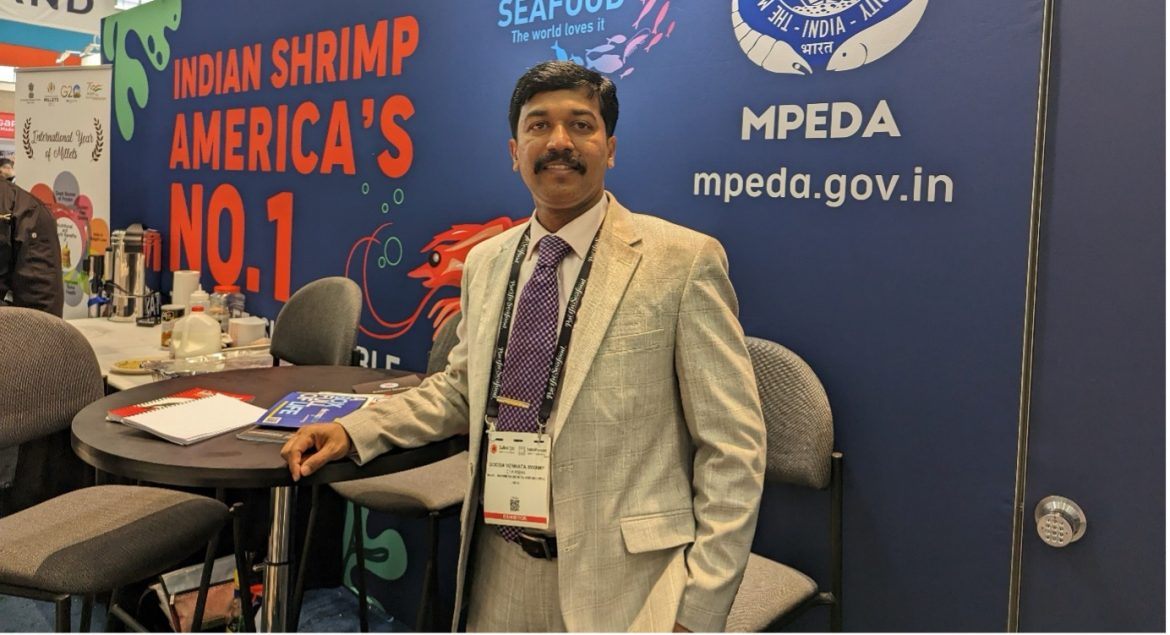
India’s Marine Products Exports Development Authority (MPEDA) is targeting a 20 percent value addition in seafood production by 2030. This initiative is driven by shifting consumer preferences and increasing competition from countries like Thailand, Vietnam, and China.

Currently, India’s seafood exports stand at USD 8.09 billion, with value-added products contributing around 10 percent, equivalent to USD 860 million. Recognizing the potential for higher profits in the U.S., E.U., Japan, and Asia, MPEDA aims to enhance the country’s share in the global market for value-added seafood, which is valued at USD 34 billion.

To achieve this ambitious goal, MPEDA has initiated a comprehensive development plan, encompassing capacity-building programs for the processing sector, worker training initiatives, and efforts to streamline bureaucratic processes and reduce transition costs. As part of the strategy, MPEDA recently conducted its first training session with Vietnamese seafood processing experts, providing valuable insights to 22 Indian seafood companies.

In response to industry demands, MPEDA is actively lobbying for the removal of tariffs on essential components of value-added seafood processing, such as breadcrumbs, sauces, pre-dust, coconut shavings, and plastic trays. Exporters have also requested an increase in India’s import duty exemption from 1 percent to 3 percent of the freight on board (FOB) value for value-added exports.

India, already a major player in the global seafood market as the third-largest fish producer, second-largest aquaculture producer, and fourth-largest seafood exporter, has set an ambitious target of reaching USD 14 billion in seafood exports by 2025.

Despite facing challenges, including political turbulence in the U.S., India’s largest export market, the country’s seafood industry remains resilient. MPEDA Chairman D V Swamy reported a 6 percent increase in seafood exports by volume in the current fiscal year, with a particular surge in August and September.

At the Global Fisheries Conference, India’s Minister of State for Fisheries, Animal Husbandry, and Dairying, L Murugan, affirmed the government’s commitment to supporting the industry’s transition to deep-sea fishing. Financial assistance of up to 60 percent for converting fishing boats, along with low- or no-interest loans through programs like India’s Blue Revolution and Pradhan Mantri Matsya Sampada Yojana, will facilitate this shift.

Murugan emphasized the need for technological advancements and research collaboration to harness the untapped potential of deep-sea fishing sustainably. World Bank Consultant Arthur Neiland estimated that India is utilizing only 12 percent of its exclusive economic zone’s tuna resources, indicating significant room for growth in this sector.

30/11/2023 0 comment
0 FacebookTwitterPinterestEmail
EU Council Unanimously Adopts Regulation on Autonomous Tariff Quotas for Fishery Products
Trade

EU Council Unanimously Adopts Regulation on Autonomous Tariff Quotas for Fishery Products

by Fishery News 29/11/2023
written by Fishery News

The EU Council has approved a regulation that opens autonomous tariff quotas (ATQs) for specific fishery products for the years 2024, 2025, and 2026. This regulation establishes rules for the management of these quotas, with the primary objective of ensuring the EU’s fish processing industry’s continued access to raw materials from non-EU countries at reduced or duty-free rates.

The adopted regulation takes into consideration the potential impact on EU suppliers, aiming to maintain fair competition between imported fishery products and those produced within the EU. The move is designed to safeguard the competitiveness of the EU’s fish processing industry while ensuring a stable supply of quality processed fishery products to European consumers at reasonable prices.

Luis Planas Puchades, the Spanish Minister for Agriculture, Fisheries, and Food, emphasized the importance of the regulation in providing legal certainty for all stakeholders involved. He stated, “With this regulation, we have safeguarded the competitiveness of our fish processing industry and the supply of European consumers with quality processed fishery products at reasonable prices.”

The adoption of autonomous tariff quotas has become essential as the EU has increasingly relied on imports to meet its demand for fishery products. This dependency arises either due to the absence of certain products within the EU or insufficient domestic production. The regulation covers specific fishery products for which duty will be either suspended or reduced for the period spanning 2024 to 2026, with specific duties and volumes allocated to each product.

In response to the strained relations between the EU and Russia, the Council has decided not to allow fishery products originating in Russia to benefit from duty-free treatment or most-favoured nation treatment. Belarusian fishery products have also been excluded from the regulation due to deteriorating relations and Belarus’ extensive support for the Russian war of aggression against Ukraine.

The regulation, set to enter into force on the twentieth day following its publication in the Official Journal of the European Union, will be applicable from January 1, 2024, to December 31, 2026. The management of these tariff quotas will be handled by the Commission and member states, operating on a first-come-first-served basis in accordance with the existing tariff-quota management system.


29/11/2023 0 comment
0 FacebookTwitterPinterestEmail
Indonesian Aquatech Startup Jala Secures 13.1 Million in Series A Funding for Platform Enhancement
Trade

Indonesian Aquatech Startup, Jala, Secures $13.1 Million in Series A Funding for Platform Enhancement

by Fishery News 28/11/2023
written by Fishery News

Indonesia-based aquatech startup, Jala, has successfully raised $13.1 million in a series A funding round led by Intudo Ventures, with participation from Sinar Mas Digital Ventures, and existing investors Mirova and Meloy Fund.

The newly secured funds will be utilized by Jala to enhance its platform, focusing on providing more comprehensive predictions for cultivation performance, water quality, and shrimp disease. Additionally, Jala aims to strengthen its automated data input capabilities for shrimp weight and feed data.

Founded in 2017 by Aryo Wiryawan and Liris Maduningtyas, Jala has developed an app that empowers farmers to record, monitor, and analyze their shrimp farm activities in real-time. The company boasts a significant impact, having monitored shrimp across more than 35,000 water bodies for its nearly 20,000 users.

Jala also offers ancillary services such as Jala Smartfarm, a credit scoring service facilitating farmers’ access to financing options, and Jala Harvest, a solution, aiding farmers in bringing their products to market.

28/11/2023 0 comment
0 FacebookTwitterPinterestEmail
Bangladesh Bank Introduces Stricter Guidelines for Cash Assistance on Shrimp and Fish Exports
Trade

Bangladesh Bank Introduces Stricter Guidelines for Cash Assistance on Shrimp and Fish Exports

by Fishery News 27/11/2023
written by Fishery News

The Bangladesh Bank (BB) has issued new regulations governing cash assistance for exports of frozen shrimp and other fish items. According to the latest directive, applications for cash assistance must now be accompanied by a certificate from the relevant trade organization.

The directive, issued by the Foreign Exchange Policy Department of the BB and communicated to all authorized dealers in foreign exchange transactions, emphasizes that companies seeking cash assistance for frozen shrimp and fish exports must be members of either the Bangladesh Frozen Foods Exporters Association (BFFEA) or the Bangladesh Marine Fisheries Association (BMFA). This membership requirement applies to companies involved in exporting frozen shrimp and other fish harvested and processed from the deep sea.

Effective immediately, applicants are mandated to submit certificates from either the BFFEA or the BMFA along with their cash assistance application forms. Furthermore, the exporting company must hold a valid license from the Department of Fisheries, certifying its status as a duly licensed fish exporting company.

These directives will be applicable to shipped goods from the date of the circular’s issuance, marking a significant shift in the requirements for cash assistance in the frozen shrimp and fish export sector.


27/11/2023 0 comment
0 FacebookTwitterPinterestEmail
Newer Posts
Older Posts
  • Recent
  • Popular
  • ICAR-CIFT Patents Rapid DNA Biosensor for Black Tiger Shrimp Authentication

    07/08/2026
  • Minister Holds Review Meeting with Fisheries Cooperative Leaders

    07/08/2026
  • Dry Fish Demand Surges Following Formalin Ban

    07/08/2026
  • Rohu Breeding: A Complete Step-by-Step Guide to Successful Seed Production

    07/08/2026
  • 1

    Trout Fish Stocking Initiative Enhances Fisheries and Tourism Potential in Shopian, Jammu and Kashmir

    17/12/2023
  • 2

    BIGGEST FISH MARKETS IN INDIA

    07/09/2024
  • 3

    ICAR Scientists Crack the Breeding Code of Rare Himalayan Fish Channa andrao, Opening New Opportunities for Ornamental Fish Farming

    28/07/2026
  • 4

    Introducing Future Aquaculture Magazine: A New Voice Shaping the Future of Seafood

    13/02/2026

About Fishery News

FN Logo

Fishery.News is India’s leading digital media platform dedicated to fisheries, aquaculture, seafood, and marine industries. We deliver trusted news, expert insights, market intelligence, technology updates, research, government policies, and success stories that help fish farmers, shrimp farmers, seafood businesses, researchers, and industry professionals stay informed and grow sustainably

Categories

  • News
  • Aquaculture
  • Aquatic Health and Disease Management
  • Research and Innovation
  • Technology & Equipments

Social Networks

Facebook Twitter Instagram Linkedin Youtube
  • Facebook
  • Twitter
  • Instagram
  • Linkedin
  • Youtube

© 2026 Fishery.News – A BLIV Media Venture. All Rights Reserved.


Back To Top
Fishery News
  • E – Magazine
    • Aquaculture
    • Aqua Health & Disease Management
    • News
      • National
      • International
    • Farming
    • Research and Innovation
    • Sustainability
    • Technology & Equipments
    • This is Africa
    • Trade
  • Publications
  • Events
    • Expos
    • Trainings
    • Events by Month
  • Business Listings
    • List Your Business
    • Business Listings
    • Buy & Sell
    • Get Consultation
  • Employment
  • About Us
    • Founder
  • Contact