
Bhubaneswar, Odisha: Is Artificial Intelligence (AI) going to reshape the future of fish and shrimp farming? India’s fisheries and aquaculture sector is increasingly looking towards advanced technologies, scientific research and sustainable farming practices to address emerging industry challenges.
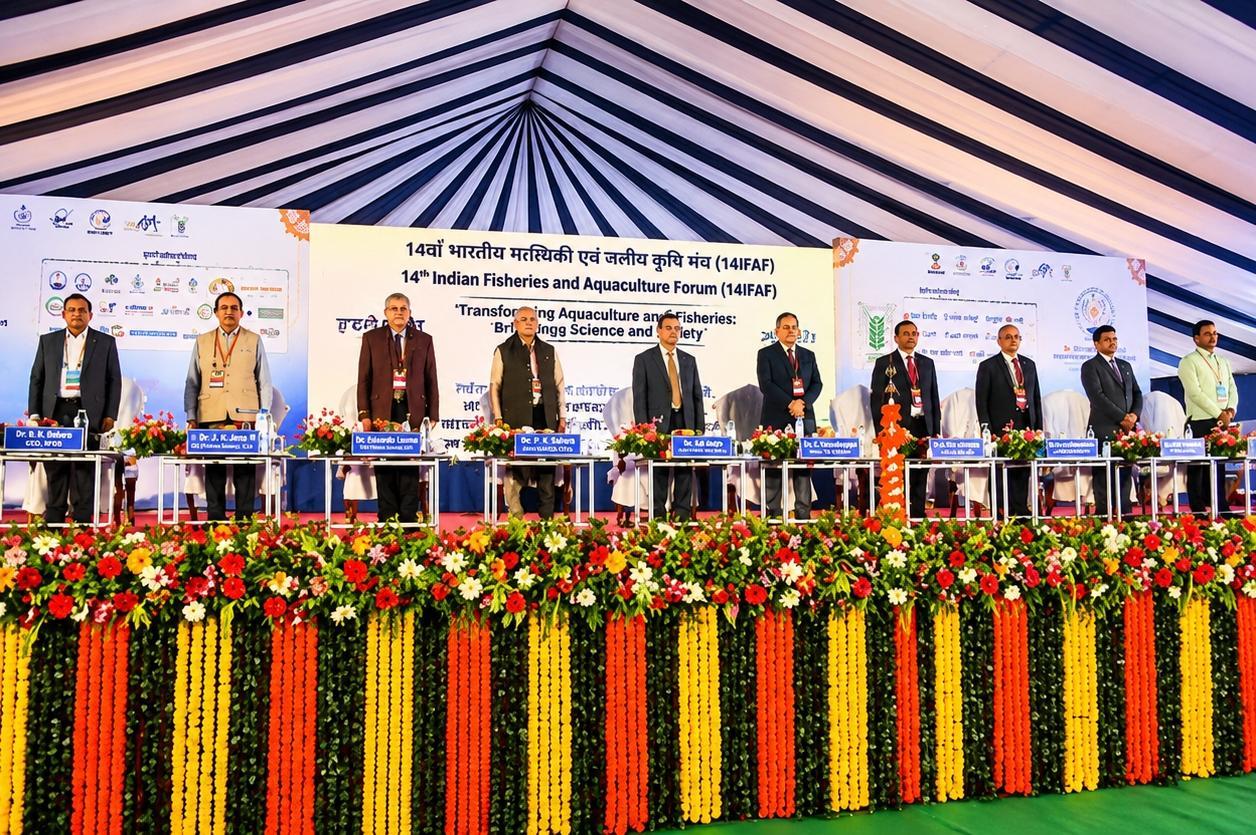
Bringing this vision into focus, the 14th Indian Fisheries and Aquaculture Forum (14IFAF) has brought together more than 1,000 delegates from India and six other countries to discuss innovations and future opportunities in fisheries and aquaculture.
The three-day international scientific conference is being held from November 18 to 20, 2026, at the ICAR–Central Institute of Freshwater Aquaculture (ICAR-CIFA), Bhubaneswar, Odisha.
Organised jointly by the Asian Fisheries Society, Indian Branch (AFSIB), ICAR-CIFA, the Department of Fisheries, Government of India, National Fisheries Development Board (NFDB), Fisheries and Animal Resources Development Department of Odisha, and the Association of Aquaculturists, the forum aims to strengthen scientific collaboration and promote technology-driven growth in the sector.
AI, Precision Aquaculture and Genome Editing Take Centre Stage
One of the major highlights of the 14IFAF 2026 is its focus on emerging technologies that could transform traditional aquaculture practices.
Artificial Intelligence (AI), genome editing, precision aquaculture, advanced breeding technologies and genetic improvement are among the key subjects being discussed during the conference.
These technologies are gaining importance as the aquaculture industry explores scientific approaches to improve farming efficiency, strengthen production systems and manage aquatic animal health.
The discussions also cover sustainable fisheries management, aquatic ecosystem conservation and scientific feed development, highlighting the need to balance increased production with environmental sustainability.
Global Experts Emphasise Innovation and Sustainable Growth
The conference was inaugurated by Dr Eduardo Leano, Director General of the Network of Aquaculture Centres in Asia-Pacific (NACA), Bangkok.
In his inaugural address, he highlighted the importance of accelerating innovation and adopting new technologies to transform the aquaculture sector.
Dr J. K. Jena, Deputy Director General (Fisheries Science), ICAR, emphasised the need for increased investment in advanced scientific research and the development of strong value chains.
Dr B. K. Behera, Chief Executive of NFDB, stressed strengthening fisheries cooperatives to improve the livelihoods of fishing communities.
Dr C. Vasudevappa, former Vice-Chancellor of NIFTEM, Kundli, Haryana, highlighted the importance of maintaining fish quality and improving consumer acceptance.
Several other prominent fisheries scientists and experts also shared their perspectives on research advancements, emerging priorities and future opportunities in the industry.
1,000+ Delegates from Seven Countries Participate
The international forum has attracted more than 1,000 participants from India and six other countries.
The participants include scientists, researchers, academicians, policymakers, entrepreneurs, industry representatives and farmers.
An exhibition featuring 20 agencies is also being organised alongside the conference. It showcases the latest technologies, innovations, products and services in fisheries and aquaculture.
The exhibition provides an opportunity for farmers, researchers and industry stakeholders to interact, explore technological solutions and build collaborative partnerships.
The inaugural ceremony also featured the release of scientific publications and the presentation of Fellow Awards by the Association of Aquaculturists to recognise the contributions of eminent fisheries scientists.
Stronger Science–Industry–Farmer Connections for the Future
A major objective of the forum is to bridge the gap between scientific research and practical farming applications.
Dr P. K. Sahoo, Director of ICAR-CIFA and Convener of the Conference, highlighted the importance of strengthening connections between scientific institutions, industries and farming communities.
He also emphasised international cooperation and the need to translate research findings into practical solutions that can benefit farmers.
For India’s growing aquaculture industry, stronger collaboration between researchers, technology developers and farmers is essential to address production challenges and promote sustainable farming practices.
With discussions centred on artificial intelligence, precision aquaculture, advanced breeding, feed development and aquatic animal health, the 14th Indian Fisheries and Aquaculture Forum highlights the growing role of science and innovation in shaping the future of fisheries.
The conference aims to identify actionable strategies for sustainable, inclusive and technology-driven growth of India’s fisheries and aquaculture sector.
