
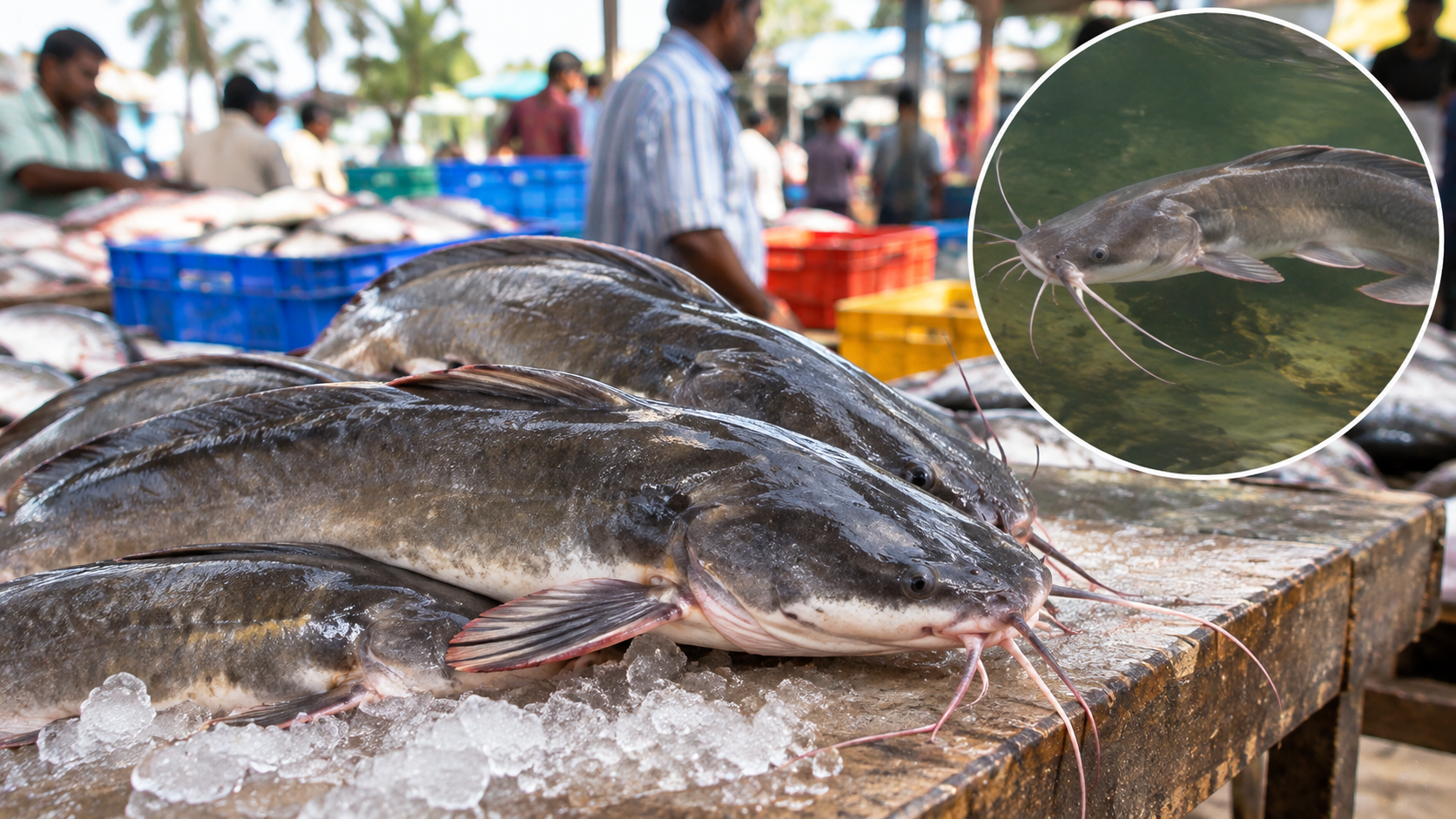
Despite being banned in India since 1997, Thai magur continues to appear openly in fish markets across the country. Recent seizures in Madhya Pradesh have once again raised questions about how this prohibited fish continues to enter the market and why authorities are struggling to stop its trade.
In recent incidents, authorities seized around 65 kg of Thai mangur in Rewa, approximately 50 kg in Rajgarh and nearly 8,000 fish at Jabalpur railway station. These incidents highlight the continuing challenge of enforcing the nationwide restrictions.
Why Was Thai Magur Banned in India?
Thai magur is the common name for African catfish (Clarias gariepinus), which entered India in 1993 through Thailand. It is different from India’s native mangur, known as desi mangur (Clarias batrachus).
The African catfish attracted interest because of its rapid growth, large size, ability to survive in different conditions and broad feeding habits. However, concerns about its environmental impact led the Central Government to examine the risks associated with introducing exotic aquatic species.
In 1997, a national committee recommended prohibiting its cultivation and preventing its spread. The concerns included the possibility of the fish escaping into natural water bodies, competing with native species, spreading diseases and potentially interbreeding with indigenous catfish populations.
How Does Thai Mangur Threaten Native Fish?
One of the biggest concerns is its feeding behaviour. Thai mangur is an omnivorous, bottom-feeding fish that consumes a wide variety of organisms, including smaller fish and other aquatic animals.
A 2011 study conducted in Kerala’s Vembanad Lake found that its diet could include microscopic aquatic organisms, fish, amphibians, reptiles and birds. This broad diet can create competition with native fish that depend on similar food resources.
Research at Karapuzha Reservoir also reported a 92% trophic niche overlap, indicating significant competition for shared resources.
Another concern is its ability to spread beyond farms. During floods, damaged pond embankments and inadequate drainage systems can allow farmed Thai mangur to escape into rivers, lakes and other natural water bodies.
Researchers have also raised concerns about possible hybridisation with native catfish species.
Are There Human Health Concerns?
A 2012 Indian study examined 324 Thai mangur samples collected from 27 rural fish-farming ponds. Researchers detected metal contamination in fish tissues, including aluminium, iron and lead.
The risk can depend on the conditions in which the fish is raised. Because Thai mangur consumes a wide variety of organic matter and aquatic organisms, it may accumulate contaminants when grown in polluted water bodies.
This raises concerns about the possible transfer of contaminants through the food chain. However, contamination findings from particular samples should not be treated as proof that every Thai mangur sold is contaminated.
Why Does It Continue to Reach Markets?
The continued sale of Thai mangur points to gaps in enforcement. Madhya Pradesh Fisheries Department officials have highlighted difficulties in taking legal action against sellers and breeders. In many cases, the existing process focuses on seizing and destroying the fish, while identifying the appropriate legal provisions for prosecution remains a challenge.
The National Green Tribunal reiterated restrictions on its cultivation in 2019. Legal provisions exist to act against violations, but procedural requirements, including the need for an official complaint from the concerned public authority in certain cases, can complicate prosecution.
Meanwhile, demand continues because Thai mangur is considered an inexpensive source of protein.
The Need for Stronger Enforcement
Seizing fish from markets alone may not stop the trade if breeding, transportation and supply networks continue operating. Effective enforcement requires monitoring farms, preventing escapes into natural water bodies, tracking supply chains and taking appropriate action against those violating the restrictions.
Nearly three decades after the ban, Thai mangur’s continued presence in Indian markets highlights the need for stronger coordination between fisheries departments, enforcement agencies and local authorities to protect native aquatic biodiversity.
