• E – Magazine
    • Aquaculture
    • Aqua Health & Disease Management
    • News
      • National
      • International
    • Farming
    • Research and Innovation
    • Sustainability
    • Technology & Equipments
    • This is Africa
    • Trade
  • Publications
  • Events
    • Expos
    • Trainings
    • Events by Month
  • Business Listings
    • List Your Business
    • Business Listings
    • Buy & Sell
    • Get Consultation
  • Employment
  • About Us
    • Founder
  • Contact
Fishery News
Home » Farming » Page 11
Category:

Farming

Keralas Vidyatheeram Scheme Empowers Financially Weaker Fishermens Families to Realize Medical Dreams
NationalFarmingNews

Kerala’s ‘Vidyatheeram’ Scheme Empowers Financially Weaker Fishermen’s Families to Realize Medical Dreams

by Fishery News 28/09/2023
written by Fishery News

In a heartwarming success story, Kerala’s ‘Vidyatheeram’ scheme, initiated by the state’s fisheries department in 2015, has been instrumental in enabling financially disadvantaged students from fishing communities to achieve their dreams of pursuing medical careers. The scheme provides crucial financial assistance to deserving students, helping them attend specialized coaching classes at renowned coaching centers and gain admission to competitive medical entrance exams.

Since its inception, ‘Vidyatheeram’ has benefited an impressive 530 students from fishermen families, with 178 of them successfully securing admission to various medical courses, including 75 into the prestigious MBBS program. This year, the scheme continues to make a significant impact, offering much-needed support to aspiring students, according to sources within the fisheries department.

For many students hailing from fishermen families, gaining admission to medical colleges seemed like an unattainable dream due to the intense competition and financial constraints. Dr. Riya Sivaprasad, who hails from Puthiyappa in Kozhikode and gained admission to a government medical college in Alappuzha in 2016 through the ‘Vidyatheeram’ scheme, reflects on the transformative effect of the program. She is now a practicing doctor and is immensely grateful for the assistance provided by the scheme.

Faseela, another success story from a fishermen family in Vizhinjam, Thiruvananthapuram, highlights the significance of ‘Vidyatheeram.’ She completed her MBBS in 2022 and acknowledges that without the scheme’s support, many families in her community would not even dare to dream of affording the high fees and expenses associated with coaching classes.

The fisheries department employs various criteria, primarily based on merit, to select candidates eligible for the ‘Vidyatheeram’ scheme. Once chosen, students receive financial aid directly from the government to cover the fees at coaching centers, making their pursuit of a medical education more accessible and equitable.


The ‘Vidyatheeram’ scheme is not just about empowering individuals; it’s a beacon of hope for coastal communities in Kerala, bridging the gap between dreams and reality for talented students who aspire to become medical professionals.

28/09/2023 0 comment
0 FacebookTwitterPinterestEmail
Breakthrough in Indian Pompano Cultivation in Karnatakas Coastal Waters
FarmingNationalNews

Breakthrough in Indian Pompano Cultivation in Karnataka’s Coastal Waters

by Fishery News 19/09/2023
written by Fishery News

Scientists at the Mangalore Regional Centre of ICAR-Central Marine Fisheries Research Institute have achieved a significant milestone by successfully cultivating Indian Pompano (Trachinotus mookalee) for the first time in Karnataka. This accomplishment follows a decade-long journey that began with the introduction of cage culture in the state’s coastal waters in 2009-10.

The innovative cage culture technique, which has gained popularity, now boasts around 800-900 cages installed in estuarine waters along the Karnataka coast. The success of this method attracted financial support from the Department of Fisheries, Karnataka, National Fisheries Development Board (NFDB), and other organizations, benefiting over 500 families engaged in the sector.

While seabass, red snapper, and snubnose pompano were successfully reared in these cages over the years, the cultivation of Indian Pompano marks a significant achievement. The inaugural farming project took place in Udupi district’s Swarna estuary, Paduthonse village, under the Scheduled Caste Sub Plan program (SCSP), focusing on inclusive growth and livelihood opportunities for marginalized communities.

Beneficiaries of the SCSP program received comprehensive training on various aspects of cage culture, and Indian Pompano seeds were procured from the marine finfish hatchery of the Vishakhapatnam Regional Centre of ICAR-CMFRI. In November 2022, 4,000 seeds were stocked in two fabricated cages, and after a five-month grow-out period, the Indian Pompano was successfully harvested in batches between June 2 and June 26. The impressive results included an average growth of 400-450 grams, a total harvest of 1,300 kg of pompano, and an exceptional survival rate of 90%.

The beneficiaries sold the harvested fish locally, fetching prices ranging from Rs 450 to Rs. 490 per kg. This successful cultivation not only demonstrates the rapid growth rate and favorable market demand for Indian Pompano but also its ability to reach the preferred table size within a short period of 5-6 months. The research program was led by Dr. A P Dineshbabu and his team of scientists, highlighting the potential for innovative aquaculture practices in the region.

19/09/2023 0 comment
0 FacebookTwitterPinterestEmail
Telanganas Ambitious Move
FarmingNationalNews

Telangana’s Ambitious Move

by Fishery News 17/09/2023
written by Fishery News

Telangana is poised to bring about a sea change in its fisheries sector with the introduction of Special Fisheries Development Zones (SFDZs). Mirroring the success of Special Economic Zones (SEZs) that have spurred industrial growth, these SFDZs aim to augment fisheries wealth and provide lucrative employment prospects for fishermen.

The State Fisheries Department, in partnership with the Fisheries Federation, is spearheading this transformative initiative. These SFDZs will be established by harnessing the potential of the flood canals from various irrigation projects.

In its inaugural phase, the spotlight falls on the Sriramsagar-Mid Manair flood canal, spanning an impressive 122 kilometers across four zones. The pilot project has selected a 20-kilometer stretch, commencing from Shanagar in the Ramadugu mandal of Karimnagar district and culminating at Varadavelli village in the Boinapalli mandal of Rajanna-Sircilla district.

Telangana State Fishermen Cooperative Societies Federation chairman Pittala Ravinder highlighted the suitability of these canals for fish production due to their consistent water flow. As a land-locked state, Telangana boasts a conducive environment for fish cultivation, thanks to the presence of canals and other water bodies.

The potential impact of this initiative is substantial, with an expected employment surge benefiting approximately 12,000 fishermen in Nirmal, Jagitial, Karimnagar, and Rajanna-Sircilla districts. The projected fishery wealth generated from this pioneering endeavor is estimated at a staggering Rs 300 crores. Once the pilot project proves successful, the SFDZ concept will expand to encompass the Kakatiya canal, further propelling the growth of the fisheries sector.

Telangana’s endeavor to establish fish farming in the Sriramsagar canal represents a historic milestone, positioning it as the first state in the country to undertake such a pioneering initiative. This bold decision follows the successful experiment by the Central Inland Fisheries Research Institute (CIFRI) in Kolkata, which demonstrated the feasibility of fish farming in a flood canal in the Sundarban region of Odisha.

Moreover, the efforts of Industries Minister KT Rama Rao to transform the Mid Manair project into a fisheries hub have garnered significant attention, with US-based company ‘FishIn’ pledging a substantial investment of Rs 1,000 crore. The ongoing work on fish cultivation using cage culture, combined with the addition of SFDZs, promises to propel the fisheries sector’s development in the region to unprecedented heights.

17/09/2023 0 comment
0 FacebookTwitterPinterestEmail
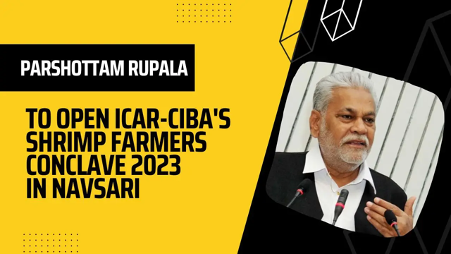
Union Minister to Inaugurate Second ICAR CIBA Shrimp Farmers Conclave in Navsari
FarmingNationalNews

Union Minister to Inaugurate Second ICAR-CIBA Shrimp Farmers Conclave in Navsari

by Fishery News 13/09/2023
written by Fishery News

The Second Edition of ICAR-CIBA’s Shrimp Farmers Conclave-2023 is set to commence on September 14, 2023, in Navsari, Gujarat. The event will be inaugurated by Union Minister of Fisheries, Animal Husbandry, and Dairying, Parshottam Rupala, and is expected to witness the participation of prominent dignitaries, including the Minister of Agriculture, Animal Husbandry, Cow Breeding, Fisheries, and Rural Development for the Government of Gujarat, Raghavji bhai Hansrajbhai Patel, Member of Parliament, Navsari, C.R. Patil, and Member of Gujarat Legislative Assembly, R.C. Patel.

Key highlights of the event include the signing of Memorandums of Understanding (MoUs) between CIBA and the National Fisheries Development Board (NFDB), as well as CIBA and the Fish Farmers Producer Organization (FFPO) of Gujarat. These agreements aim to implement crop insurance for aquaculture, with premium subsidies from NFDB, and provide technology support to FFPO. Additionally, the launch of a shrimp crop insurance product by the Agriculture Insurance Company of India Limited is anticipated

The conclave will feature technical sessions addressing various aspects of the shrimp industry, including the current shrimp export scenario, disease prevention and management, crop insurance for shrimp farming, the development of Genetically Improved Indian White Shrimp (Penaeus indicus), and diversification of brackish water aquaculture with Mudcrab and Asian Seabass fish.

An exhibition showcasing live displays of shrimps and fishes, book releases, and the distribution of fish seeds to farmers are also on the agenda. A special session on Aquaculture Crop Insurance and a panel discussion with inter-departmental officials will focus on critical topics such as shrimp seed quality, shrimp pricing, diversification, and electricity tariffs.

The event is organized by the scientific team of the Navsari-Gujarat Regional Centre of ICAR-Central Institute of Brackish water Aquaculture (ICAR-CIBA), Chennai, under the leadership of Dr. Kuldeep K Lal, Director, ICAR-CIBA.

Notable participants include Smt. Grija Subramanian, Chairman cum Managing Director of Agricultural Insurance Company Ltd., Dr. J.K. Jena, Deputy Director General (Fisheries) of ICAR, Dr. Z.P. Patel, Vice-Chancellor of Navsari Agricultural University, Dr. V. Kripa, Member Secretary of the Coastal Aquaculture Authority, Nitin Sangwan, Chief Executive of the National Fisheries Development Board, and Dr. L. Narashima Murthy, Commissioner of Fisheries for the Government of Gujarat.

The conclave expects a large turnout of over 300 aqua farmers, stakeholders from the Gujarat Aqua Feed Dealers Association, Gujarat Aqua Farmers Association, beneficiaries of SC/ST schemes, public representatives, development department officials, technicians, bankers, insurance officials, faculty, and students.

13/09/2023 0 comment
0 FacebookTwitterPinterestEmail
Breakthrough Reverse Pressure Sterilization May Reduce Allergenicity of Shrimp
AquacultureAquatic Health and Disease ManagementFarming

Breakthrough: Reverse-Pressure Sterilization May Reduce Allergenicity of Shrimp

by Fishery News 06/09/2023
written by Fishery News

A groundbreaking study published in the Journal of Agricultural and Food Chemistry has revealed a potential game-changer for those with shrimp allergies. Researchers at Dalian Polytechnic University’s National Engineering Research Center of Seafood conducted experiments using reverse-pressure sterilization on shrimp, exposing them to high pressure and steam. The result: a less-allergenic roasted shrimp product.

When mice with shellfish-consumption sensitivities were fed shrimp treated with reverse-pressure sterilization, they experienced milder allergic reactions and less organ damage compared to those fed raw or conventionally roasted shrimp. The study, supported by the American Chemical Society, highlights the possibility of using this technique to reduce allergenicity in other foods.

This breakthrough holds promise for addressing food allergies, potentially leading to the development of hypoallergenic versions of commonly allergenic foods like dairy, nuts, wheat, and various seafood. It sheds light on how the human immune system responds to foods it mistakenly perceives as threats

Food allergies affect millions of people, resulting in thousands of emergency department visits and hundreds of deaths annually in the United States alone. Reverse-pressure sterilization alters problematic proteins in a way that prevents overreactions from the immune system, potentially offering a safer future for allergy sufferers.

While roasting can achieve similar results in some foods, reverse-pressure sterilization appears to be particularly effective in inhibiting antibodies from latching onto allergenic proteins. This innovative technique may pave the way for a new era of hypoallergenic food products, offering relief to those living with food allergies.

06/09/2023 0 comment
0 FacebookTwitterPinterestEmail
India Launches Seaweed Mission to Transform Coastal Cultivation and Boost Production
FarmingNews

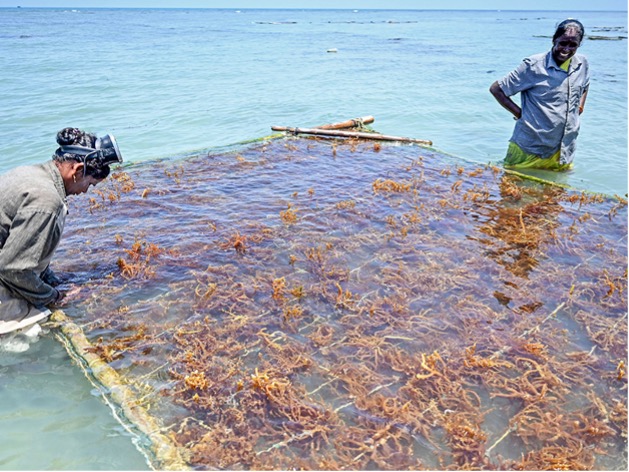
India Launches Seaweed Mission to Transform Coastal Cultivation and Boost Production

by Fishery News 06/09/2023
written by Fishery News

India has unveiled an ambitious Seaweed Mission to revamp and modernize its small-scale seaweed farming, aligning with the global surge of interest in this climate-friendly and nutritionally rich underwater crop. The mission aims to span the nation’s extensive 7,500-km peninsular coastline and elevate national seaweed production from the current 30,000 tonnes to a staggering 11 million tonnes by 2025.

Veeragurunathan, a principal scientist at the government-run Marine Algal Research Station near Mandapam, highlighted the enormity of the task, stating, “India is only producing 0.02 per cent of the world’s total seaweed.” The plan envisions all nine maritime states participating in cultivation, potentially propelling India’s role in the global seaweed market to double digits.

India’s multifaceted strategy encompasses the establishment of a seaweed park in Tamil Nadu for processing wet and dried seaweed, the creation of model demonstration farms and seaweed nurseries, and the development of seaweed-based recipes tailored to the Indian palate.

While carbohydrate-rich grains remain the foundation of food security in India, seaweed’s nutritional benefits, versatile uses in processed foods, and sustainability make it a compelling dietary addition. Unlike traditional crops, seaweed can thrive without consuming additional land or freshwater resources, a crucial advantage in the face of climate change-related challenges such as heatwaves, droughts, and floods.

This growing interest in seaweed production aligns with global efforts to strike a balance between nature preservation and agriculture while implementing climate-smart dietary changes. The seaweed market, valued at approximately $17.85 billion in 2021, is projected to witness a 10 per cent annual growth as coastal nations like India work to scale up production.

The World Bank’s recent report highlights the potential for 10 emerging seaweed markets, spanning applications from animal feed to yield-boosting biostimulants, with an estimated growth potential of up to $11.8 billion by 2030. This is partly due to seaweed’s ability to sequester carbon and enhance marine biodiversity.

Beyond its economic potential, seaweed also plays a vital role in providing food for marine animals and channeling nutrients from seawater into the food system, underscoring its significance in the broader ecosystem.

As India’s coastal regions grapple with rising sea levels and erosion, coconut farmers are increasingly turning to seaweed cultivation, accentuating the urgency of professionalizing the sector and realizing its vast potential.

06/09/2023 0 comment
0 FacebookTwitterPinterestEmail
AquacultureAquatic Health and Disease ManagementFarming

A Detailed Walkthrough of Diseases and Treatments in Fish Farming

by Fishery News 06/09/2023
written by Fishery News

Aquaculture, the cultivation of aquatic organisms like fish, is a fascinating and economically significant industry that plays a pivotal role in meeting the world’s growing demand for seafood. However, just like any other form of agriculture, fish farming faces its fair share of challenges, and one of the most critical aspects is the health of the fish population. Fish are susceptible to a variety of diseases, infections, and parasites that can severely impact their growth and overall well-being. In this context, understanding different treatment methods, such as dip treatments and bath treatments, becomes paramount for fish farmers and aquaculture enthusiasts alike. In this guide, we will explore these treatment techniques, their applications, and the importance of precise execution in maintaining the health and vitality of your aquatic companions.

Bacterial Infections

  • Condition: Fin and Tail Erosion
  • Causative Agents: Aeromonas, Pseudomonas, and Vibrio
  • Indications: Appearance of a white border on fin margins; fragility and breakage of fin rays.
  • Remedies: Submerge the affected fish in a solution containing 500ppm copper sulfate for a brief 1-minute duration.


  • Condition: Ulcerative Lesions
  • Causative Agents: Aeromonas hydrophilla and Pseudomonas
  • Indications: Presence of open sores or ulcers on the body.
  • Remedies: Conduct a 1-minute immersion treatment using a 1:2000 copper sulfate solution for 3-4 days.


  • Condition: Dropsy
  • Causative Agent: Pseudomonas punctata
  • Indications: Accumulation of fluid within the body cavity; protruding scales; exophthalmic condition.
  • Remedies: Administer a 2-minute dip treatment in a 5ppm potassium permanganate solution.


  • Condition: Eye Ailment
  • Causative Agent: Aeromonas liquifaciens
  • Indications: Vascularization of the cornea followed by opacity and decay of the eyeball.
  • Remedies: Apply Chloromycetin (8-10 mg/liter) bath for 1 hour over 2-3 days.

Fungal Infections

  • Condition: Water Mold Infection (Saprolegniasis)
  • Causative Agent: Saprolegnia parasitica
  • Indications: Fish succumbs after skin ulceration or exfoliation, leading to hemorrhaging, blindness, and the emergence of white hair-like growths in affected areas.
  • Remedies: Submerge the fish for 3 seconds in a 1:10,000 malachite green solution or for 5-10 minutes in a 3% common salt solution or potassium permanganate solution.

Protozoan Diseases

  • Condition: Ichthyophthiriasis (White-Spot Disease)
  • Causative Agent: Ichthyophthirius multifilis
  • Indications: Small whitish cysts approximately 1mm in diameter on the skin, gills, and fins.
  • Remedies: Conduct a 5-day bath treatment in a 2ppm methylene blue solution, or use an hourly dip treatment in a 1:5,000 formalin solution for 7-10 days.


  • Condition: Boil Disease
  • Causative Agent: Myxobolus pfeifferi
  • Indications: Development of large boils ranging from the size of a nut to that of a hen’s egg on various parts of the body.
  • Remedies: Bathe the fish in a 3% common salt solution or a 1:2,500 formalin solution for 10 minutes.


  • Condition: Whirling Disease
  • Causative Agent: Myxobolus cerebralis
  • Indications: Caudal bending, deformities in the oral region, and darkening of the tail region.
  • Remedies: Eradicate all infected fish by applying quicklime (pond disinfectant) at a rate of 2 tons per hectare.


  • Condition: Costiasis
  • Causative Agent: Costia necatrix
  • Indications: Bluish coating on the skin, irregular patches of lesions.
  • Remedies: Perform a bath treatment in a 3% common salt solution or a 1:2,500 formalin solution for 10 minutes.

Trematode Infections

  • Condition: Gyrodactylosis
  • Causative Agent: Gyrodactylus sp.
  • Indications: Fading colors, drooping scales, and skin peeling.
  • Remedies: Conduct a dip treatment in a 5% common salt solution or a 1:5,000 formalin solution for 5 minutes.


  • Condition: Dactylogyrosis
  • Causative Agent: Dactylogyrus sp.
  • Indications: Fading colors, drooping scales, and skin peeling.
  • Remedies: Perform a dip treatment in a 5% common salt solution or a 1:5,000 formalin solution for 5 minutes.


  • Condition: Diplostomiasis (Black Spot Disease)
  • Causative Agent: Diplostomulum sp.
  • Indications: Small black nodules approximately 1-5mm in diameter in affected areas.
  • Remedies: Administer a dip treatment in a 3:1,00,000 picric acid solution for 1 hour or Di-n-butyl tin oxide at a rate of 250mg/kg fish.

Cestode Infections

  • Condition: Ligulosis
  • Causative Agent: Ligula sp.
  • Indications: Fish appears dull and sickly, with parts of the alimentary canal swollen or completely obstructed by cestode cysts or worms.
  • Remedies: Conduct a dip treatment in a 3:1,00,000 picric acid solution for 1 hour or Di-n-butyl tin oxide at a rate of 250mg/kg fish.

Nematode Infections

  • Causative Agents: Philometra sp., Camallanus sp.
  • Indications: Fish looks dull and sickly, with parts of the alimentary canal swollen or entirely obstructed by roundworms.
  • Remedies: Administer a dip treatment in a 3:1,00,000 picric acid solution for 1 hour or Di-n-butyl tin oxide at a rate of 250mg/kg fish.

Acanthocephala Infections

  • Causative Agent: Acanthogyrus sp.
  • Indications: Presence of yellowish-white fibro epithelioma on the lips, skin, and fins of the fish.
  • Remedies: Treatment with quicklime.

Hirudinea Infections

  • Causative Agent: Hemiclepsis sp.
  • Indications: Abnormal fish movements due to irritation as the parasites feed on the host’s blood.
  • Remedies: Conduct a dip treatment using a 1:100,000 solution of glacial acetic acid.

Copepod Infestations

  • Causative Agents: Argulus sp., Ergasilus sp., Lernea sp., Caligus sp., Pseudocycnus sp., Clavellisa sp.
  • Indications: Loss of scales, the presence of red spots, and damage to the gills.
  • Remedies: Treatment involving a half-hour immersion in a 500ppm formalin solution, mechanical removal using forceps followed by a bath in a weak potassium permanganate solution for 2-3 minutes, a bath in a 1:1,000 glacial acetic acid solution for 5 minutes, and subsequently, a bath in a 1% common salt solution for 1 hour. Pond disinfection can be achieved by applying lindane at a rate of 8ml per 1,000 liters.

Viral Infections

  • Disease: Lymphocystis
  • Causative Agent: Lymphocystis spp. (A DNA Iridovirus)
  • Indications: Lethargy and potential effects on balance and swimming control, especially along the lateral line.
  • Remedies: Promote frequent water changes and reduce ammonia and nitrite levels to alleviate stress, allowing the fish to combat the infection and shrink tumors naturally.


  • Disease: Infectious Pancreatic Necrosis (IPN)
  • Causative Agent: IPN virus
  • Indications: Darkening of color, tail-chasing, and spiral swimming behavior.
  • Remedies: Ensure a clean water supply and provide optimal nutrition.

Other Diseases

Gas Bubble Disease

Gas bubble disease may occur due to nitrogen saturation in water, often resulting from rapid temperature changes. Fish fry, in particular, can experience high mortality rates. Affected fish may exhibit an angled swimming posture with their heads pointing downward. Symptoms may also include the presence of bubbles beneath the skin, on fins, around the eyes, in the stomach and intestine, or in blood capillaries. Remedies include agitating the water to reduce nitrogen saturation or transferring affected fish to other ponds. Supersaturated levels of oxygen have also been linked to gas bubble disease in fish.

Vitamin Deficiencies

Symptoms of vitamin deficiencies in fish can include scoliosis (curved spine), reduced growth, and anorexia (lack or loss of appetite). Signs of these deficiencies may manifest as low fish weight and lethargy.

Varieties of Treatment:

Immersion Treatment:

In the immersion treatment, fish are exposed to a relatively concentrated chemical solution for a brief duration, typically less than one minute. Here’s the procedure:

  1. Prepare the chemical solution in a suitable container like a bucket, half-drum, or trough.
  2. Place the fish or a group of fish in a specialized dip net.
  3. Submerge the fish into the solution for the specified time frame
  4. Immediately after treatment, return the fish to well-oxygenated water.

Bathing Treatment:

During bath treatment, fish are immersed in a diluted solution of the chemical for an extended period, which can range from a few minutes to up to one hour for short baths or even 24 to 48 hours for longer baths, especially in cases of very low chemical concentrations. Follow these steps:

(a) Short Bath:

For a short bath, mix the required amount of chemical with water in a plastic watering can. Lower the water level in the tank or circular enclosure by one-third to one-half. Gradually reintroduce water while evenly distributing the previously mixed chemical over the entire water surface. If necessary, stir the water with a clean broom, an agitator, or an aerator to ensure thorough dispersion of the chemical throughout the water column. Once the water returns to its usual level, treat for the recommended duration. Afterward, drain two-thirds of the water while resuming water inflow.

(b) Long Bath:

In the case of a long bath, halt the water inflow into the tank or pond. Reduce the water volume by draining some water, ensuring it’s at an appropriate level for the stock density and water temperature conditions. Calculate the water volume and determine the necessary chemical quantity. Dilute this chemical amount considerably, often at least 100 times, by mixing it in several plastic containers before application. Add this diluted solution to the tank or pond, making an effort to evenly disperse it over the entire water surface and thoroughly incorporate it with the pond water. Treat for the recommended duration. Subsequently, reopen the water inflow and elevate the water level to its normal state. If required, repeat the draining and refilling process.

In conclusion, proper diagnosis and timely application of the appropriate treatments are crucial for maintaining the health and well-being of your fish. Whether it’s through dip treatments or bath treatments, the care you provide to address various infections and diseases can make a significant difference in the vitality of your aquatic companions. Always remember to follow recommended procedures and guidelines to ensure the best outcomes for your fish population.

06/09/2023 0 comment
0 FacebookTwitterPinterestEmail
FarmingNews

Kisan Credit Cards: A Boon to Aquafarmers

by Fishery News 05/09/2023
written by Fishery News

Agriculture, including aquaculture, is the backbone of India’s economy, providing livelihoods to millions of rural families. In recent years, the government has introduced various schemes to uplift and empower farmers, and the Kisan Credit Card (KCC) is a pivotal instrument in this endeavor. This article delves into what a Kisan Credit Card is, its significance for aqua farmers, eligibility criteria, age considerations, and the step-by-step process to obtain one.

The introduction of the Kisan Credit Card (KCC) scheme in August 1998 marked a significant milestone in India’s efforts to provide financial support to its farming community. The KCC scheme was conceived as a means to offer term loans tailored to the agricultural needs of farmers across the country. This visionary initiative was developed based on the model prepared by the National Bank for Agriculture and Rural Development (NABARD) and aligned with the recommendations of the RV Gupta Committee. Since its inception, the KCC scheme has become accessible through a wide network of banks, including Indian banks, regional rural banks, and cooperative banks. This article explores the inception and features of the Kisan Credit Card scheme, highlighting its role in transforming the financial landscape for farmers.

Only about 58 percent of farmers are currently taking advantage of Kisan Credit Cards, while the remaining 42 percent continue to borrow from moneylenders at high-interest rates. The government aims to expand the reach of KCC to include livestock/dairy farmers and fish farmers. Fish farmers, in particular, can benefit from KCC as it offers loans at a reduced interest rate. The standard interest rate for loans up to Rs 3 lakh taken through KCC is 9 percent. However, the government provides a subsidy of 2 percent, effectively reducing the rate to 7 percent.

Discount for Timely Repayment: Farmers who repay their loans on time can receive a further discount of 3 percent. This means that for honest and timely repaying farmers, the effective interest rate on KCC loans can be as low as 4 percent.

Understanding the Kisan Credit Card (KCC):

The Kisan Credit Card (KCC) is a financial tool introduced by the Government of India to provide short-term credit to farmers, enabling them to meet their agricultural expenses without resorting to high-interest loans from informal sources. It acts as a revolving credit facility, meaning that farmers can borrow, repay, and re-borrow funds within the sanctioned limit without the need for repeated loan applications.

Significance for Aqua Farmers:

Aqua farmers, like their counterparts in traditional agriculture, benefit immensely from Kisan Credit Cards. Here’s how:

  • Financial Inclusion: Many aqua farmers face financial exclusion, making it difficult to access formal credit channels. KCCs bridge this gap by bringing aqua farmers into the formal banking system, offering them credit facilities on reasonable terms.
  • Timely Investments: Aqua farming involves various expenses, including the purchase of fingerlings, feed, medicines, and equipment. KCCs ensure that farmers have access to funds when needed, allowing them to make timely investments in their farms
  • Risk Mitigation: Aqua farming is susceptible to environmental factors and disease outbreaks. With KCCs, farmers have the financial flexibility to manage unexpected challenges, minimizing the risks associated with their operations.

Eligibility Criteria for Kisan Credit Cards:

  • To obtain a Kisan Credit Card, farmers, including aqua farmers, must meet certain eligibility criteria:
  •  Ownership of Land: The applicant should be the owner or co-owner of the land being cultivated. In cases where the land is leased, a lease agreement may be required.
  • Age Requirement: The beneficiary should be between 18 to 75 years old.
  • Age Over 60: If the farmer is aged 60 or older, a co-applicant will be required.
  • Eligibility Check: If the farmer is under 60 years old, the bank employee will assess their eligibility for the Kisan Credit Card.
  • Fish Farming Requirements: For fish farming beneficiaries, the following conditions apply:
  • They must possess the necessary licenses for fish farming and fishing-related activities.
  • They should own or be engaged in fisheries-related activities like ponds, tanks, open water bodies, raceways, hatcheries, rearing units.
  • The eligibility may also depend on state-specific fisheries and allied activities
  • Aadhar Card: Possession of an Aadhar card is often a mandatory requirement for KCC applications as it aids in verifying.
  • Bank Account: The applicant should have an active savings or current account with the concerned bank.

The Process of Obtaining a Kisan Credit Card:

Obtaining a Kisan Credit Card involves a systematic process that can be broken down into the following steps:

Step 1: Visit the Nearest Bank Branch

The first step is to visit the nearest bank branch that offers Kisan Credit Cards. Typically, nationalized banks, cooperative banks, and some regional rural banks (RRBs) provide this facility. It’s essential to choose a bank that has a branch conveniently located near the aqua farm.

Step 2: Collect the Application Form

Once at the bank branch, inquire about the KCC application process. Bank officials will provide you with the necessary application form. Ensure that you carefully read and understand the instructions before filling out the form.

Step 3: Fill in the Application Form

Complete the application form with accurate and up-to-date information. Be prepared to provide details such as your name, contact information, land ownership status, Aadhar number, and bank account details.

Step 4: Attach Required Documents

  • The bank will require certain documents to support your KCC application. These documents may include:
  • Land ownership documents (land records, title deed, etc.)
  • Identity proof (Aadhar card, voter ID, passport, etc.)
  • Address proof (electricity bill, ration card, etc.)
  • Passport-size photographs
  • Any additional documents specified by the bank
  • Ensure that you provide legible photocopies of these documents along with your application form.

Step 5: Submit the Application

Submit the completed application form along with the necessary documents to the bank officials. They will review your application and verify the provided information.

Step 6: Verification and Processing

The bank will conduct a thorough verification process, which may include a physical inspection of your land and collateral assessment, if applicable. This verification process is crucial for determining your credit limit.

Step 7: Sanctioning of the KCC

Upon successful verification and assessment, the bank will sanction your Kisan Credit Card. The sanctioned credit limit will depend on factors such as the size of your landholding and your repayment capacity.

Step 8: Receive the KCC

Once your KCC is sanctioned, the bank will issue the card. It will resemble a regular credit or debit card and will be linked to your savings or current account.

Step 9: Avail Credit Facilities

You can now use your KCC to avail credit facilities for your aqua farming activities. You can withdraw funds as per your credit limit, repay the borrowed amount, and reuse the credit within the sanctioned limit.

Step 10: Repayment and Renewal

It’s essential to make timely repayments to maintain a good credit history. KCCs are typically valid for up to five years and can be renewed based on your repayment track record.

Conclusion:

The Kisan Credit Card has emerged as a crucial instrument for financial inclusion and support for aqua farmers in India. By offering access to formal credit at reasonable interest rates, it empowers farmers to make essential investments in their farms, manage risks, and improve their livelihoods. The eligibility criteria are inclusive, with no upper age limit, making it accessible to aqua farmers of all age groups. The step-by-step process outlined ensures that aqua farmers can obtain their Kisan Credit Cards efficiently, thus enhancing their financial resilience and prospects in the aquaculture sector.

05/09/2023 0 comment
0 FacebookTwitterPinterestEmail
Newer Posts
Older Posts
  • Recent
  • Popular
  • ICAR-CIFT Patents Rapid DNA Biosensor for Black Tiger Shrimp Authentication

    07/08/2026
  • Minister Holds Review Meeting with Fisheries Cooperative Leaders

    07/08/2026
  • Dry Fish Demand Surges Following Formalin Ban

    07/08/2026
  • Rohu Breeding: A Complete Step-by-Step Guide to Successful Seed Production

    07/08/2026
  • 1

    Trout Fish Stocking Initiative Enhances Fisheries and Tourism Potential in Shopian, Jammu and Kashmir

    17/12/2023
  • 2

    BIGGEST FISH MARKETS IN INDIA

    07/09/2024
  • 3

    Brazil’s Appetite for Vietnamese Tilapia Is Reshaping the Global Whitefish Trade

    28/07/2026
  • 4

    Introducing Future Aquaculture Magazine: A New Voice Shaping the Future of Seafood

    13/02/2026

About Fishery News

FN Logo

Fishery.News is India’s leading digital media platform dedicated to fisheries, aquaculture, seafood, and marine industries. We deliver trusted news, expert insights, market intelligence, technology updates, research, government policies, and success stories that help fish farmers, shrimp farmers, seafood businesses, researchers, and industry professionals stay informed and grow sustainably

Categories

  • News
  • Aquaculture
  • Aquatic Health and Disease Management
  • Research and Innovation
  • Technology & Equipments

Social Networks

Facebook Twitter Instagram Linkedin Youtube
  • Facebook
  • Twitter
  • Instagram
  • Linkedin
  • Youtube

© 2026 Fishery.News – A BLIV Media Venture. All Rights Reserved.


Back To Top
Fishery News
  • E – Magazine
    • Aquaculture
    • Aqua Health & Disease Management
    • News
      • National
      • International
    • Farming
    • Research and Innovation
    • Sustainability
    • Technology & Equipments
    • This is Africa
    • Trade
  • Publications
  • Events
    • Expos
    • Trainings
    • Events by Month
  • Business Listings
    • List Your Business
    • Business Listings
    • Buy & Sell
    • Get Consultation
  • Employment
  • About Us
    • Founder
  • Contact