• E – Magazine
    • Aquaculture
    • Aqua Health & Disease Management
    • News
      • National
      • International
    • Farming
    • Research and Innovation
    • Sustainability
    • Technology & Equipments
    • This is Africa
    • Trade
  • Publications
  • Events
    • Expos
    • Trainings
    • Events by Month
  • Business Listings
    • List Your Business
    • Business Listings
    • Buy & Sell
    • Get Consultation
  • Employment
  • About Us
    • Founder
  • Contact
Fishery News
Home » Farming » Page 6
Category:

Farming

WorldFish Boosts Sustainable Aquaculture in Malaysia Through GIFT Fry Contribution
Farming

WorldFish Boosts Sustainable Aquaculture in Malaysia Through GIFT Fry Contribution

by Fishery News 02/01/2024
written by Fishery News

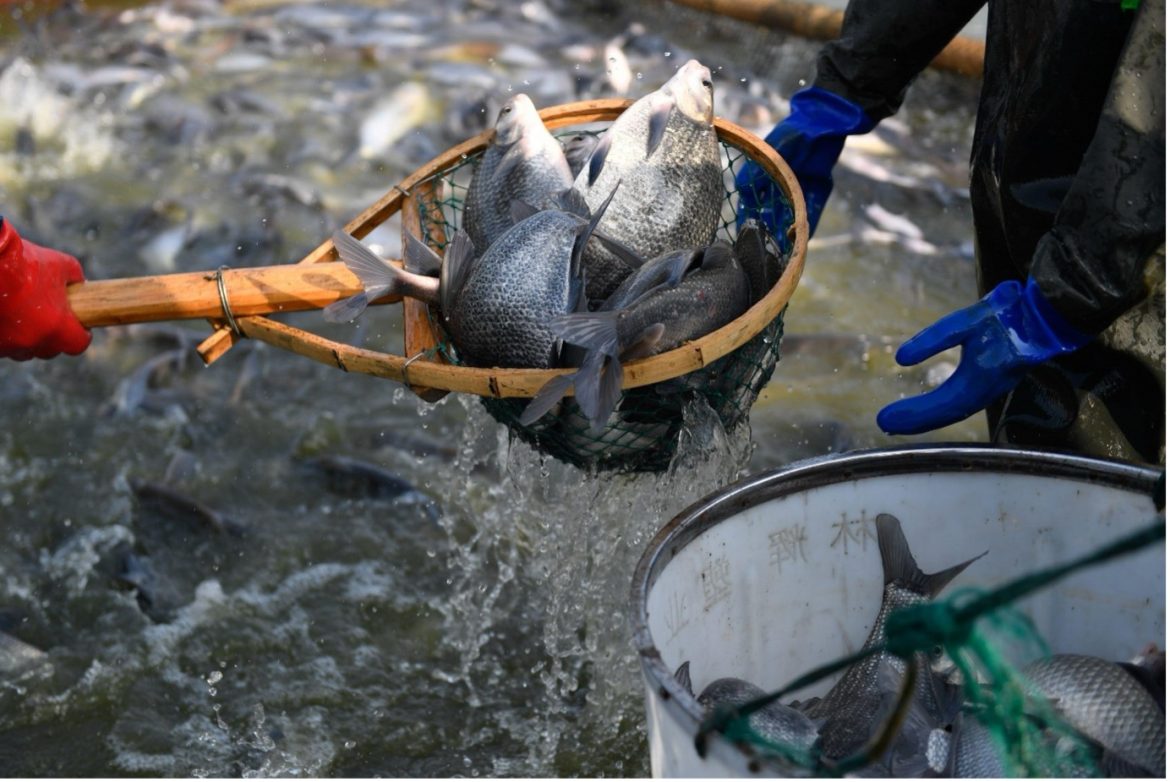
Malaysia: WorldFish has achieved a significant milestone in promoting sustainable aquaculture practices in Malaysia by delivering 14,000 18th generation Genetically Improved Farmed Tilapia (GIFT) fry to the Jitra Aquaculture Extension Centre. This noteworthy contribution, originating from WorldFish’s state-of-the-art Aquaculture Research Centre, is part of a collaborative initiative with the Department of Fisheries in Malaysia.

The fry will be distributed to hatcheries across the country, highlighting WorldFish’s dedication to advancing seed production and dissemination and establishing new benchmarks for sustainable and productive fish farming practices.

WorldFish GIFT is a climate-smart innovation, playing a crucial role in advancing sustainable fish farming to ensure food security and support economic growth. These genetically improved tilapia not only contribute to reducing the carbon footprint of food systems but also enhance resilience to climate shifts.

Dr. Essam Yassin Mohammed, Director-General of WorldFish, emphasized the broader significance of the initiative, stating, “This effort goes beyond the mere transfer of high-quality GIFT fry. It signifies our commitment to sustainable aquaculture, innovation, and our ongoing collaboration with the Malaysian Department of Fisheries.”

02/01/2024 0 comment
0 FacebookTwitterPinterestEmail
Punjab Government Initiates Efforts to Boost Shrimp Farming through State Level Seminar
Farming

Punjab Government Initiates Efforts to Boost Shrimp Farming through State-Level Seminar

by Fishery News 02/01/2024
written by Fishery News

Muktsar District: The Punjab Government has taken a significant step towards promoting shrimp farming on unused saline-affected waterlogged land, aiming to expand the cultivated area to 5,000 acres within the next five years. A State-Level Shrimp Farming Seminar was organized at the Demonstration Farm-cum-Training Centre in Ena Khera village of Muktsar district to address this objective.

Jasvir Singh, Director and Warden of the Department of Fisheries, highlighted the success of shrimp farming in Punjab, stating that in the 2022-23 period, 366 farmers cultivated shrimp in approximately 1,212 acres, resulting in a total production of about 2,400 tonnes of shrimp. The practice, implemented on saline-affected waterlogged land, has proven effective in increasing farmers’ income.

Singh emphasized that shrimp and fish farmers were previously earning up to Rs 3 lakh from one acre. However, due to increased international shrimp production, rates have fallen. Recognizing the importance of developing a local market to sell shrimps, Singh mentioned the government’s special attention to this sector. A strategy has been devised to bring 5,000 acres in the border districts under shrimp farming within the next five years.

In pursuit of this target and to understand the challenges in promoting shrimp farming, the Department of Fisheries organized the one-day seminar, which saw the participation of more than 350 farmers and traders. The initiative reflects the government’s commitment to the growth of shrimp farming as a lucrative venture for farmers in the region.

02/01/2024 0 comment
0 FacebookTwitterPinterestEmail
China Accelerates Aquaculture Transformation with Focus on High Value Species
Farming

China Accelerates Aquaculture Transformation with Focus on High-Value Species

by Fishery News 30/12/2023
written by Fishery News

China is taking bold steps to revitalize its aquaculture sector by prioritizing the development of advanced facilities and shifting away from mass production of low-value species. The government, at federal, provincial, and local levels, is granting priority status to new projects, ensuring expedited permitting, incentive programs, and subsidies. This strategic shift aims to move beyond species like carp and tilapia towards higher-value options such as grouper, sea bass, sea bream, trout, and salmon.

Key government documents, including the “Number One Document” from China’s Department of Agriculture and the “Shandong Provincial Level 2019 Review of Poverty Alleviation by Dragon Head Companies,” outline the desired trajectory for the aquaculture sector. The emphasis is on industrial-scale development of recirculating aquaculture system (RAS) facilities, fish-rice co-production, and carbon capture fisheries.

Government-supported projects, like the Hongqi (Red Flag) Modern Fishery Industrial Park, exemplify this shift. The park, backed by a CNY 260 million investment, features a recirculating facility cultivating high-value species like grouper and sea bass. It also serves as a poverty alleviation project, qualifying for subsidies and integrating tourism with visitors paying to tour the facility and dine at seafood restaurants.

In a broader effort, Shandong is investing CNY 6.71 billion over three years to restore shorelines and wetlands, further integrating environmental responsibility into development initiatives. The province plans to build four new fishery parks and expand marine pastures offshore.

Qingdao’s government underscores collaboration between fishery companies and research agencies to develop higher-value species. Successful examples include the creation of premium varieties like the “Superior Sea Cucumber No. 1” and the “white jade sea cucumber.” Qingdao encourages the offshore expansion of aquaculture, endorsing projects like deep-water cages for salmon and intelligent aquaculture vessels.

Despite the positive environmental aspects of these initiatives, concerns have been raised by NGOs. The shift towards carnivorous, high-value species may increase demand for fishmeal, potentially posing sustainability challenges. Moreover, the introduction of non-native species raises apprehensions about environmental impact, given past issues with invasive species in China’s natural habitats.

30/12/2023 0 comment
0 FacebookTwitterPinterestEmail
Transformative Agriculture Integrated Rice Fish Farming Paves the Way for Agroecological Progress in West Godavari
Farming

Transformative Agriculture: Integrated Rice-Fish Farming Paves the Way for Agroecological Progress in West Godavari

by Fishery News 29/12/2023
written by Fishery News

The Government of Andhra Pradesh, in its pursuit of sustainable farming practices, introduced the ‘Andhra Pradesh Community Managed Natural Farming (APCNF)’ program in 2020. Executed by the ‘Rythu Sadhikara Samstha (RySS),’ this initiative seeks to revolutionize agriculture by promoting agroecology and addressing concerns related to chemical inputs in the West Godavari district.

Rice cultivation, a cornerstone of the region’s agriculture, is now undergoing a paradigm shift with the introduction of the Integrated Rice and Fish Farming System (IRFS). This innovative approach not only promises to boost farmer incomes and improve soil health but also tackles the environmental and health risks associated with chemical farming.

The CGIAR initiative on Agroecology is actively involved in documenting existing IRFS practices in West Godavari. Through field observations, two distinct IRFS types have been identified, with the potential for a third. Each of these practices adheres to agroecological principles, emphasizing nutrient recycling, species diversity, and synergies between rice and fish production.


Three key IRFS models have emerged:

Integrated Farm Structure: This unique land use pattern dedicates the center of the field to rice production, a trench area for aquaculture, and a dike perimeter for horticulture. The trench, capable of retaining water, supports various fish species, offering a sustainable and diversified farming system.


Adjacent/Alternate Farming and Aquaculture Plots: Alternating rice fields with aquaculture ponds allows for seasonal use of rice fields for fish farming. Balancing rice and shrimp plots is the goal, although challenges related to mixing or contamination need attention.


Co-culture of Small Indigenous Fish: Leveraging rice paddies, this approach focuses on co-culturing indigenous varieties of small fish. By replacing chemical inputs with natural technologies, this practice aligns with agroecological principles and promotes biodiversity.


Despite the promise of IRFS, challenges such as initial labour intensity, higher costs, and competition with conventional models persist. Some farmers are hesitant due to short-term gains offered by traditional practices. However, the CGIAR initiative envisions IRFS as a sustainable agroecological model that, through collaboration with farmers, can overcome challenges and contribute to the region’s agroecological transition.

The next steps for the Agroecology Initiative involve documenting microclimatic conditions, resource requirements, biodiversity, productivity, value chains, and socioeconomic impacts of IRFS. This evidence will inform the development of locally co-designed technologies and supportive policies, accelerating West Godavari’s transition towards a more sustainable and ecologically sound agricultural system.

29/12/2023 0 comment
0 FacebookTwitterPinterestEmail
Stagnant Inland Fish Production in Nagaland Over the Past Decade
Farming

Stagnant Inland Fish Production in Nagaland Over the Past Decade

by Fishery News 28/12/2023
written by Fishery News

Data from the Union Ministry of Fisheries, Animal Husbandry, and Dairying reveals that inland fish production in Nagaland has seen no growth over the past seven years. In the last nine years, the increase has been a mere 1000 tonnes, with the figure remaining constant at 0.09 lakh tonnes since the financial year 2016-17. The state’s lack of progress stands in contrast to the North-East region’s overall average annual growth rate of 5.38% in inland fish production from 2014-15 to 2022-23.

The data indicates that Assam has been a major driver of this growth, contributing over 66% of the total production in the region. In the same period, Nagaland experienced an average annual growth of just 0.08%, reaching a total production of 0.79 lakh tonnes in the last nine years.

The Ministry’s written reply to an unstarred question in the parliament highlighted the success of the Blue Revolution scheme implemented from 2015-16 to 2019-20, with projects worth Rs. 391.95 crore sanctioned for the North-East States. Building on this, the Government of India launched the Pradhan Mantri Matsya Sampada Yojana (PMMSY) in 2020-21, with an investment of Rs. 20,050 crore for five years to enhance fish production. PMMSY projects with a total outlay of Rs. 1391.62 crore have been approved for North-East States from 2020-21 to 2023-24.

To further support aquaculture farmers and fishers, the Government of India extended the Kisan Credit Card (KCC) facility to them in 2018-19. A total of 1,70,674 KCCs, with a loan amount of Rs. 1893.43 crore, have been issued, including 16,870 KCCs in North-East States. Despite these initiatives, Nagaland’s inland fish production remains stagnant, emphasizing the need for targeted strategies to boost the sector in the state.

28/12/2023 0 comment
0 FacebookTwitterPinterestEmail
Haryana Advances Prawn Farming with Farmer Producer Organization FPO in Sirsa District
Farming

Haryana Advances Prawn Farming with Farmer Producer Organization (FPO) in Sirsa District

by Fishery News 26/12/2023
written by Fishery News

A significant leap forward has been made in Haryana’s agricultural landscape as a Farmer Producer Organization (FPO) takes root in Sirsa district, uniting 165 farmers with the support of the National Bank for Agriculture and Rural Development (NABARD). The primary objective of this initiative is to mold the FPO into a robust entity akin to Amul, complete with its own brand and processing capabilities.

Having completed the registration process, the FPO is poised to incorporate all prawn farmers into its framework. This collective strength will empower the FPO to engage in purposeful negotiations with hatcheries, particularly concerning seed prices and other essential input expenses like feed. This development comes as a result of the dedicated efforts of Jagdish Chandra, the district fishery officer in Sirsa, who is spearheading Haryana’s ambitious expansion in prawn farming.

Farmers in the region commend Chandra’s proactive measures to address the pressing issue of electricity costs, advocating for a reduction to INR 2 per unit. Kuldeep Singh from Sirsa’s Badaguda block underscores the financial strain on small-scale farmers with limited acreage, citing the current rate of INR 4.75 per unit as unsustainable. Singh, who incurs INR 3 lakh in electrical costs per crop cycle spanning two one-acre ponds over four to five months, appreciates Chandra’s efforts to champion the cause.

Chandra has instituted a comprehensive policy for all members of The Sirsa Shrimp Farmer Producer Company, fostering unity and adherence to shared goals. Notably, Sirsa boasts a shrimp productivity rate of 11.5 tonnes per hectare, exceeding the state average of 8 tonnes per hectare. Chandra’s innovative approach addresses challenges such as the shortage of skilled labour by organizing small groups of 8-10 farmers who collaborate during critical farming phases.

With aspirations to replicate the success of Amul through organized farmer initiatives, Chandra envisions Haryana as a potential hub for lucrative alternatives. Concerns about soil degradation and declining water tables due to excessive use of chemical fertilizers and pesticides underscore the importance of such initiatives.

While Haryana is landlocked, the government aims to explore export opportunities through coastal states. Market dynamics are evolving, with exporters currently purchasing prawns directly from farmers at the farm gate. The ongoing infrastructure development, including rail and road networks, is seen as a catalyst for higher returns, creating optimism among farmers and industry experts alike.


26/12/2023 0 comment
0 FacebookTwitterPinterestEmail
Secretary of Fisheries Dr. Abhilaksh Likhi Explores Innovations in Shrimp Farming at Kalinga Pattinam Andhra Pradesh
Farming

Secretary of Fisheries, Dr. Abhilaksh Likhi Explores Innovations in Shrimp Farming at Kalinga Pattinam, Andhra Pradesh

by Fishery News 25/12/2023
written by Fishery News

Dr. Abhilaksh Likhi, Secretary of the Department of Fisheries, Ministry of Fisheries, Animal Husbandry, and Dairying, recently visited Kalinga Pattinam in the Srikakulam District of Andhra Pradesh to delve into the challenges faced by saline water shrimp farmers. During his interaction with local shrimp farmers, a focus on cutting-edge technology, particularly the adoption of a 4-step farming approach with Bio-floc technology, emerged as a key highlight.

Shrimp farmers shared insights into the innovative culture system being employed, which includes fully lined ponds in high bio-secured conditions. This advanced system incorporates features such as auto feeders, central drainage/sludge removal, and IoT-based water parameter monitoring. These technologies collectively enable high-density intensive farming, ultimately boosting productivity from reduced culture areas and higher stocking densities.

Srikakulam District, a major contributor to India’s shrimp exports, stands out for maintaining superior shrimp quality. Its geographical advantage, with the entire culture area situated at an elevated position compared to other regions, has played a pivotal role in this achievement.

Kalinga Pattinam currently hosts a shrimp culture area exceeding 1000 acres, closely linked with numerous feed companies. Positioned near the Srikakulam Sea coast and adhering to stringent biosecurity measures, these farms collectively yield approximately 40,000 tons of shrimp annually, with an average shrimp body weight of 20 grams.

This translates to an estimated annual revenue of nearly Rs 10,000 crore, providing livelihoods for around 600 farmers and employing approximately 5000 individuals directly in various roles on these farms.

Dr. Abhilaksh Likhi’s visit underscores the government’s commitment to supporting and advancing sustainable and technology-driven practices in the fisheries sector, ensuring economic growth and livelihood opportunities for coastal communities.


25/12/2023 0 comment
0 FacebookTwitterPinterestEmail
Vietnams Shrimp Industry Anticipates Global Growth with Grobests Innovative Grofarm Model
Farming

Vietnam’s Shrimp Industry Anticipates Global Growth with Grobest’s Innovative Grofarm Model

by Fishery News 23/12/2023
written by Fishery News

In a groundbreaking development for Vietnam’s shrimp industry, the introduction of the Grofarm model by Grobest is poised to significantly elevate its international market value. Unveiled at the 2023 Shrimp Summit in Ho Chi Minh City, this innovative approach has garnered widespread acclaim for its potential to revolutionize high-tech shrimp farming, addressing the complex challenges faced by the industry.

The Grofarm model, boasting an impressive success rate of over 80%, emerged as a comprehensive solution to multifaceted issues affecting Asian and global shrimp industries. These challenges range from stagnant production to the imperative need for sustainable livelihoods among growers. Environmental concerns and domestic price fluctuations have destabilized Vietnam’s shrimp farming market, jeopardizing its competitive edge in export and processing activities.

The 2023 Shrimp Summit, organized by the Center for Responsible Seafood (TCRS), took center stage as a pivotal industry event. Recognizing Vietnam’s crucial role in the seafood economy and its strategic position in Asia, the summit spanned two days, bringing together hundreds of experts and business leaders across the entire shrimp value chain. The primary focus was on fostering collaboration, knowledge exchange, and dynamic discussions aimed at promoting sustainability and adapting to climate change.

At the heart of the event was Grobest’s Grofarm model, which emerged as a standout solution. This open platform unites key industry stakeholders, encompassing farmers, hatcheries, and equipment suppliers. Attendees gained firsthand insight into the model through a visit to Minh Phu’s Intensive Tank Farm, a significant partner farm of Grobest Vietnam.

The Grobest Grofarm model comprises five essential elements, each tailored to ensure optimal results and heightened productivity. These include expert consultation services, meticulous selection of top-quality post-larvae sources, an optimized feeding program, a Mobile Lab service for on-site health and water quality assessments, and a focus on reducing production costs while maximizing crop profitability.


Since its introduction in 2021, the Grofarm model has demonstrated impressive economic efficiencies and remarkable profits across more than 600 shrimp farms. With a success rate reaching 82.9% after three years of trial, the model has proven its potential to revolutionize the industry.

The commercial shrimp produced through the Grofarm model has garnered commendation from purchasing units, distributors, and export entities, both domestically and abroad. During the 2023 Shrimp Summit, Dr. Le Van Khoa, Head of Technical Service at Grobest Vietnam, emphasized the profound value of the model.

23/12/2023 0 comment
0 FacebookTwitterPinterestEmail
Rise in Local Fish Production Reduces Dependence on Andhra Pradesh in Cuttack District
Farming

Rise in Local Fish Production Reduces Dependence on Andhra Pradesh in Cuttack District

by Fishery News 20/12/2023
written by Fishery News

The district of Cuttack in Odisha has witnessed a remarkable increase in fish production, leading to a significant reduction in dependence on the Andhra Pradesh market to meet consumer demand. Previously reliant on imported fish from Andhra Pradesh due to local unavailability, Cuttack’s shift towards fish farming has proven both viable and profitable over the past three to four years.

The impact of this transformation is substantial, with local fish production tripling post-COVID-19, attributed in part to migrant workers finding fish farming attractive due to favourable climatic conditions and suitable markets in Cuttack. Currently, the district produces over 26,000 metric tonnes of fish annually, a substantial increase from the pre-2019 annual production of 10,000 metric tonnes.

Various initiatives have contributed to this surge, including Biofloc fish farming and the involvement of around 200 women self-help groups (SHGs) in fish farming within gram panchayat tanks. These efforts, supported by the state government’s self-help group movement, have played a crucial role in boosting fish production.

District Fisheries Officer Itishree Rath highlighted the successful execution of pisciculture in 326 tanks, exceeding the target of 320, with 40-60% input subsidy. Additionally, women SHGs have engaged in fish farming across 135 hectares in Cuttack district, benefiting from a 60% subsidy.

Despite these positive developments, the district still faces a shortfall of 3,000 to 4,000 metric tonnes in meeting the annual fish demand of approximately 32,000 tonnes. This gap is primarily filled by importing fish from Andhra Pradesh or Balugaon. The price range for locally produced fish is Rs 180 to Rs 250 per kg, while fish imported from Andhra Pradesh is priced between Rs 160 to Rs 180 per kg.

Cuttack currently houses about 40 fish godowns, and approximately 20 tonnes of fish are imported daily from Andhra Pradesh to meet the local demand. The increase in local fish production not only boosts self-sufficiency but also supports the livelihoods of fish farmers in the district.

20/12/2023 0 comment
0 FacebookTwitterPinterestEmail
Innovative HDPE Farm Pond Method Boosts Inland Fishing Returns in Virudhunagar Tamil Nadu
Farming

Innovative HDPE Farm Pond Method Boosts Inland Fishing Returns in Virudhunagar, Tamil Nadu

by Fishery News 18/12/2023
written by Fishery News

Farmers in Virudhunagar district, Tamil Nadu, are experiencing significant success with a novel inland fishing technique known as the High-Density Polyethylene-lined (HDPE) farm pond method. This innovative approach, introduced by the district fisheries department, has addressed challenges related to sandy soil texture, allowing farmers to successfully undertake fish farming and enjoy lucrative returns.

The initiative, which began in February 2021 with the support of State government subsidies, involves the use of HDPE sheets laid on farm ponds to overcome issues associated with sandy soil. Farmers who previously faced difficulties in retaining water content for fish farming due to the prevalent sandy soil texture have reported substantial benefits from adopting this method.

G Rajendran, the Assistant Director of Fisheries, explained that officials conduct site inspections to ensure the availability of nearby water resources. The government provides a 50% subsidy on the total cost of constructing an HDPE pond, which amounts to approximately Rs 1,54,000.

This successful venture marks a positive development for inland fisheries in Virudhunagar, showcasing how innovative techniques and government support can contribute to the prosperity of fish farming in regions with specific environmental challenges.

18/12/2023 0 comment
0 FacebookTwitterPinterestEmail
Newer Posts
Older Posts
  • Recent
  • Popular
  • ICAR-CIFT Patents Rapid DNA Biosensor for Black Tiger Shrimp Authentication

    07/08/2026
  • Minister Holds Review Meeting with Fisheries Cooperative Leaders

    07/08/2026
  • Dry Fish Demand Surges Following Formalin Ban

    07/08/2026
  • Rohu Breeding: A Complete Step-by-Step Guide to Successful Seed Production

    07/08/2026
  • 1

    Trout Fish Stocking Initiative Enhances Fisheries and Tourism Potential in Shopian, Jammu and Kashmir

    17/12/2023
  • 2

    BIGGEST FISH MARKETS IN INDIA

    07/09/2024
  • 3

    Brazil’s Appetite for Vietnamese Tilapia Is Reshaping the Global Whitefish Trade

    28/07/2026
  • 4

    Introducing Future Aquaculture Magazine: A New Voice Shaping the Future of Seafood

    13/02/2026

About Fishery News

FN Logo

Fishery.News is India’s leading digital media platform dedicated to fisheries, aquaculture, seafood, and marine industries. We deliver trusted news, expert insights, market intelligence, technology updates, research, government policies, and success stories that help fish farmers, shrimp farmers, seafood businesses, researchers, and industry professionals stay informed and grow sustainably

Categories

  • News
  • Aquaculture
  • Aquatic Health and Disease Management
  • Research and Innovation
  • Technology & Equipments

Social Networks

Facebook Twitter Instagram Linkedin Youtube
  • Facebook
  • Twitter
  • Instagram
  • Linkedin
  • Youtube

© 2026 Fishery.News – A BLIV Media Venture. All Rights Reserved.


Back To Top
Fishery News
  • E – Magazine
    • Aquaculture
    • Aqua Health & Disease Management
    • News
      • National
      • International
    • Farming
    • Research and Innovation
    • Sustainability
    • Technology & Equipments
    • This is Africa
    • Trade
  • Publications
  • Events
    • Expos
    • Trainings
    • Events by Month
  • Business Listings
    • List Your Business
    • Business Listings
    • Buy & Sell
    • Get Consultation
  • Employment
  • About Us
    • Founder
  • Contact