
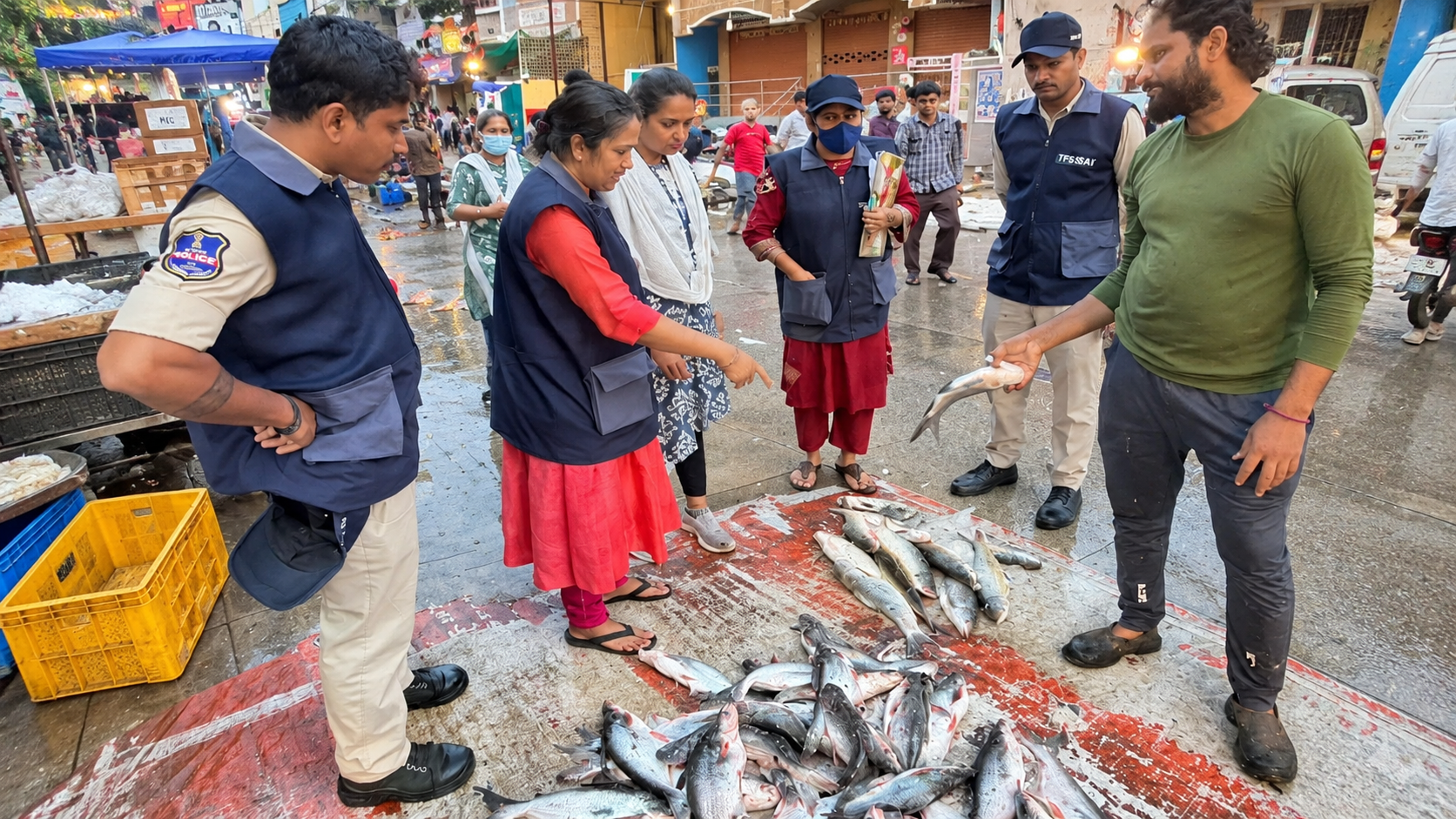
A major food safety inspection in Hyderabad has uncovered unhygienic conditions at two fish markets, leading to the seizure and disposal of nearly 858 kg of spoiled fish and prawns worth ₹1,56,880. The inspections were conducted on Friday, November 27, by enforcement teams of the Telangana Standards Authority for Food and Essential Drugs (TG SAFE) at the Ram Nagar and Begum Bazaar fish markets.
During the inspections, officials identified several violations, including businesses operating without mandatory FSSAI licences or registrations, unhygienic seafood storage, unclean water and ice, and poor handling practices. The teams also found rotten fish, rodent infestation and inadequate hygiene in some establishments.
19 Establishments and Street Vendors Inspected
The enforcement drive involved 19 teams comprising Food Safety Officers, police personnel, State Food Laboratory technicians and veterinary officials from the Greater Hyderabad Municipal Corporation (GHMC).
Together, they inspected 19 establishments and street vendors across Ram Nagar and Begum Bazaar. Several businesses were found operating without the required FSSAI licences or registrations.
Officials also observed that fish was being stored, handled and sold under unhygienic conditions. The water and ice used to preserve seafood were found to be unclean, while temperature monitoring of chilled fish was not being carried out.
Another violation involved the failure to follow the First In, First Out (FIFO) inventory system. This system requires older stock to be sold or used before newer stock. However, inspectors found that fresh and older fish stocks were being stored together without following this practice.
Rotten Fish, Rodent Infestation and Poor Storage Conditions
The inspections revealed several additional hygiene concerns. Officials found rotten and spoiled fish, rodent infestation and poor personal hygiene among food handlers.
The plastic crates and thermocol boxes used to store fish were also found to be dirty and inadequately maintained. Some establishments had failed to maintain mandatory records, including stock registers, employee health records and pest control documentation.
These findings highlighted gaps in seafood handling, storage and hygiene practices at the inspected establishments.
Formalin Tests Conducted on Fish and Seafood
As part of the inspection drive, technicians from the State Food Laboratory conducted spot tests to detect adulterants such as formalin in fish and seafood products.
Food Safety Officers, along with GHMC veterinary officials, also examined the physical characteristics of fish and prawns to assess their freshness and suitability for consumption.
The assessment included checking the colour of fish gills, clarity of the eyes, firmness and texture of the fish. Officials also examined the colour, firmness and other physical characteristics of prawns.
Following these assessments, approximately 858 kg of fish and prawns, valued at ₹1,56,880, were found spoiled and deteriorated. The stock was seized and discarded, with GHMC sanitation vehicles used for its disposal.
TG SAFE Steps Up Food Safety Enforcement
TG SAFE stated that these special enforcement drives are intended to identify food safety violations and ensure that seafood sold in markets meets prescribed hygiene and safety standards.
The inspections at Ram Nagar and Begum Bazaar brought attention to several important aspects of seafood retailing, including proper storage, clean water and ice, temperature monitoring, pest control, licensing and maintenance of mandatory records.
For fish vendors and seafood businesses, maintaining hygienic storage conditions, handling seafood properly and following food safety requirements are essential to ensure that products are suitable for sale and consumption.
The November 27 enforcement drive resulted in the disposal of 858 kg of spoiled fish and prawns from two Hyderabad markets, following inspections that identified multiple food safety violations.
