• E – Magazine
    • Aquaculture
    • Aqua Health & Disease Management
    • News
      • National
      • International
    • Farming
    • Research and Innovation
    • Sustainability
    • Technology & Equipments
    • This is Africa
    • Trade
  • Publications
  • Events
    • Expos
    • Trainings
    • Events by Month
  • Business Listings
    • List Your Business
    • Business Listings
    • Buy & Sell
    • Get Consultation
  • Employment
  • About Us
    • Founder
  • Contact
Fishery News
Home » News » Page 130
Category:

News

Azerbaijan Fish Farm Makes History as First Sturgeon Breeding Farm to Achieve BAP Certification
InternationalNewsResearch and Innovation

Azerbaijan Fish Farm Makes History as First Sturgeon Breeding Farm to Achieve BAP Certification

by Fishery News 15/09/2023
written by Fishery News

In a historic milestone for sustainable aquaculture, Azerbaijan Fish Farm (AFF) has achieved the prestigious Best Aquaculture Practices (BAP) certification, becoming the world’s first sturgeon breeding farm to earn this coveted recognition. AFF, established in 2017, has consistently prioritized innovation and responsible fish breeding, particularly focusing on caviar production in Azerbaijan.

The BAP certification, awarded by the Global Seafood Alliance (GSA), signifies AFF’s unwavering commitment to environmentally and socially responsible seafood practices. The certification sets a remarkable standard for aquaculture operations globally.

Mike Berthet, a market development representative for the Global Seafood Alliance, commended AFF’s dedication to responsible practices, emphasizing their commitment to environmental responsibility, social accountability, food safety, and animal welfare.

AFF’s mission goes beyond just responsible sturgeon aquaculture; it is also deeply committed to the conservation of sturgeon populations in the endangered Caspian Sea. To this end, the company organizes fish release events, where they release ten sturgeons into the Caspian Sea for every jar of caviar sold, further solidifying their dedication to the preservation of this precious species.

This remarkable achievement by Azerbaijan Fish Farm underscores the global aquaculture industry’s growing commitment to sustainability and responsible practices, setting a shining example for others to follow in their footsteps.

15/09/2023 0 comment
0 FacebookTwitterPinterestEmail
Bhubaneswars Innovative Solution Start Up Converts Household Waste into Insect Larvae for Poultry and Fish Feed
NationalNewsTrade

Bhubaneswar’s Innovative Solution

by Fishery News 15/09/2023
written by Fishery News

A local startup, Insectika Biotech Pvt Ltd, has received substantial investment backing from an Israeli serial entrepreneur to advance the commercialization of its groundbreaking product: the cultivation of insect larvae from household waste, intended for use as feed in the poultry and fish industries.

This startup has pioneered India’s first auto-climatized and decentralized insect farming bioreactor, revolutionizing the upcycling of municipal bio-waste and streamlining insect farming with cost-effectiveness. Leveraging innovative technology, it cultivates insect larvae within food or kitchen waste.

The bioreactor-based technology boasts impressive efficiency, enabling economically viable mass production of insect larvae for both the natural feed and biofuel sectors, as well as producing insect frass for the organic fertilizer industry.

Arun Kumar Das, Founder and CEO of Insectika, explained that this innovation facilitates the upcycling of municipal waste while simultaneously bolstering natural feed resources for poultry, fish, shrimp, and pig farming. “This is a waste-to-value concept. We take wet waste and cultivate insect larvae by utilizing this waste. Once the larvae reach a size of half a centimeter, they are rich in protein (40 percent) and fat (20 percent), making them ideal as feed. We have already commenced larva production and aim to produce 100 tonnes of feed per week,” he emphasized.

The innovative technology has captured the attention of Israeli investor Benjamin Elad Rubin, the Co-Founder and CEO of Giggd, a disruptive freelancer accounting solution. Rubin has committed to invest INR 100 crore to scale up production.

Rubin recently held discussions with Housing and Urban Development Minister Usha Devi and officials from the Bhubaneswar Municipal Corporation (BMC), which has agreed to supply wet waste for the venture. Rubin stated, “Typically, insects thrive on refuse, while chickens and fish relish insects, and humans savor fish and poultry. Our collaboration with Insectika will enhance the natural process and enable industrial-scale insect farming using technology.”

In addition to larvae production, the startup has plans to manufacture insect frass, a second-generation organic fertilizer that will contribute to soil enrichment and enhance natural farming practices, leading to increased productivity. Das remarked, “The bioreactor technology can be replicated worldwide and significantly enhance biowaste management, food security, and employment opportunities. As part of our project, we will engage youth in collecting household waste for the bioreactor.”

To streamline operations and reduce transportation costs, the company intends to decentralize the process by establishing bioreactors near daily vegetable markets. This approach aims to address a significant portion of the expenses incurred by the BMC, which accounts for approximately 70 percent of waste disposal costs. Bioreactors, covering an area of 170 sq ft, will process the waste and yield larvae. Das added that approximately 40 tonnes of fish feed can be generated daily from the waste collected in Bhubaneswar.

15/09/2023 0 comment
0 FacebookTwitterPinterestEmail
Andhra Pradeshs Mosquito Fighting Gambusia Fish Release Sparks Concerns Over Native Wildlife e1695809547819
NationalNews

Andhra Pradesh’s Mosquito-Fighting Gambusia Fish Release Sparks Concerns Over Native Wildlife

by Fishery News 14/09/2023
written by Fishery News

In a bid to combat mosquito-borne diseases like malaria and dengue, the government of Andhra Pradesh has recently released approximately 10 million Gambusia fish into the state’s water bodies. These fish, commonly known as mosquitofish, have long been employed as a biological solution to control mosquito larvae proliferation.

However, the release of these invasive alien species has triggered concerns about the potential harm they might inflict on the indigenous aquatic ecosystems of the state.

According to data from the Union Ministry of Health and Family Welfare, Government of India (MoHFW), Andhra Pradesh reported around 6,391 dengue cases and 2,022 malaria cases in 2022. Disturbingly, local news reports indicate a significant rise in cases over the past six months, with 2,339 dengue cases and 1,630 malaria cases registered in the state.

Gambusia affinis (G. affinis), originally hailing from the southeastern United States, is a voracious predator capable of consuming about 100 to 300 mosquito larvae per day, as per MoHFW.

The use of Gambusia in mosquito-control strategies has been practiced worldwide for over a century, including in India. Its sister species, Gambusia holbrooki (G. holbrooki), also known as the eastern mosquito fish, has been an integral part of malaria control initiatives in India since 1928, including the Urban Malaria Scheme.

While mosquitofish are generally considered a valuable biological control method for curbing mosquito breeding, experts emphasize that they should be just one component of a comprehensive approach. This approach must include other methods like chemical spraying and, most importantly, source reduction, according to Desham PR, a public health practitioner in Telangana.

“Reducing the number of mosquito breeding sources like puddles and open drainages, and clearing vegetation that mosquitoes feed on must be prioritized over releasing fish into water bodies,” she stressed.

Notably, the effectiveness of Gambusia as a viable mosquito control method remains inconclusive. While some studies have shown a reduction in malaria cases where the fish were introduced, others have reported an increased mosquito larvae population because Gambusia preyed on other predators that consumed mosquito larvae. Additionally, the predatory efficacy of Gambusia declined when introduced in running water streams, water bodies with high insecticide levels, and water bodies with dense vegetation.

One of the most concerning aspects of Gambusia is its high breeding capacity. A single female can produce between 900 and 1,200 offspring during its lifetime, as per MoHFW. With up to six generations per season, this adaptability has allowed Gambusia to thrive on six of the seven continents, leading the International Union for Conservation of Nature to categorize it as one of the 100 worst invasive alien species globally.

Several countries, including India, have listed Gambusia as an invasive species. Nevertheless, the fish continues to play a prominent role in the country’s malaria control programs, with releases into freshwater bodies occurring in various regions such as Andhra Pradesh, Chandigarh, and Uttar Pradesh.

Known for its competitive and predatory behavior, Gambusia can outcompete and prey upon native species, leading to concerns over its potential impact on local ecosystems. Observations include the consumption of competing fishes’ eggs and frog tadpoles, as well as aggressive behaviors such as chasing other fishes and fin-nipping.

14/09/2023 0 comment
0 FacebookTwitterPinterestEmail
Indias Project Samudrayaan to Explore Oceans Depths with Matsya 6000 Submersible
NationalNews

India’s Project Samudrayaan to Explore Ocean’s Depths with Matsya 6000 Submersible

by Fishery News 14/09/2023
written by Fishery News

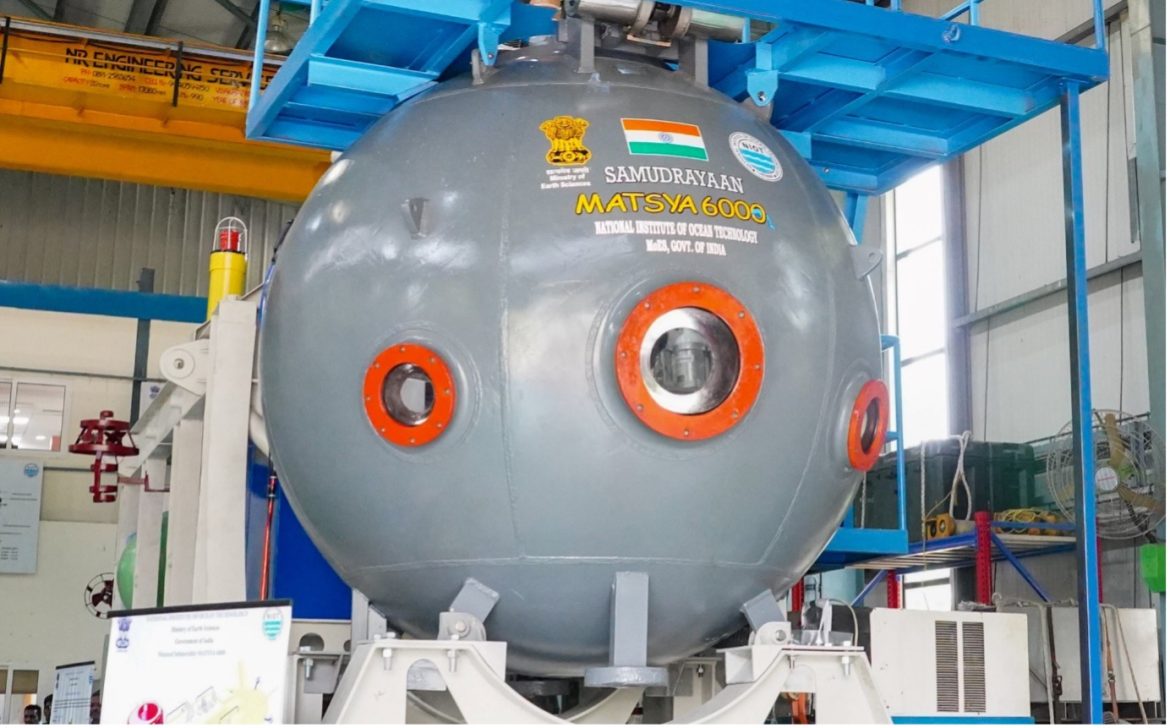
In the aftermath of a triumphant lunar mission, Indian scientists are gearing up for yet another audacious venture, Project Samudrayaan. In a groundbreaking mission poised to explore the deep ocean, three intrepid individuals are set to plunge a staggering 6,000 meters beneath the ocean’s surface aboard a homegrown submersible known as “Matsya 6000.” This ambitious undertaking aims to unearth precious metals and minerals, with a focus on cobalt, nickel, and manganese.

The project has been dubbed “Matsya 6000” and has been under development for nearly two years. It is now ready for its maiden sea trials, scheduled to take place early in 2024 off the coast of Chennai in the Bay of Bengal. This mission carries added significance following the unfortunate loss of the Titan submersible during a voyage to explore the Titanic wreckage in the North Atlantic Ocean in June 2023.

Indias Project Samudrayaan to Explore Oceans Depths with Matsya 6000 Submersible 1

Scientists from the National Institute of Ocean Technology (NIOT) have meticulously scrutinized every aspect of Matsya 6000, including its design, materials, testing, certification, redundancy measures, and standard operating procedures.

Union Minister Kiren Rijiju, speaking on the importance of the Deep Ocean Mission, stated, “The Deep Ocean Mission supports the ‘Blue Economy’ vision of Prime Minister Narendra Modi, and envisages sustainable utilization of ocean resources for economic growth of the country, improve livelihoods and jobs, and preserve ocean ecosystem health.”

M Ravichandran, the secretary of the Ministry of Earth Sciences, revealed, “Samudrayaan mission is underway as part of the Deep Ocean Mission. We will be conducting sea trials at 500 meters depth in the first quarter of 2024.” The mission’s completion is anticipated by 2026, positioning India among the exclusive club of nations with manned submersible capabilities, including the US, Russia, Japan, France, and China.

Beyond its quest for valuable minerals, Matsya 6000 is poised to explore the enigmatic realm of chemosynthetic biodiversity within hydrothermal vents and the frigid depths where methane seeps emerge.

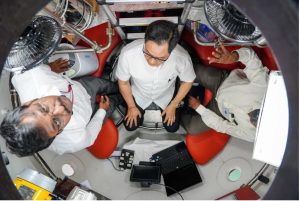
Key features of Matsya 6000 include a 2.1-meter diameter sphere capable of accommodating three occupants. Constructed from an 80mm-thick titanium alloy, this sphere is engineered to withstand the staggering pressure of 600 bar, equivalent to 600 times the pressure at sea level, all at a depth of 6,000 meters. The submersible is designed to operate continuously for 12 to 16 hours, with a substantial 96-hour oxygen supply to ensure crew safety.

Director Ramadass of NIOT emphasized the meticulous precautions taken, stating, “Except for the sphere, we have redundancy for everything. Sometimes double, sometimes triple redundancy. An official sea trial will be certified, and we have gone with DNV-GL for certification. We will also follow standard operating procedures, such as deploying the submersible from a ship, which will remain on the surface right above the submersible for easy communication with the underwater vehicle.”

14/09/2023 0 comment
0 FacebookTwitterPinterestEmail
Revolutionary Initiative Unveiled 350000 Cutting Edge Two Way Transponders for Maritime Security and Fisherfolk Empowerment
NationalNews

Revolutionary Initiative Unveiled

by Fishery News 14/09/2023
written by Fishery News

In an audacious endeavour poised to revolutionize both maritime security and the livelihoods of coastal fishermen, the Indian government is on the cusp of bestowing 350,000 state-of-the-art two-way communication transponders to seafaring communities. This visionary undertaking, meticulously orchestrated under the ambit of the Pradhan Mantri Matsya Sampada Yojana, is slated to fortify coastal security while reinvigorating the fishing industry.

These pioneering transponders, precision-crafted by the illustrious Indian Space Research Organisation (ISRO), will be meticulously assembled on native soil. Powered by dedicated satellites, purpose-launched for this groundbreaking mission, these devices will usher in a new era of maritime vigilance.

The maiden phase of this epochal project will witness the installation of 100,000 transponders exclusively on vessels measuring less than 20 meters in length. Synergizing efforts, governmental entities including state and central fisheries departments, in tandem with the National Security Council, will orchestrate the seamless deployment of this cutting-edge technology across the tapestry of coastal domains.

Intricately designed, these two-way transponders are set to be multifaceted marvels. Beyond the cardinal function of real-time geospatial tracking, these technological marvels will serve as a veritable lifeline at sea. They shall empower fishermen with seamless communication channels, fostering rapid response capabilities in the face of exigencies. Equally remarkable, these devices will serve as beacons of safety, issuing timely alerts to mariners in the face of impending cyclones and capricious weather conditions.

This visionary initiative took its nascent strides in Tamil Nadu, marked by the installation of transponders aboard sub-20 meter vessels. It’s emblematic of the overarching endeavor spearheaded by the National Maritime Security Coordinator, Vice Admiral G Ashok Kumar, to simplify the bureaucratic quagmire for the fishing community. This transformative system shall emancipate fishermen from the onerous task of carrying original identification documents, permitting them to transport authenticated copies.

This momentous stride harmonizes seamlessly with India’s resolute commitment to safeguarding its maritime interests. Mandated in the wake of the 2008 Mumbai attacks, wherein terrorists infiltrated Indian waters via stolen vessels, the requirement for an automatic identification system aboard fishing vessels is no longer a choice but a categorical imperative.

14/09/2023 0 comment
0 FacebookTwitterPinterestEmail
UKs Major Fish Populations in Crisis Due to Overfishing and Government Policy Report Finds
InternationalNews

UK’s Major Fish Populations in Crisis Due to Overfishing and Government Policy, Report Finds

by Fishery News 13/09/2023
written by Fishery News

A new report reveals that half of the United Kingdom’s ten largest fish populations are facing severe challenges, with some being overfished or reduced to critically low levels. The findings, published by the Washington DC-based NGO Oceana, point to the UK government’s practice of setting catch limits that exceed scientific recommendations as a primary driver of this crisis.

The UK’s fishing industry heavily relies on these ten key fish stocks. Among them, five are currently experiencing overfishing, including mackerel, which accounted for the largest volume of UK landings in 2021. Additionally, others, such as North Sea cod, have reached critically low population levels, putting popular fish species on the brink of collapse.

The report conducted a comprehensive assessment of 104 fish populations, encompassing most of the UK’s commercial fish stocks. Shockingly, it found that 34% of these populations are being overfished, while only 45% are being sustainably managed. Insufficient data prevented an assessment of the remaining fish stocks.

In addition to evaluating fishing pressure, the report examined population sizes, revealing that less than half (41%) of these populations are at a healthy size, and a quarter are in critical condition. Again, a lack of data hindered the assessment of some stocks.

Hugo Tagholm, the director and vice president of Oceana in the UK, accused the government of disregarding scientific advice and allowing the overexploitation of the seas. He called for the UK to demonstrate political leadership by adhering to catch limits aligned with scientific guidance and adopting an ambitious strategy to end overfishing.

Tagholm emphasized that the issue of overfishing is primarily linked to industrial fisheries, not small inshore fishers, who make up nearly 80% of Britain’s fishing fleet. He highlighted that only 3% of the fishing quota is allocated to small inshore fishermen in places like Newlyn.

Among the worst-managed populations are Celtic Sea cod, West of Scotland cod, and Irish Sea whiting, which are so depleted that the International Council for the Exploration of the Sea (ICES) has recommended a total ban on all catches.

The report underscores that sustainable catch limits are essential for maintaining healthy fish populations. For example, for the five best-performing stocks, catch limits for 2020-2023 closely followed ICES scientific advice. Conversely, for four of the five worst-performing stocks, catch limits were set higher than the scientific recommendations.

The report aims to provide an evidence-based snapshot of the status of UK fish stocks since the country’s departure from the EU and the Common Fisheries Policy. Since January 2021, the UK has been responsible for setting total allowable catch limits in its own waters. However, because most stocks are shared, the UK and EU have agreed to collaborate on annual recommendations through the Trade and Cooperation Agreement, involving a review of scientific advice on catch limits from ICES.

Oceana’s report highlights that ongoing political decisions to set catch limits above scientific advice are perpetuating the problem of overfishing, leading to a decline in previously healthy stocks and only a few improvements in critically low populations since 2020.

13/09/2023 0 comment
0 FacebookTwitterPinterestEmail
UAE Embraces Unconventional Salmon Farming Amid Food Security Drive e1695805569721
NationalNews

UAE Embraces Unconventional Salmon Farming Amid Food Security Drive

by Fishery News 13/09/2023
written by Fishery News

In an unlikely endeavor, the United Arab Emirates (UAE) is venturing into salmon farming, challenging the conventional wisdom that these cold-water fish thrive only in chilly climates. The UAE’s interest in salmon farming is driven by its commitment to bolster food security while reducing water consumption, despite the country’s extreme heat and water scarcity.

The UAE’s Food Security Strategy, launched in 2018, designated fish as one of its 18 strategic food items. With an annual per capita fish consumption of approximately 66 pounds, the UAE ranks highest in the Gulf Cooperation Council (GCC) and nearly 50 percent above the global average of 45 pounds per capita. Despite this, local fisheries in the Emirates are overfished, and locally caught fish contribute only eight percent to UAE consumption. Salmon, a cold-water species, is the second-most consumed fish in the country, all of which is imported from colder regions.

Traditionally, farmed salmon are reared in controlled freshwater tanks before being transferred to seawater as they grow, simulating the natural lifecycle of wild salmon. Due to their relatively sedentary nature and efficient food-to-flesh conversion, farmed salmon are a sought-after commodity. Emirati investors have recognized an opportunity in recirculating aquaculture systems (RAS), a method that utilizes ocean water, filters, and recycles it within a self-contained system.

Since the introduction of locally farmed salmon in UAE grocery stores in 2019, the government has invested significantly in RAS production. In 2021, Abu Dhabi’s largest investment firm allocated over $350 million to a fund dedicated to RAS production and facilitated the relocation of one of the world’s largest RAS salmon producers to Abu Dhabi, with the aim of expanding inland salmon production within the UAE.

However, challenges remain. While RAS reuses up to 99 percent of the water it uses, it is a resource-intensive process that demands expensive filtration systems, skilled personnel, and substantial energy to maintain water circulation and cooling, given the UAE’s extreme temperatures. Although the energy consumption for RAS-produced salmon is higher than that of traditional sea-cage farming or RAS production of warm-water fish like tilapia, it eliminates the need to transport salmon from distant, cooler climates.

Locally farmed salmon in the UAE sells for approximately $23 per pound, making it slightly more expensive than imported farmed salmon but less expensive than imported wild salmon. The primary advantage lies in freshness, as locally farmed salmon can reach consumers’ plates within hours of harvest.

The UAE’s unconventional approach to salmon farming reflects its determination to enhance food security and reduce reliance on imports in the face of challenging environmental conditions.

13/09/2023 0 comment
0 FacebookTwitterPinterestEmail
U.S. and Russia Explore Commercial Fishing in the Arctic Amid Shifting Fish Stocks
InternationalNews

U.S. and Russia Explore Commercial Fishing in the Arctic Amid Shifting Fish Stocks

by Fishery News 13/09/2023
written by Fishery News

In a response to the migration of fish stocks northward due to climate change, both the United States and Russia are considering the prospect of opening commercial fisheries in the Arctic. However, their efforts are subject to international agreements that currently ban fishing in the Central Arctic Ocean.

The Central Arctic Ocean Fisheries Agreement, signed in 2018 by nine nations and the European Union, came into effect on June 25, 2021, imposing a ban on fishing in the Central Arctic until at least 2037. This agreement permits fishing in the high seas area of the Arctic solely for research purposes, and its extension beyond 2037 requires unanimous consent.

Additionally, the U.S. introduced the Arctic Fishery Management Plan in 2009, which, following approval by the North Pacific Fishery Management Council, restricted fishing in state waters north of the Bering Strait, including the Chukchi and Beaufort seas.

Despite these restrictions, a commercial pollock fishery opened in Russian-controlled waters in the Chukchi Sea in 2020, and Pacific cod has also ventured into the region due to changing climate conditions.

In March 2023, officials from the U.S. and Russia convened in Utqiagvik, Alaska, to collaborate on a joint science plan, emphasizing that commercial fishing in the Arctic is unlikely for at least the duration of the existing agreement, which spans 16 years.

David Balton, a former U.S. State Department diplomat who played a key role in negotiating the Central Arctic Ocean Fisheries Agreement, commended the signatory nations for adhering to the treaty, calling it a “success story.”

At the Arctic Encounter Symposium in Anchorage, Alaska, on March 29, Alaska Department of Fish and Game Commissioner Doug Vincent-Lang expressed his commitment to preparing for the eventual end of the moratorium on commercial fishing in the state’s Arctic waters. He is seeking funding, including $1 million from the state of Alaska and $2 million in federal funds, to conduct research on the matter.

Vincent-Lang’s plans include identifying biomasses and stocks north of the Bering Strait that could support commercial fisheries and establishing a system for allocating fishing rights to Arctic communities.

“We see opportunities for our coastal communities to develop fisheries,” Vincent-Lang said, emphasizing the importance of not being left behind while other countries, including Russia, explore Arctic waters for fishing opportunities.

He also stressed the need to begin working on a comprehensive fishery management system to ensure sustainable fishing practices in the region.

13/09/2023 0 comment
0 FacebookTwitterPinterestEmail
Nutreco Invests in Eruvaka Enhancing Aquaculture with IoT Technology
NationalNews

Nutreco Invests in Eruvaka, Enhancing Aquaculture with IoT Technology

by Fishery News 13/09/2023
written by Fishery News

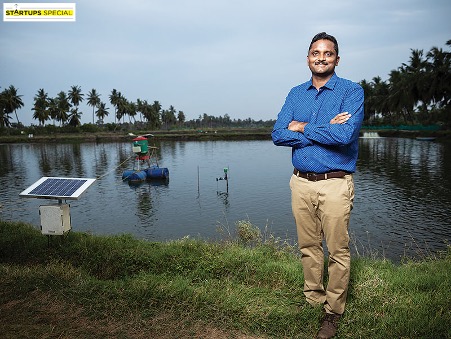
Nutreco, a global leader in animal nutrition and aquaculture solutions, has announced a significant investment in Eruvaka, an Indian-based Internet of Things (IoT) company specializing in tools for aquaculture farmers. Nutreco has acquired a 25% stake in Eruvaka and is forging a strategic commercial partnership aimed at scaling Eruvaka’s technology worldwide.

Founded in 2012 by Indian entrepreneur Sreeram Raavi, Eruvaka has developed a suite of products that empower farmers to actively monitor vital pond parameters and remotely manage automated equipment. This innovative approach helps reduce farming risks, optimize feed efficiency, enhance shrimp growth, and boost farm profitability.

Omnivore, an impact venture fund focused on breakthrough technologies for food, agriculture, and rural economies, is among the other prominent shareholders in Eruvaka.

This investment aligns perfectly with Nutreco’s mission to “Feed the Future,” a commitment to sustainably produce high-quality food to meet the demands of a growing global population. Nutreco CEO Knut Nesse expressed his excitement about this investment, emphasizing how Eruvaka’s technology complements their shrimp feed business and supports expansion across Latin America and Asia.

As part of this strategic partnership, Nutreco will have representation on Eruvaka’s board through its Chief Innovation Officer, Viggo Halseth.

Sreeram Raavi, Managing Director of Eruvaka, shared his enthusiasm for collaborating with Nutreco, stating, “I’m impressed by Nutreco’s depth of knowledge in shrimp farming, and I look forward to joint development projects.”

Nutreco’s aquaculture division, Skretting, will work directly with Eruvaka to implement precision farming technology, starting with Latin America. The technology will be integrated into AquaSim, Skretting’s suite of customized performance tools. This integration will allow local shrimp farmers to remotely ensure precise feed dosages, reducing the risk of over- or under-feeding.

Carlos Miranda Illingworth, General Manager of Skretting in Ecuador, highlighted the positive impact of this technology, stating, “In Ecuador, we have been able to lower the feed conversion ratio and shorten the production cycle of shrimp thanks to satiation feeding, thereby doubling production without huge intensification. The Eruvaka solution will ensure we can work in this way with many more farms in the future.”

In line with its commitment to sustainable shrimp production, Skretting is constructing a new production facility in Ecuador with an annual capacity of 470,000 tons, set to be completed by 2019, with the first phase opening this year.

13/09/2023 0 comment
0 FacebookTwitterPinterestEmail
Union Minister to Inaugurate Second ICAR CIBA Shrimp Farmers Conclave in Navsari
FarmingNationalNews

Union Minister to Inaugurate Second ICAR-CIBA Shrimp Farmers Conclave in Navsari

by Fishery News 13/09/2023
written by Fishery News

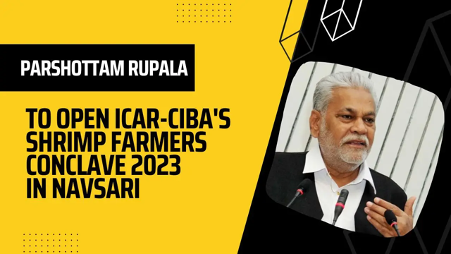
The Second Edition of ICAR-CIBA’s Shrimp Farmers Conclave-2023 is set to commence on September 14, 2023, in Navsari, Gujarat. The event will be inaugurated by Union Minister of Fisheries, Animal Husbandry, and Dairying, Parshottam Rupala, and is expected to witness the participation of prominent dignitaries, including the Minister of Agriculture, Animal Husbandry, Cow Breeding, Fisheries, and Rural Development for the Government of Gujarat, Raghavji bhai Hansrajbhai Patel, Member of Parliament, Navsari, C.R. Patil, and Member of Gujarat Legislative Assembly, R.C. Patel.

Key highlights of the event include the signing of Memorandums of Understanding (MoUs) between CIBA and the National Fisheries Development Board (NFDB), as well as CIBA and the Fish Farmers Producer Organization (FFPO) of Gujarat. These agreements aim to implement crop insurance for aquaculture, with premium subsidies from NFDB, and provide technology support to FFPO. Additionally, the launch of a shrimp crop insurance product by the Agriculture Insurance Company of India Limited is anticipated

The conclave will feature technical sessions addressing various aspects of the shrimp industry, including the current shrimp export scenario, disease prevention and management, crop insurance for shrimp farming, the development of Genetically Improved Indian White Shrimp (Penaeus indicus), and diversification of brackish water aquaculture with Mudcrab and Asian Seabass fish.

An exhibition showcasing live displays of shrimps and fishes, book releases, and the distribution of fish seeds to farmers are also on the agenda. A special session on Aquaculture Crop Insurance and a panel discussion with inter-departmental officials will focus on critical topics such as shrimp seed quality, shrimp pricing, diversification, and electricity tariffs.

The event is organized by the scientific team of the Navsari-Gujarat Regional Centre of ICAR-Central Institute of Brackish water Aquaculture (ICAR-CIBA), Chennai, under the leadership of Dr. Kuldeep K Lal, Director, ICAR-CIBA.

Notable participants include Smt. Grija Subramanian, Chairman cum Managing Director of Agricultural Insurance Company Ltd., Dr. J.K. Jena, Deputy Director General (Fisheries) of ICAR, Dr. Z.P. Patel, Vice-Chancellor of Navsari Agricultural University, Dr. V. Kripa, Member Secretary of the Coastal Aquaculture Authority, Nitin Sangwan, Chief Executive of the National Fisheries Development Board, and Dr. L. Narashima Murthy, Commissioner of Fisheries for the Government of Gujarat.

The conclave expects a large turnout of over 300 aqua farmers, stakeholders from the Gujarat Aqua Feed Dealers Association, Gujarat Aqua Farmers Association, beneficiaries of SC/ST schemes, public representatives, development department officials, technicians, bankers, insurance officials, faculty, and students.

13/09/2023 0 comment
0 FacebookTwitterPinterestEmail
Newer Posts
Older Posts
  • Recent
  • Popular
  • ICAR-CIFT Patents Rapid DNA Biosensor for Black Tiger Shrimp Authentication

    07/08/2026
  • Minister Holds Review Meeting with Fisheries Cooperative Leaders

    07/08/2026
  • Dry Fish Demand Surges Following Formalin Ban

    07/08/2026
  • Rohu Breeding: A Complete Step-by-Step Guide to Successful Seed Production

    07/08/2026
  • 1

    Trout Fish Stocking Initiative Enhances Fisheries and Tourism Potential in Shopian, Jammu and Kashmir

    17/12/2023
  • 2

    BIGGEST FISH MARKETS IN INDIA

    07/09/2024
  • 3

    Brazil’s Appetite for Vietnamese Tilapia Is Reshaping the Global Whitefish Trade

    28/07/2026
  • 4

    Introducing Future Aquaculture Magazine: A New Voice Shaping the Future of Seafood

    13/02/2026

About Fishery News

FN Logo

Fishery.News is India’s leading digital media platform dedicated to fisheries, aquaculture, seafood, and marine industries. We deliver trusted news, expert insights, market intelligence, technology updates, research, government policies, and success stories that help fish farmers, shrimp farmers, seafood businesses, researchers, and industry professionals stay informed and grow sustainably

Categories

  • News
  • Aquaculture
  • Aquatic Health and Disease Management
  • Research and Innovation
  • Technology & Equipments

Social Networks

Facebook Twitter Instagram Linkedin Youtube
  • Facebook
  • Twitter
  • Instagram
  • Linkedin
  • Youtube

© 2026 Fishery.News – A BLIV Media Venture. All Rights Reserved.


Back To Top
Fishery News
  • E – Magazine
    • Aquaculture
    • Aqua Health & Disease Management
    • News
      • National
      • International
    • Farming
    • Research and Innovation
    • Sustainability
    • Technology & Equipments
    • This is Africa
    • Trade
  • Publications
  • Events
    • Expos
    • Trainings
    • Events by Month
  • Business Listings
    • List Your Business
    • Business Listings
    • Buy & Sell
    • Get Consultation
  • Employment
  • About Us
    • Founder
  • Contact