Mandya district in Karnataka is making waves with a surprising but powerful transformation—fish farming! Once known primarily for sugarcane and agriculture, Mandya is now diving into aquaculture as a new income stream for rural communities.
At a recent review meeting, the Mandya Deputy Commissioner highlighted major strides in the fisheries sector. Out of 1,825 tanks and lakes under government control, 1,464 have already been leased out for fish farming.
This initiative has generated over ₹1 crore in revenue, showing the untapped potential of inland water resources.
The Fisheries Department, along with the Zilla Panchayat, is actively promoting the Pradhan Mantri Matsya Sampada Yojana (PMMSY) to support local farmers, SHGs, and youth. Subsidies, awareness camps, and free fish seed distribution are being used to encourage more participation in aquaculture.
Special focus is also being given to SC/ST communities through reserved tenders and support programs. The district is not just creating jobs—it’s building sustainable livelihoods, especially for women and small farmers.
With training, market linkages, and cooperative societies stepping in, Mandya is setting a new benchmark for rural development through aquaculture.
This “silent revolution” might just be the blueprint for inland districts across India.
News
India’s seafood exports get a dream entry into the UK after the new trade deal removes almost all duties.
The India‑UK Comprehensive Economic and Trade Agreement (CETA), signed in July 2025, has opened zero‑duty access on 99% of tariff lines for Indian seafood products. This includes shrimp, lobster, frozen fish, and value‑added marine goods
Prior to the pact, exporters paid tariffs of up to 21% when supplying seafood to the UK. With the barriers lifted, Indian shrimp exporters are now on a level playing field with competitors like Vietnam and Singapore
Analysts estimate exports to the UK could grow by up to 70% over the coming years
In FY 2024–25, India shipped US $104 million (₹879 crore) of seafood to the UK, with frozen shrimp alone making up 77% of that total ($80M)
Despite this, India’s current share of the £4.5 billion UK seafood import market stands at just 2.25%
Key Benefits:
Duty‑free access boosts price competitiveness
Opens premium UK market, diversifies beyond US & China
Supports India’s rising fisheries production (~₹60,000 crore exports, 1.78 M tonnes in FY 2024–25)
For coastal states and exporters, this is a pivotal opportunity to scale up exports, uplift rural livelihoods, and cement India’s position in the global seafood supply chain.
₹21,000 Crore Fish Boom! India’s PMMSY Powers 11 Aqua Parks to Boost Farmer Incomes & Blue Economy
India is making waves in the fisheries sector! Under the Pradhan Mantri Matsya Sampada Yojana (PMMSY), the Ministry of Fisheries, Animal Husbandry & Dairying has greenlit fisheries development projects worth a whopping ₹21,274.16 crore, with ₹9,189.79 crore as central government share.
The star of the show? 11 state-of-the-art Integrated Aqua Parks approved across 11 states—including Andhra Pradesh, Tamil Nadu, Odisha, and Assam—at a total investment of ₹682.60 crore.
These Aqua Parks will act as ‘one-stop hubs’ for India’s aquaculture revolution. From seed and feed supply to processing, cold storage, and market linkage—these parks aim to provide end-to-end infrastructure, reduce post-harvest losses, and boost fisher incomes through value addition and organized marketing.
The parks are strategically planned to support cluster-based development, driving efficiency, sustainability, and higher exports. States like Tamil Nadu (₹127.71 Cr) and Odisha (₹100 Cr) lead the funding charts, while smaller states like Tripura, Uttarakhand, and Nagaland also get a slice of this blue growth.
In the last 5 years (2020–2025), the PMMSY has become a game-changer—empowering fisherfolk, strengthening the seafood supply chain, and fueling the ‘Blue Economy’ dream.
This massive push not only secures India’s food future but also opens new global export doors for desi seafood.
India is swimming toward prosperity, one fish at a time!
Shrimp Shake-Up in Sri Lanka: New Rules to Protect Local Farmers & Stop “Fake Lankan” Exports!
Sri Lanka has rolled out strict new regulations to curb the unchecked import and re-export of shrimp after mounting pressure from local aquaculture farmers. The country, which had previously allowed the import of foreign shrimp for value addition and re-export, is now hitting pause to protect its domestic industry.
The Sri Lankan Ministry of Fisheries, Aquatic, and Ocean Resources had opened the gates to foreign shrimp in recent years to meet international demand and boost seafood exports. But this strategy sparked backlash from local shrimp farmers, who warned that cheap foreign imports were flooding the market, threatening homegrown products and risking disease outbreaks that could lead to global trade restrictions.
Another major concern? Imported shrimp were being marketed as Sri Lankan, damaging the brand value of the country’s seafood industry.
To fix this, the government has now formed a special task force involving key stakeholders—from government agencies to shrimp exporters and aquaculture leaders. The result is a new Standard Operating Procedure (SOP) that sets tight controls on shrimp imports, ensuring traceability, biosecurity, and transparent labeling.
This move is expected to:
Prevent market distortion
Protect local shrimp livelihoods
Safeguard Sri Lanka’s reputation in global seafood trade
With these new SOPs, Sri Lanka aims to strike a balance between boosting exports and protecting its blue economy.
From Salty to Superfood: Solar-Dried Fish Now Packs 70% Protein & 12-Month Shelf Life!
What if your daily protein needs could be met with just 5 grams of fish?
That’s now possible, thanks to solar-dried epipelagic fish—like anchovy, sardine, and mackerel—processed under hygienic conditions by innovators at M.S.Swaminathan Research Foundation(MSSRF) in Tamil Nadu.
Traditional dried fish has over 30% salt, poor hygiene, and just 2-month shelf life. But with solar drying, the salt content is just 12%, moisture drops to 5-15%, and shelf life jumps to 9–12 months. Even better? Protein content doubles to 70%!
Solar drying speeds up the process 2x faster than open sun drying and avoids contamination. Women-led fish drying units in Cuddalore, Nagapattinam, and Poompuhar now use this tech, making safer, high-quality fish that sells at Rs. 450–800/kg, compared to Rs. 200–400 for traditional ones.
Aluminum foil packaging adds hygiene and longer shelf life—without the cost of vacuum packing. MSSRF has even trained fisherwomen in fish selection, hygiene, and packaging.
This innovation boosts nutrition, supports livelihoods, and enhances food safety—perfect for Anganwadi & Midday Meal Programs!
Big Wins for Indian Fisheries: UK Trade Deal + Maldives MoU Set to Boost Exports & Blue Economy Growth
India’s fisheries and aquaculture sector is seeing a strategic leap forward through two major developments:
India–UK Free Trade Agreement
MoU with the Maldives on Fisheries Cooperation
What’s New?
Duty-Free Access to UK under the CETA deal is expected to boost Indian seafood exports—especially shrimp—by up to 70% over the next few years.
MoU with Maldives focuses on:
Sustainable tuna fishing
Deep-sea fisheries development
Aquaculture & processing infrastructure
Joint R&D & knowledge exchange
Fisheries eco-tourism
Why This Matters:
India exported seafood worth ₹60,523 crore in 2024–25
UK imported just ₹879 crore—huge headroom for growth
Exporters gain new access to high-value markets
Industry can strengthen traceability, standards & competitiveness
Opens doors to deep-sea fishing and Blue Economy partnerships
These agreements are more than trade—they’re catalysts for transforming India’s position in the global seafood and aquaculture value chain.
Let’s gear up for the next phase of innovation, sustainability, and export excellence.
From Guns to Gills: How Former Naxalites in Jharkhand Turned into Successful Fish Farmers – Narendra Modi
In a remarkable transformation, over 1,300 former extremists in Left Wing Extremism-affected areas of Jharkhand have turned to fish farming, forging a new path of peace and livelihood. This inspiring change has been made possible under the Pradhan Mantri Matsya Sampada Yojana (PMMSY) — a government initiative aimed at boosting India’s fisheries sector while fostering social and economic rehabilitation.
These ex-Naxalites, once part of insurgent groups, have now been trained in scientific aquaculture techniques, empowering them to build sustainable incomes. The government’s support through PMMSY not only offers financial aid but also technical know-how, equipment, and infrastructure — giving these individuals a second chance at life.
Fish farming in Jharkhand is doing more than just producing food — it’s driving peace, restoring dignity, and transforming rural communities. The initiative shows how the Blue Economy can be a powerful tool for inclusive development and conflict resolution.
Prime Minister Narendra Modi praised this achievement in his monthly radio address, Mann Ki Baat, highlighting it as a model for the nation. He emphasized that fisheries are not just a sector of economic growth but a force for social upliftment.
This story from Jharkhand is proof that when development meets vision, even the most unlikely journeys can end in hope. Fish farming is no longer just an industry — it’s a symbol of change.
Padma Hilsa Missing from Kolkata Plates! Myanmar & Gujarat Fish Now Take Centre Stage
This year, Kolkata’s love story with Padma Hilsa (from Bangladesh) is on hold. With extremely limited supply and rising prices, fish traders and consumers are turning to hilsa from Myanmar and Gujarat instead.
Traditionally, Padma Hilsa is a must during festivals like Jamai Shashti and Durga Puja. But with poor imports and high costs (₹1,800–₹2,000/kg), people are choosing affordable options.
Why the shift?
Myanmar hilsa has softer bones and better availability
Gujarat hilsa is cheaper and accessible
Local demand is high, but Padma supply is low
Even fish markets like Sealdah and Gariahat are filled with non-Bangladeshi hilsa varieties. Experts say this may be the start of a long-term trend unless import policies and cross-border agreements improve.
Can India invest more in domestic hilsa production?
Will local hatchery-based solutions meet this growing demand?
One thing is clear: consumer preferences are changing fast—and the fish business must keep up!
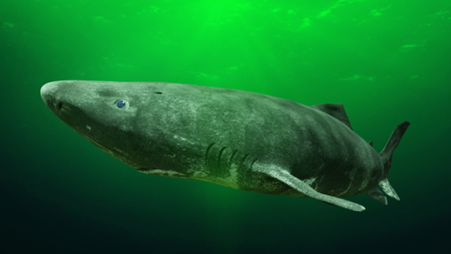
This shark was born before the Taj Mahal was built… and it’s still swimming today!
Yes, you read that right! Scientists discovered a Greenland shark, currently living in the icy waters of the North Atlantic, that could be over 400 years old — making it the world’s longest-living vertebrate.
Researchers used a unique method called radiocarbon dating on the shark’s eye lens proteins (which don’t change from birth) to estimate her age. They concluded she was likely born between 1501 and 1744, with most predictions placing her around 1620.
Measuring nearly 5 meters in length, this incredible female Greenland shark has outlived every known vertebrate, including the 211-year-old bowhead whale!
Greenland sharks are known for:
Growing extremely slowly (they mature at 150 years!)
Living for centuries in deep, cold waters
Giving us new insights into marine longevity and evolution
As climate change, overfishing, and pollution threaten marine life, stories like this remind us how precious and mysterious our oceans truly are.
Born before Shakespeare. Still alive today. The ocean holds more secrets than we can imagine.
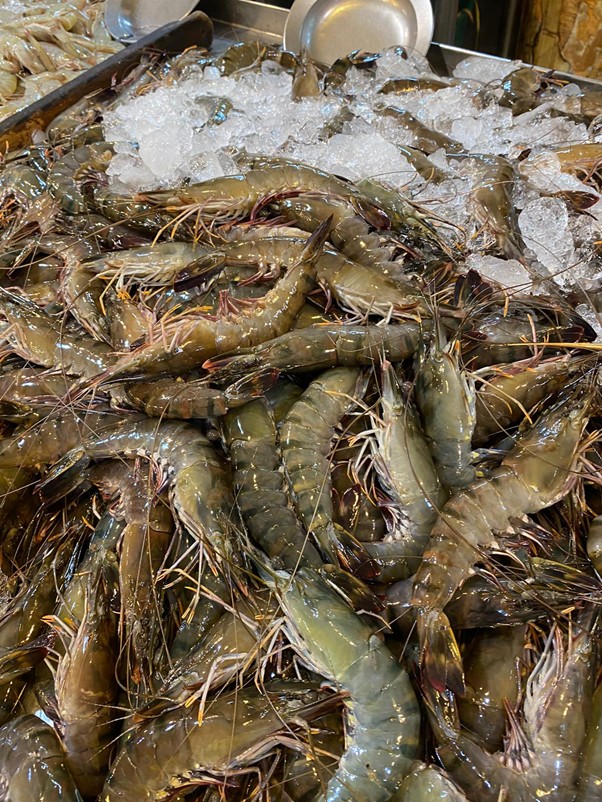
Tiger Prawn Losing Its Throne? Vannamei Takes Over Andhra’s Aquaculture!
Once the king of coastal aquaculture, Tiger Prawn farming in Andhra Pradesh is slowly fading from the spotlight. Farmers are switching to Vannamei shrimp, which is easier to farm, cheaper to maintain, and gives better returns.
Why Tiger Prawn is Losing Popularity:
High risk of diseases like White Spot Virus & EHP
Higher input cost and longer culture period
Difficulty in getting high-quality seed from reliable hatcheries
Why Farmers Prefer Vannamei Now:
Better survival rate and resistance to diseases
Easier access to seed and hatchery support
Quick turnaround with higher market demand
In West Godavari alone, Vannamei now covers 2.5 lakh hectares. Meanwhile, tiger prawn farming is limited and shrinking each year.
But not all hope is lost for Tiger Prawn lovers! With good biosecurity, strong disease management, and high-quality broodstock, this premium species can still shine.
What’s Needed for a Comeback:
Reliable hatcheries with virus-free broodstock
Farmer training on disease management
Policy support to diversify shrimp farming
The future of prawn farming depends on innovation, resilience, and smart choices!