• E – Magazine
    • Aquaculture
    • Aqua Health & Disease Management
    • News
      • National
      • International
    • Farming
    • Research and Innovation
    • Sustainability
    • Technology & Equipments
    • This is Africa
    • Trade
  • Publications
  • Events
    • Expos
    • Trainings
    • Events by Month
  • Business Listings
    • List Your Business
    • Business Listings
    • Buy & Sell
    • Get Consultation
  • Employment
  • About Us
    • Founder
  • Contact
Fishery News
Home » Sustainability » Page 13
Category:

Sustainability

CMFRI Joins Forces with SEAI
AquacultureNewsSustainability

CMFRI Joins Forces with SEAI to Enhance Sustainable Harvest of Key Kerala Fishery Resources

by Fishery News 05/09/2023
written by Fishery News

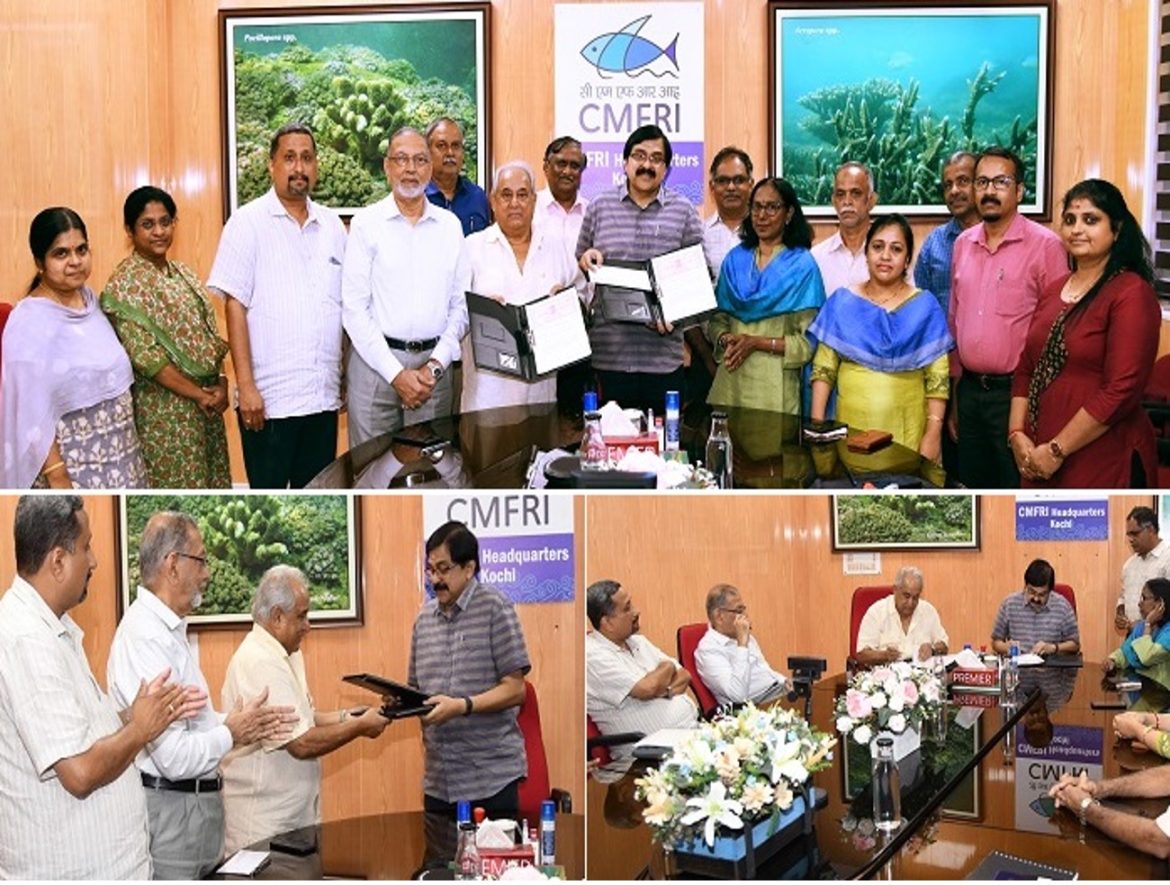
In a pivotal move towards bolstering sustainable fisheries practices in Kerala, the ICAR-Central Marine Fisheries Research Institute (CMFRI) has teamed up with the Seafood Exporters Association of India (SEAI). The collaborative effort seeks to provide technical expertise and support for the sustainable harvest of 11 selected shrimp and cephalopod trawl fishery resources.

The Initiative in Focus:

The CMFRI will spearhead a consultancy research project with a clear mandate: to assess the stock health and fishery performance of a diverse range of aquatic species. This includes popular catches such as the Kiddi (Karikadi) shrimp, Flower Tail (Poovalan) shrimp, Red Ring Deep-Sea shrimp, Nylon shrimp, Deep-Sea non-penaid shrimp, Squid, Cuttlefish, Octopus, Ribbon Fish, and two species of Threadfin Breams.

Sealing the Agreement:

The collaboration was formally cemented through the signing of a Memorandum of Understanding (MoU) on June 19, 2023. Dr. A Gopalakrishnan, Director of CMFRI, and A J Tharakan of SEAI put their signatures on this pivotal agreement, ushering in a new era of sustainable fisheries management in the region 

Project Objectives:

  • The consultancy research project is underpinned by a series of crucial objectives, including:
  • Stock Assessment: Evaluating the health and viability of the selected species’ populations to ensure sustainability.
  • Fishery Performance Analysis: Scrutinizing the performance of fisheries targeting these resources, including factors such as catch rates and fishing efforts.
  • Setting Management Targets: Establishing targeted levels for fisheries management to ensure sustainable exploitation of these vital marine resources.
  • Bycatch Reporting: Documenting and addressing the incidental capture of species like sawfish, guitarfish, and juvenile sharks in Kerala’s trawl fishery.
  • Indicative Management Actions: Providing recommendations for management actions aimed at maintaining sustainable fishing practices.

Global Perspective:

Dr. A Gopalakrishnan, Director of CMFRI, emphasized the global shift towards informed, healthy, and sustainable seafood consumption among consumers. It is in this context that ensuring seafood originates from sustainable fisheries becomes imperative. Enhanced management programs are poised to not only benefit the environment but also open doors for the marine fisheries sector to access seafood markets worldwide more effectively.

Tailored Approaches:

The research project will prioritize the application of models tailored to the unique life-history patterns of the selected species. This tailored approach acknowledges the distinct characteristics and behavior of each species, essential for effective fisheries management. Additionally, the project seeks to strengthen the existing database on bycatch, providing valuable insights into incidental catches and their impact on non-target species.

As this collaborative effort unfolds, it represents a significant stride towards promoting sustainable fisheries management in Kerala. By assessing stock health, fishery performance, and setting management targets, this initiative aims to ensure the long-term sustainability of 11 crucial marine resources. Moreover, it aligns with the global trend towards sustainable seafood consumption, contributing to environmental conservation and the prosperity of the fishing industry.

05/09/2023 0 comment
0 FacebookTwitterPinterestEmail
Sustainability

Aquaculture as a Sustainable Protein Source: A Brief Analysis in the Context of Meat Production in India

by Fishery News 05/09/2023
written by Fishery News

India, with its burgeoning population and diverse dietary preferences, faces the challenge of providing sufficient protein to meet nutritional needs while balancing environmental sustainability. This article offers an extensive analysis of aquaculture as a sustainable protein source compared to meat production in India. Through a detailed examination of the pros and cons, contributing factors, and statistics, we assess the potential of aquaculture to play a pivotal role in addressing the protein demand while mitigating environmental impact.

India’s quest to provide adequate protein to its population has intensified in recent years due to demographic shifts, urbanization, and changing dietary patterns. The traditional reliance on meat from poultry, goats, and cattle places enormous pressure on land, water, and feed resources. In this context, aquaculture emerges as a sustainable alternative, given India’s extensive coastline and abundant freshwater resources. This analysis explores the potential of aquaculture as a sustainable protein source compared to meat production, focusing on the pros and cons, contributing factors, and pertinent statistics.

Aquaculture: A Sustainable Protein Source

The Pros of Aquaculture:

  • High Protein Efficiency: Aquaculture stands out for its exceptional protein efficiency. Fish and crustaceans, commonly cultured in India, have high protein-to-feed conversion ratios, making them an efficient source of dietary protein.
  • Reduced Land Footprint: Unlike traditional livestock farming, aquaculture requires significantly less land. This factor is crucial in a densely populated country like India, where land availability for agriculture is limited.
  • Mitigated Greenhouse Gas Emissions: Aquaculture tends to produce fewer greenhouse gas emissions compared to livestock. It’s a more environmentally friendly protein source, particularly when considering methane emissions from ruminant animals.
  • Lower Water Usage: Aquaculture utilizes water more efficiently than land-based livestock farming. In recirculating aquaculture systems (RAS), water is recycled, reducing the overall consumption.
  • Diverse Cultivation: India’s geographical diversity allows for a wide range of aquaculture practices, including freshwater and marine aquaculture, shrimp, and finfish cultivation. This diversity ensures a steady supply of various protein sources.

The Cons of Aquaculture:

  • Environmental Impact: Aquaculture, if not managed sustainably, can have adverse environmental effects, such as water pollution, habitat degradation, and disease transmission. Overuse of antibiotics can also lead to antimicrobial resistance.
  • Feed Dependency: Many aquaculture species are reliant on formulated feeds, which often contain fishmeal and fish oil. The production of these feeds contributes to overfishing of smaller fish species, such as anchovies and sardines.
  • Disease Outbreaks: High-density aquaculture systems are susceptible to disease outbreaks, which can lead to significant economic losses if not adequately managed.
  • Biodiversity Concerns: The escape of farmed species into the wild and the introduction of non-native species can disrupt local ecosystems and biodiversity.

Contributing Factors:

  • Climatic Diversity: India’s geographical diversity allows for a wide range of aquaculture practices, from the Himalayan foothills to the coastal plains, creating opportunities for diverse species and production methods.
  • Government Initiatives: The Indian government has launched initiatives like the Blue Revolution to promote sustainable aquaculture practices and enhance production. These initiatives provide technical support, financial incentives, and infrastructure development.
  • Market Demand: The growing demand for seafood, coupled with health-conscious consumer choices, has boosted aquaculture’s importance as a protein source.
  • Research and Development: Ongoing research aims to develop alternative protein sources for aquafeeds, reducing the reliance on wild-caught fish for feed production.

Statistics:

Total Fish Production: India is the world’s second-largest producer of fish, with a total production of over 13 million metric tonnes in 2020. Approximately 7 million metric tonnes are contributed by aquaculture.

Employment Generation: The aquaculture sector employs over 14 million people, providing livelihoods to coastal and rural communities.

Environmental Impact: Inadequate management practices in aquaculture can lead to pollution. For instance, a study found that shrimp farming in certain regions led to mangrove loss and increased salinity in water bodies.

Feed Dependency: As of 2018, India imported over 75% of the fishmeal it used for aquaculture, highlighting the need for sustainable alternatives.

Greenhouse Gas Emissions: Aquaculture contributes to greenhouse gas emissions, primarily through energy consumption, but emissions are relatively lower compared to livestock.

The Role of Aquaculture in Sustainable Protein Production:

Aquaculture’s remarkable efficiency in converting feed into protein positions it as a sustainable protein source. The reduced land footprint, lower water usage, and mitigated greenhouse gas emissions make it an attractive alternative to conventional meat production. However, its sustainability hinges on responsible practices, which must be enforced through regulations and industry standards.

Addressing Environmental Concerns:

The environmental impact of aquaculture can be mitigated through the adoption of sustainable practices. These include improved feed formulation, efficient water management, reduced antibiotic usage, and stricter regulations on pollution control. Sustainable certification programs, such as the Aquaculture Stewardship Council (ASC) and Best Aquaculture Practices (BAP), play a vital role in promoting responsible aquaculture.

Reducing Feed Dependency:

Developing sustainable and alternative protein sources for aquafeeds is critical to reducing the pressure on wild fisheries. India’s agricultural sector can contribute by producing plant-based protein sources suitable for aquaculture feeds. Innovations such as insect-based protein and algal-based feeds also hold promise in reducing fishmeal and fish oil dependency.

Promoting Biodiversity and Resilience:

Aquaculture can play a role in biodiversity conservation through responsible practices. Integrated multi-trophic aquaculture (IMTA) systems, for example, combine different species to utilize nutrients efficiently and reduce environmental impact. Such practices enhance the resilience of aquaculture systems.

Aquaculture holds immense potential as a sustainable protein source in India, offering a viable alternative to traditional meat production. Its high protein efficiency, reduced land and water requirements, and lower greenhouse gas emissions position it favorably. However, the sector must address environmental concerns, reduce feed dependency, and promote responsible practices to ensure long-term sustainability. With the right policies, technological innovations, and consumer awareness, aquaculture can significantly contribute to meeting India’s protein demand while minimizing its environmental footprint. Balancing the protein equation in India will require a holistic approach that embraces both aquaculture and sustainable practices in traditional meat production.

05/09/2023 0 comment
0 FacebookTwitterPinterestEmail
Newer Posts
Older Posts
  • Recent
  • Popular
  • ICAR-CIFT Patents Rapid DNA Biosensor for Black Tiger Shrimp Authentication

    07/08/2026
  • Minister Holds Review Meeting with Fisheries Cooperative Leaders

    07/08/2026
  • Dry Fish Demand Surges Following Formalin Ban

    07/08/2026
  • Rohu Breeding: A Complete Step-by-Step Guide to Successful Seed Production

    07/08/2026
  • 1

    Trout Fish Stocking Initiative Enhances Fisheries and Tourism Potential in Shopian, Jammu and Kashmir

    17/12/2023
  • 2

    BIGGEST FISH MARKETS IN INDIA

    07/09/2024
  • 3

    Brazil’s Appetite for Vietnamese Tilapia Is Reshaping the Global Whitefish Trade

    28/07/2026
  • 4

    Introducing Future Aquaculture Magazine: A New Voice Shaping the Future of Seafood

    13/02/2026

About Fishery News

FN Logo

Fishery.News is India’s leading digital media platform dedicated to fisheries, aquaculture, seafood, and marine industries. We deliver trusted news, expert insights, market intelligence, technology updates, research, government policies, and success stories that help fish farmers, shrimp farmers, seafood businesses, researchers, and industry professionals stay informed and grow sustainably

Categories

  • News
  • Aquaculture
  • Aquatic Health and Disease Management
  • Research and Innovation
  • Technology & Equipments

Social Networks

Facebook Twitter Instagram Linkedin Youtube
  • Facebook
  • Twitter
  • Instagram
  • Linkedin
  • Youtube

© 2026 Fishery.News – A BLIV Media Venture. All Rights Reserved.


Back To Top
Fishery News
  • E – Magazine
    • Aquaculture
    • Aqua Health & Disease Management
    • News
      • National
      • International
    • Farming
    • Research and Innovation
    • Sustainability
    • Technology & Equipments
    • This is Africa
    • Trade
  • Publications
  • Events
    • Expos
    • Trainings
    • Events by Month
  • Business Listings
    • List Your Business
    • Business Listings
    • Buy & Sell
    • Get Consultation
  • Employment
  • About Us
    • Founder
  • Contact