• E – Magazine
    • Aquaculture
    • Aqua Health & Disease Management
    • News
      • National
      • International
    • Farming
    • Research and Innovation
    • Sustainability
    • Technology & Equipments
    • This is Africa
    • Trade
  • Publications
  • Events
    • Expos
    • Trainings
    • Events by Month
  • Business Listings
    • List Your Business
    • Business Listings
    • Buy & Sell
    • Get Consultation
  • Employment
  • About Us
    • Founder
  • Contact
Fishery News
Home » News » Page 7
Category:

News

NORTHEASTERN REGION STATES MEET ON FISHERIES TO BE HELD IN GUWAHATI
NationalNews

NORTHEASTERN REGION STATES MEET ON FISHERIES TO BE HELD IN GUWAHATI

by Fishery News 06/01/2025
written by Fishery News

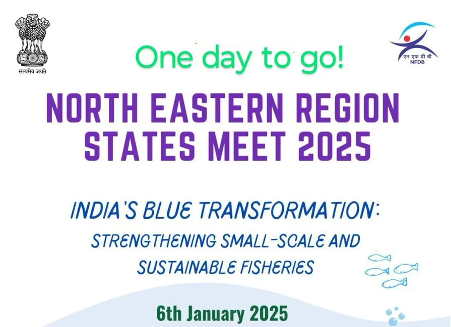
The Department of Fisheries, under the Ministry of Fisheries, Animal Husbandry, and Dairying, is organizing the Northeastern Region States Meet today in Guwahati, Assam.

Union Minister Rajiv Ranjan Singh will chair the event, which will focus on reviewing the implementation of the Pradhan Mantri Matsya Sampada Yojana (PMMSY). Prominent ministers from the Northeast are set to participate in the meet.

As part of the program, fisheries development projects worth ₹50 crore will be inaugurated, signaling a significant boost for the sector in the region. Certificates and awards will also be distributed to fisheries beneficiaries. A noteworthy highlight is the announcement of an Organic Fisheries Cluster in Sikkim, aimed at promoting sustainable aquaculture.

A technical session led by ICAR Deputy Director General Dr. J.K. Jena will discuss challenges and advancements in fisheries and aquaculture, offering valuable insights for the stakeholders.

This meet is expected to strengthen sustainable fisheries practices, enhance productivity, and improve the livelihoods of fisher communities across the northeastern states.
 

06/01/2025 0 comment
0 FacebookTwitterPinterestEmail
PANCHAYAT RAJ MINISTER TO DISTRIBUTE MOBILE FISH RETAIL OUTLETS UNDER PMMSY
NationalNews

PANCHAYAT RAJ MINISTER TO DISTRIBUTE MOBILE FISH RETAIL OUTLETS UNDER PMMSY

by Fishery News 03/01/2025
written by Fishery News

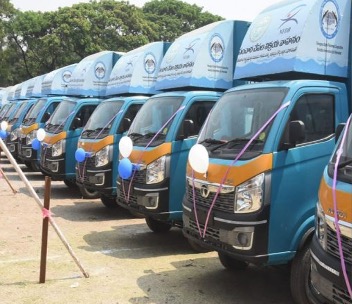
In a significant step towards empowering women and boosting fish consumption, Panchayat Raj and Rural Development Minister Danasari Anasuya (Seethakka) will inaugurated the distribution of Mobile Fish Retail Outlets (MFROs) sanctioned under the Pradhan Mantri Matsya Samrudhi Yojana (PMMSY) today and the Blue Revolution. The ceremony will take place at Praja Bhavan today.

Financial Support and Beneficiary Details:

The initiative, backed by the Indira Mahila Shakti programme, is facilitated by the Society for Elimination of Rural Poverty (SERP), which has arranged bank loans to cover the beneficiaries’ contribution.

  • First Phase Allocation: 32 units (one per district) sanctioned.
  • Unit Cost: ₹10.38 lakh, including fabrication.
  • Subsidy: 60% per unit, amounting to ₹6 lakh.

Beneficiaries are Self-Help Group (SHG) women engaged in fish retail, selected by the District Fisheries Officer and District Rural Development Officer (DRDO) with approval from the respective District Collectors.

Features of Mobile Fish Retail Outlets:
Each unit is equipped for:

  • Storage and sale of raw fish.
  • Preparation and marketing of fish-based dishes.
  • Operation in strategic locations like markets and public spaces.

Objective:
This initiative aims to:

  1. Empower Women: Provide sustainable income opportunities for SHG women.
  2. Promote Fish Consumption: Increase the accessibility and popularity of fish as a nutritious food choice across the State.

The MFROs are expected to significantly contribute to the socio-economic upliftment of rural communities while strengthening the fisheries sector.


03/01/2025 0 comment
0 FacebookTwitterPinterestEmail
DRI SEIZES ILLEGAL WILDLIFE ARTICLES APPREHENDS THREE PERSONS IN ANDHRA PRADESH
NationalNews

DRI SEIZES ILLEGAL WILDLIFE ARTICLES, APPREHENDS THREE PERSONS IN ANDHRA PRADESH

by Fishery News 03/01/2025
written by Fishery News

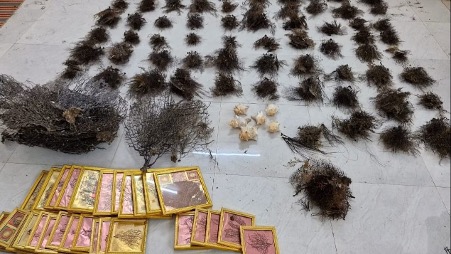
The Directorate of Revenue Intelligence (DRI) Hyderabad Zonal Unit has seized a significant quantity of illegal wildlife articles, including 9.812 kgs of dead Black Corals (Antipatharia), 0.286 kgs of dead Soft Corals (Alcyonacea), and six Trapezium Horse Conches (Pleuroploca Trapezium). The seizure was made from two individuals involved in the illegal trade.

Further investigations revealed that the supplier of these wildlife articles was based in Ongole, a coastal town in Andhra Pradesh. Acting swiftly, a team from the DRI’s Vijayawada Regional Unit apprehended the supplier and seized an additional 6.64 kgs of dead Black Corals on December 31.

Soft and Black Corals are rare and endangered marine invertebrates critical to the survival of coral reef ecosystems. These corals:

  • Provide shelter and food for marine species.
  • Are integral to maintaining ecological balance.

The illegal removal of these corals disrupts habitats and food chains, causing long-term ecological damage. Despite their ecological importance, these corals, locally known as ‘mahendrajaal’ (Soft Corals) and ‘indrajaal’ (Black Corals), are sold for ornamental purposes, believed to bring good luck when displayed in homes.

The apprehended individuals, along with the seized wildlife articles and vehicles, were handed over to the Forest Department of Andhra Pradesh for further investigation under the Wildlife (Protection) Act, 1972.

Officials emphasized that there are no verified medical or problem-solving benefits associated with Soft or Black Corals, underscoring the senseless destruction of vital marine life for decorative purposes.

This operation reflects DRI’s commitment to curbing illegal wildlife trade and protecting India’s biodiversity.

03/01/2025 0 comment
0 FacebookTwitterPinterestEmail
TRIPURA LEADS THE WAY IN SUSTAINABLE AQUACULTURE WITH INNOVATIVE TECHNOLOGIES
NationalNews

TRIPURA LEADS THE WAY IN SUSTAINABLE AQUACULTURE WITH INNOVATIVE TECHNOLOGIES

by Fishery News 03/01/2025
written by Fishery News

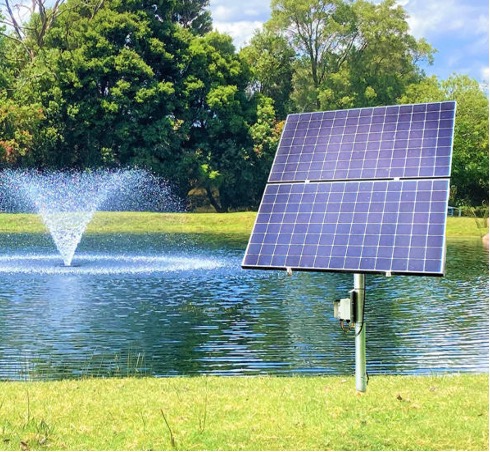
The Northeastern region of India, rich in water resources, is unlocking its potential in aquaculture, with Tripura emerging as a key player in driving economic growth, cultural preservation, and food security. Leveraging advanced technologies, the state has witnessed significant strides in productivity and sustainability. From Biofloc technology enabling fish farming in small spaces to Recirculating Aquaculture Systems (RAS) for efficient water reuse and solar-powered aerators for oxygen enhancement, innovative practices have transformed aquaculture in Tripura.

At the forefront of these advancements is Debtanu Barman, founder of Barman Aqua Clinics Private Limited, and his revolutionary creation, ‘Pond Talk.’ This solar-powered pond aerator integrates immediate water filtration and an auto-feeder, providing a holistic solution to enhance fish farming systems.

The Technology Innovation and Development Foundation (IITGTIDF) has recognized the significance of this innovation, awarding a ₹20 lakh grant for the project titled “Solar Powered Pond Aerator with Instant Water Filtration and Auto Feeder (POND TALK).” The initiative has been formally approved by IIT Guwahati.

“We received this grant under Barman Aqua Clinics Private Limited, a sister concern of Aqua Doctor Solutions,” Barman shared in an exclusive interview. “Our company, established in 2023, focuses on research and development in aquaculture and fisheries across the Northeastern states.”

Based in Tripura, Barman Aqua Clinics provides a comprehensive suite of services, including consultancy, training, fintech solutions, and market linkages. Since its inception, the company has completed over 100 consultancy projects, connected with more than 30,000 fish farmers, and trained over 5,000 individuals.

Debtanu Barman, a native of Melaghar in the Sepahijala district, brings over 14 years of expertise in aquaculture. Holding a B.F.Sc. from the Central Agricultural University, Agartala, and a master’s degree from Ghent University, Belgium, he has collaborated with global NGOs, laboratories, and government agencies.

Barman has also played a pivotal role in establishing women-led Farmer Producer Organizations (FFPOs) and promoting financial inclusion in collaboration with organizations like the National Cooperative Development Corporation (NCDC) and FishFed.

The Solar Revolution in Aquaculture

Solar-powered solutions like ‘Pond Talk’ are reshaping the fisheries sector, offering sustainable and cost-effective alternatives. In India, innovations such as solar-powered aerators, cold storage units, and drying technology have gained traction in states like Kerala, Tamil Nadu, and Gujarat. Globally, solar-powered fishing boats and floating solar panels are addressing challenges in resource efficiency and environmental impact.

With ‘Pond Talk,’ Barman Aqua Clinics is not only transforming aquaculture in Tripura but also positioning the state as a leader in sustainable fisheries practices. This initiative aims to reduce operational costs, improve productivity, and set a benchmark for eco-friendly aquaculture solutions, paving the way for a sustainable future.

Source: Business North East

03/01/2025 0 comment
0 FacebookTwitterPinterestEmail
NABARD EMERGES AS A PILLAR OF SUPPORT FOR SHRIMP FARMING IN ANDHRA PRADESH
NationalNews

NABARD EMERGES AS A PILLAR OF SUPPORT FOR SHRIMP FARMING IN ANDHRA PRADESH

by Fishery News 31/12/2024
written by Fishery News

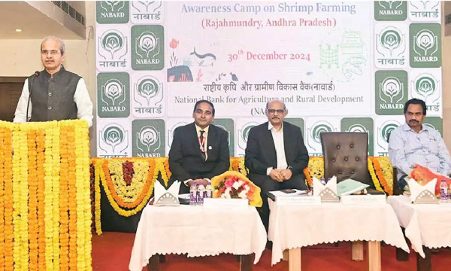
NABARD Andhra Pradesh Regional Chief General Manager M R Gopal highlighted NABARD’s vital role in supporting fish and shrimp farmers through financial aid and strategic initiatives for the aquaculture sector. Speaking at a regional awareness workshop on shrimp farming, organised in collaboration with the State Fisheries Department, Gopal emphasised the importance of comprehensive planning for shrimp farming, processing, and exports.

Farmers from the erstwhile Godavari districts participated in the workshop, which focused on the challenges and opportunities in the aquaculture sector. Gopal called for collaborative efforts to enhance shrimp production and exports, particularly through financial assistance for establishing nucleus breeding centres for shrimp propagation.

Shrimp Farming: A Key Contributor

With a 974 km coastline, Andhra Pradesh is a crucial player in the domestic and global shrimp industry. The state has achieved remarkable growth in fisheries exports, significantly contributing to rural employment. Major export markets include China and the USA.

Key Insights from Experts

Dr A V Bhavani Shankar, CGM (NABARD HO), pointed out that India ranks second globally in fish production, with a 7% annual growth rate in the past seven years. Fisheries Department Joint Director Lal Mohammed highlighted that 70% of the aquaculture area is concentrated in East and West Godavari, Krishna, and Guntur districts. He also noted the introduction of innovative technologies like drones and the provision of electricity subsidies to over 54,000 aqua farmers.

NABARD’s Aqua Pragati Initiative

The workshop showcased NABARD’s Aqua Pragati initiative, which facilitates credit support for small, medium, and corporate-level farmers. Experts discussed Andhra Pradesh’s potential to strengthen its position in the global shrimp market through innovation and strategic planning.

The programme witnessed the participation of key dignitaries, including AGM SLBC Srinivasa Dasyam, NFDB representative Dr A V Madhuri, ICAR-CMFRI Principal Scientist Dr Joe K Kizhakudan, and MPEDA Joint Director Vijay Kumar, who shared insights to drive aquaculture growth in the state.

This collaborative effort underscores Andhra Pradesh’s commitment to leveraging its aquaculture potential, enhancing livelihoods, and cementing its place in the global shrimp industry.


31/12/2024 0 comment
0 FacebookTwitterPinterestEmail
FOCUSING ON FISHERS' WELFARE MLA BANDARU SHRAVANI INAUGURATES FINGERLING RELEASE PROGRAM UNDER PMMSY
NationalNews

FOCUSING ON FISHERS’ WELFARE: MLA BANDARU SHRAVANI INAUGURATES FINGERLING RELEASE PROGRAM UNDER PMMSY

by Fishery News 31/12/2024
written by Fishery News

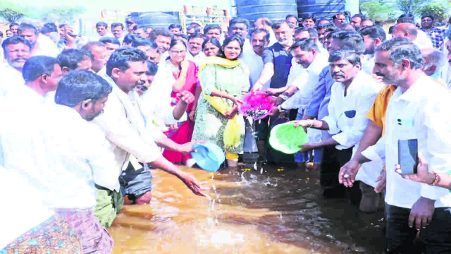
MLA Bandaru Shravani highlighted the NDA government’s unwavering commitment to the welfare of fishers and the development of the fisheries sector. Speaking at a significant event at the Penakacherla (Mid-Pennar) Dam, she inaugurated the release of 12 lakh fish fingerlings under the Mission Fingerling Program, funded through the Pradhan Mantri Matsya Sampada Yojana (PMMSY) scheme.

Accompanied by District Fisheries Officer Srinivas Naik, the MLA released the fingerlings into the dam’s waters. She emphasized the government’s proactive efforts to uplift the fisheries sector and enhance the livelihoods of fishing communities.

In her address, MLA Bandaru Shravani expressed plans to develop the MP Dam as a tourist destination and restore its former glory. She assured the audience that all necessary steps would be taken to promote tourism and related economic activities in the region.

The event witnessed active participation from several prominent figures, including former MPP Munthimadugu Srinivas Reddy, Sarpanch Usha Rani, South Canal DC Chairman Chandrashekar, Tahsildar Bandaru Eramma, MPDO Yogananda Reddy, MEO Tara Chandranayak, and EORD Damodaramma. Fisheries Department officials, including FDOs Ashif and Lakshminarayana, also played a key role in the program.

District-level leaders of the fisheries associations, including President Nagesh, along with members Pandu, Narasimha Reddy, Venkatarami Reddy, Chittambarappa, Suresh, Vadlaramu, Challa Nagaraju, Saama Madhusudhan, Erriswamy, Subbu, Venkatesh, Venkataramudu, and Ramamji, were present. The program also saw enthusiastic participation from local leaders, activists, and community members.

The release of fish fingerlings under the PMMSY scheme is a strategic step towards increasing fish production, boosting the income of fishers, and maintaining ecological balance in water bodies. This initiative aligns with the government’s vision of creating sustainable development opportunities for rural communities.

With such efforts, the fisheries sector in Andhra Pradesh continues to grow as a cornerstone of rural economic development, promising a brighter future for the fishing community and the region as a whole.


31/12/2024 0 comment
0 FacebookTwitterPinterestEmail
MASS FISH DEATHS IN HISTORIC MANSAR LAKE SPARK CONCERNS OVER ECOLOGICAL IMBALANCE
NationalNews

MASS FISH DEATHS IN HISTORIC MANSAR LAKE SPARK CONCERNS OVER ECOLOGICAL IMBALANCE

by Fishery News 31/12/2024
written by Fishery News

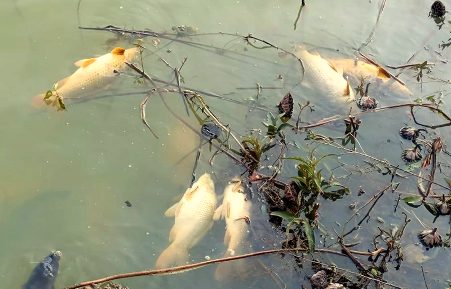
A recent mass fish die-off in the historic Mansar Lake has drawn attention to the fragile interplay between human activities and natural ecosystems. This recurring tragedy, now exacerbated, underscores the urgent need for collective and sustained action by authorities, environmental experts, and the local community.

Mansar Lake, renowned for its religious and cultural significance, is a vital resource supporting diverse aquatic life and providing drinking water to nearby communities. However, the mass deaths of fish have sparked alarm over potential water contamination and the spread of waterborne diseases, posing threats to public health and ecological stability.

Investigations Highlight Causes

A study by the Fisheries Department of Sher-e-Kashmir Agricultural Science University last year identified oxygen depletion as the primary cause of fish mortality. Factors such as overpopulation of fish, excessive feeding with flour by visitors, and organic waste accumulation were cited as key contributors. Decomposing waste produces ammonia, which depletes oxygen levels, rendering the lake uninhabitable for aquatic species.

Despite efforts by the Wildlife Conservation Department to curtail household wastewater discharge into the lake, some residents continue to violate these guidelines, exacerbating water pollution and hampering conservation efforts.

Cultural Reverence and Ecological Challenges

The lake holds immense religious significance, with beliefs discouraging the removal of aquatic life. While this cultural practice has historically protected the lake’s biodiversity, it now poses challenges. Overpopulation of fish, coupled with a reluctance to intervene, has led to severe ecological imbalances. Balancing cultural beliefs with ecological preservation is both delicate and essential.

Experts and authorities stress the importance of immediate and long-term measures, including:

  1. Removal of Dead Fish: Clearing the lake of deceased fish to prevent further water contamination.
  2. Aeration Systems: Installing fountains or aerators to enhance oxygen levels, particularly during winter months when oxygen depletion is most severe.
  3. Fish Relocation: Controlled relocation to reduce overcrowding while respecting cultural beliefs.
  4. Wastewater Management: Strict enforcement of regulations against household wastewater discharge and alternative waste disposal solutions for residents.
  5. Awareness Campaigns: Educating locals and tourists on the harmful effects of overfeeding fish and polluting the lake, with religious leaders playing a pivotal role.
  6. Regular Monitoring: Conducting scientific studies and predictive modelling to anticipate and mitigate future incidents.

Preserving Mansar Lake’s Heritage

Saving Mansar Lake requires a balanced approach integrating science, tradition, and community participation. The government must allocate resources for conservation, including research funding and sustainable management practices. Partnerships with NGOs, academic institutions, and religious organisations can amplify efforts.

This environmental crisis is a stark reminder of the consequences of inaction. Mansar Lake is not merely a water body; it is a living testament to the region’s heritage and biodiversity. Swift and decisive actions are essential to preserve it for future generations, ensuring it remains a vibrant and life-sustaining ecosystem.

Call to Action

Authorities, experts, and citizens must act collectively to save Mansar Lake from further degradation. The time to act is now—before the lake’s ecological and cultural legacy is lost forever.


31/12/2024 0 comment
0 FacebookTwitterPinterestEmail
RUSSIAN SCIENTISTS CRITICIZE INADEQUATE CLEANUP EFFORTS AFTER BLACK SEA OIL SPILL
InternationalNews

RUSSIAN SCIENTISTS CRITICIZE INADEQUATE CLEANUP EFFORTS AFTER BLACK SEA OIL SPILL

by Fishery News 30/12/2024
written by Fishery News

Credit: Sergey Pivovarov/Reuters

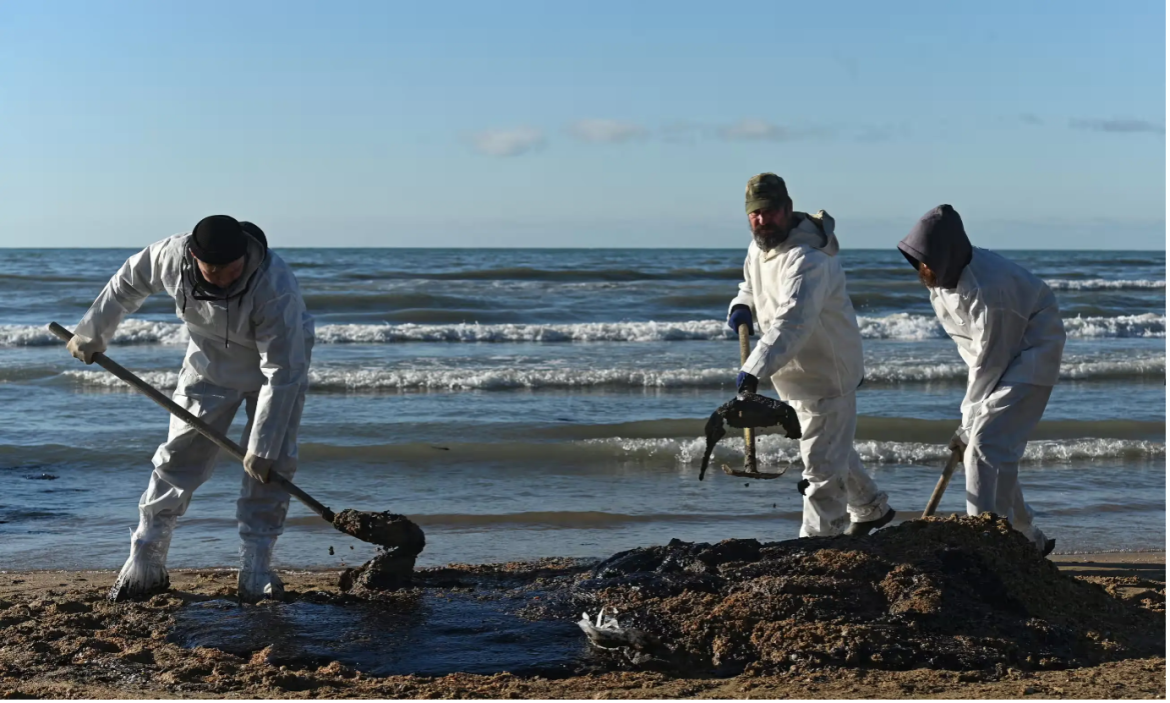
Russian scientists have expressed serious concerns over the inadequacy of cleanup operations following a massive oil spill from two tankers in the Black Sea. They have criticized the lack of proper equipment and resources, calling the response insufficient for the scale of the disaster.

The oil spill occurred on December 15 when two Russian tankers, the Volgoneft-212 and Volgoneft-239, were hit by a storm in the Kerch Strait. One vessel sank, while the other ran aground. The strait, which separates southern Russia from Crimea—a region annexed by Russia in 2014—witnessed a spill of approximately 40% of the 9,200 tonnes of fuel oil carried by the ships, according to Russian authorities.

President Vladimir Putin has described the incident as an “ecological disaster.” In response, thousands of volunteers were mobilized to clean oil-soaked beaches. However, Viktor Danilov-Danilyan, the head of the Water Problems Institute of the Russian Academy of Sciences, criticized the lack of heavy machinery and proper tools during a recent news conference.

“There are no bulldozers, no trucks—practically no heavy machinery,” he stated. Volunteers are relying on shovels and flimsy plastic bags, which he described as “useless and prone to tearing.” The delays in collecting these bags risk allowing the oil to return to the sea during storms, he added.

Public criticism of Russian authorities is rare, but the scale of this ecological crisis has prompted outcry from experts. Russia’s Minister of Natural Resources reported on Monday that up to 200,000 tonnes of sand may be contaminated, with nearly 30,000 tonnes already removed. Krasnodar region governor Veniamin Kondratyev confirmed ongoing efforts but acknowledged the challenges.

Adding to the concern, Sergei Ostakh, a professor at the Russian Academy of Natural Sciences, warned that the oil could soon reach the shores of Crimea. “No one should have illusions it will stay clean,” he cautioned, urging swift action.

The Delfa dolphin rescue center has reported the deaths of 21 dolphins in the affected area, although further testing is required to determine whether the spill was the cause.

The cleanup efforts are under increasing scrutiny, with experts calling for immediate improvements to mitigate the environmental damage in the Black Sea region

Source: The Guardian

30/12/2024 0 comment
0 FacebookTwitterPinterestEmail
NEARLY % OF SPECIES IN UNESCO WORLD HERITAGE MARINE SITES FACE HEAT STRESS
NationalNews

NEARLY 20% OF SPECIES IN UNESCO WORLD HERITAGE MARINE SITES FACE HEAT STRESS

by Fishery News 28/12/2024
written by Fishery News

A recent report reveals that nearly 20% of species in UNESCO World Heritage marine sites are under severe heat stress, posing a significant threat to their survival and disrupting marine ecosystems.

Heat Tolerance and Vulnerable Species

The study highlights that 881 out of 4,406 marine species have reached or surpassed their heat tolerance levels. Among these are 342 fish species, 135 types of algae, and various marine mammals, including iconic species like the Caribbean reef shark and the Atlantic bottlenose dolphin.

The Belize Barrier Reef Reserve tops the list, with 53% of its species living at their heat tolerance limits. Coiba National Park in Panama follows with 26.6%, and the Everglades National Park in the USA records 24.4%. Even the Sundarbans, a vital marine ecosystem, reports nearly 20% of its species struggling with excessively warm waters.

Impacts of Rising Temperatures

Oceans have warmed by approximately 1°C since 1884, and predictions suggest an alarming increase of up to 4.4°C by the century’s end if emissions are not curbed. This rise in temperature:

  • Reduces reproductive rates of marine species.
  • Increases vulnerability to diseases.
  • Disrupts oxygen and nutrient circulation, affecting marine health.

The cascading effects could lead to mass migration of species, destabilizing marine ecosystems globally.

Call for Conservation

To combat these challenges, experts emphasize the need for immediate greenhouse gas reductions. Community engagement and sustainable practices are crucial to protect marine biodiversity. UNESCO World Heritage Marine Sites, like the Belize Barrier Reef and Coiba National Park, must be prioritized for conservation to safeguard their ecological and cultural significance.

Key Insights

  • UNESCO Marine Sites: Critical ecosystems at risk from climate change.
  • Belize Barrier Reef: Home to the highest percentage of heat-stressed species.
  • Global Action Needed: Collaborative conservation efforts can mitigate climate impacts.

The report underscores the urgent need to address climate change for the survival of marine life and the health of our oceans.


28/12/2024 0 comment
0 FacebookTwitterPinterestEmail
ICAR CIBA Signs MoU with BRC Marine Products to Promote Sustainable Shrimp Feed Innovation
NationalNews

ICAR-CIBA Signs MoU with BRC Marine Products to Promote Sustainable Shrimp Feed Innovation

by Fishery News 28/12/2024
written by Fishery News

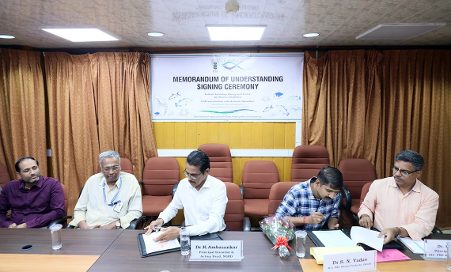
In a significant step toward sustainable aquaculture practices, the ICAR-Central Institute of Brackish water Aquaculture (CIBA) signed a Memorandum of Understanding (MoU) with BRC Marine Products, a leading seafood processing and export firm based in Dhamana, Bhadrak district, Odisha. The partnership focuses on evaluating the feasibility of rice distillers’ dried grains with solubles (DDGS) as a sustainable dietary component for Pacific white shrimp (Litopenaeus vannamei).

The agreement underscores the shared commitment of ICAR-CIBA and BRC Marine Products to explore innovative and cost-effective protein alternatives in shrimp feed formulation.

Speaking on the occasion, Dr. Kuldeep Kumar Lal, Director of ICAR-CIBA, emphasized the urgent need for alternative protein sources to ensure sustainability and cost efficiency in aquaculture. “This collaboration will pave the way for identifying viable resources to replace traditional ingredients, reducing the environmental footprint of aqua feeds,” he stated.

Shri S.N. Yadav, representing BRC Marine Products, elaborated on the company’s initiatives in aquaculture, marine product processing, and bio-ethanol production. He highlighted rice DDGS as a promising substitute for soybean meal, which has the potential to revolutionize the Indian aqua feed industry by offering an economical and sustainable option.

The partnership is expected to enhance the nutritional quality and sustainability of shrimp feeds, contributing significantly to the growth of India’s aquaculture sector.


28/12/2024 0 comment
0 FacebookTwitterPinterestEmail
Newer Posts
Older Posts
  • Recent
  • Popular
  • ICAR-CIFT Patents Rapid DNA Biosensor for Black Tiger Shrimp Authentication

    07/08/2026
  • Minister Holds Review Meeting with Fisheries Cooperative Leaders

    07/08/2026
  • Dry Fish Demand Surges Following Formalin Ban

    07/08/2026
  • Rohu Breeding: A Complete Step-by-Step Guide to Successful Seed Production

    07/08/2026
  • 1

    Trout Fish Stocking Initiative Enhances Fisheries and Tourism Potential in Shopian, Jammu and Kashmir

    17/12/2023
  • 2

    BIGGEST FISH MARKETS IN INDIA

    07/09/2024
  • 3

    Brazil’s Appetite for Vietnamese Tilapia Is Reshaping the Global Whitefish Trade

    28/07/2026
  • 4

    Introducing Future Aquaculture Magazine: A New Voice Shaping the Future of Seafood

    13/02/2026

About Fishery News

FN Logo

Fishery.News is India’s leading digital media platform dedicated to fisheries, aquaculture, seafood, and marine industries. We deliver trusted news, expert insights, market intelligence, technology updates, research, government policies, and success stories that help fish farmers, shrimp farmers, seafood businesses, researchers, and industry professionals stay informed and grow sustainably

Categories

  • News
  • Aquaculture
  • Aquatic Health and Disease Management
  • Research and Innovation
  • Technology & Equipments

Social Networks

Facebook Twitter Instagram Linkedin Youtube
  • Facebook
  • Twitter
  • Instagram
  • Linkedin
  • Youtube

© 2026 Fishery.News – A BLIV Media Venture. All Rights Reserved.


Back To Top
Fishery News
  • E – Magazine
    • Aquaculture
    • Aqua Health & Disease Management
    • News
      • National
      • International
    • Farming
    • Research and Innovation
    • Sustainability
    • Technology & Equipments
    • This is Africa
    • Trade
  • Publications
  • Events
    • Expos
    • Trainings
    • Events by Month
  • Business Listings
    • List Your Business
    • Business Listings
    • Buy & Sell
    • Get Consultation
  • Employment
  • About Us
    • Founder
  • Contact