
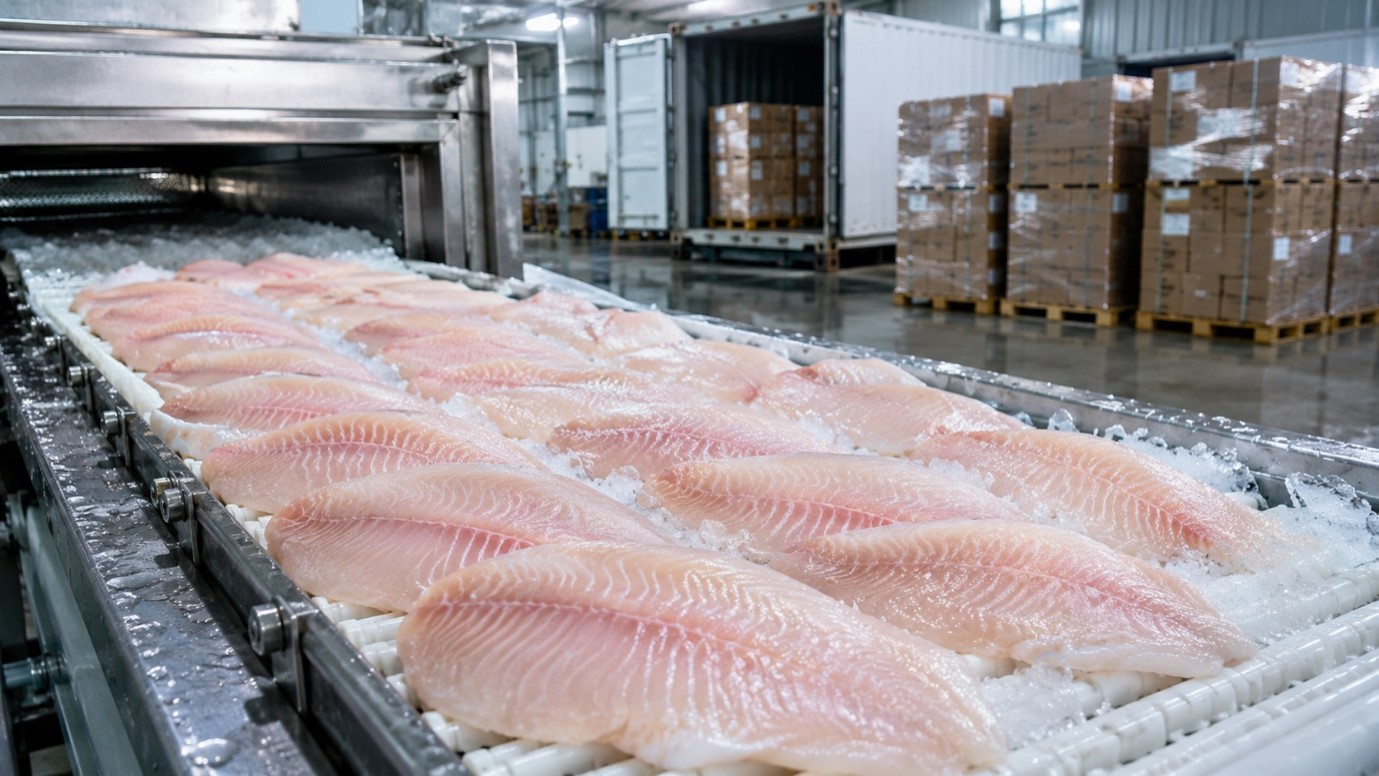
Vietnam’s tilapia exports crossed USD 69 million in the first half of the year, with Brazil accounting for more than half of the total export value. The rapid rise highlights changing global seafood demand, the growing popularity of competitively priced whitefish, and Vietnam’s emergence as a major tilapia supplier.
Brazil Emerges as Vietnam’s Biggest Tilapia Customer
Global seafood trade is witnessing a major shift as Brazil has emerged as the largest importer of Vietnamese tilapia, purchasing seafood worth USD 34.9 million during the first six months of the year. According to the Vietnam Association of Seafood Exporters and Producers (VASEP), Brazil accounted for more than 50% of Vietnam’s total tilapia export earnings, helping the country’s overall exports reach USD 69.4 million during the same period.
Perhaps the most striking figure is the pace of growth. Brazilian imports of Vietnamese tilapia increased 289-fold compared with the same period in 2025, making Brazil the fastest-growing overseas market for Vietnam’s tilapia industry.
Why Brazil Is Buying More Vietnamese Tilapia
The surge reflects a broader change in global seafood consumption. Demand for affordable whitefish continues to increase as consumers and food businesses look for reliable alternatives to traditional species.
VASEP believes Vietnam is well positioned to meet this demand because of its favourable climate, extensive freshwater aquaculture resources and steadily improving farming systems. The country has also invested heavily in hatcheries, feed production, seafood processing and export infrastructure.
Vietnam produced around 420,000 tonnes of tilapia last year, providing a strong production base for future export growth.
Pangasius Experience Gives Vietnam a Competitive Advantage
One of Vietnam’s biggest strengths is the experience it has gained through its world-leading pangasius industry.
Over the years, seafood processors have developed expertise in:
- Quality control
- International food safety standards
- Product traceability
- Cold chain management
- Value-added seafood processing
These capabilities are now being applied to tilapia production, allowing exporters to supply premium frozen fillets, breaded seafood products and retail-ready packaged fish to international buyers.
Vietnam Targets Higher-Value Markets
Vietnam is also expanding beyond volume exports by targeting premium seafood markets.
Recently, a Vietnamese seafood company exported its first shipment of tilapia fillets to Japan for use in sushi and sashimi. The company reportedly spent nearly six months refining its farming and processing methods to meet Japan’s strict quality standards.
Following positive feedback from Japanese buyers, the company plans to expand exports of value-added tilapia products to the United States, Canada and other international markets.
Tilapia Exports Continue to Grow
According to VASEP, Vietnam’s tilapia exports increased from around USD 41 million in 2024 to USD 99.3 million in 2025, with growth continuing this year.
The association expects international demand to remain strong, particularly for:
- Frozen tilapia fillets
- Breaded seafood products
- Ready-to-cook packaged seafood
- Other value-added fish products
Growing consumption across the United States, the European Union, the Middle East, Africa and Latin America is expected to create additional export opportunities for Vietnamese seafood companies.
What It Means for the Global Seafood Industry
Vietnam’s rapid success in the Brazilian market demonstrates how global seafood trade is evolving beyond traditional suppliers. As buyers increasingly seek affordable, high-quality whitefish with reliable supply chains, Vietnam is strengthening its position as one of the world’s fastest-growing tilapia exporters.
If current trends continue, tilapia could become the country’s next major aquaculture success story alongside pangasius, supported by investments in modern farming, processing technology and value-added seafood production.
