
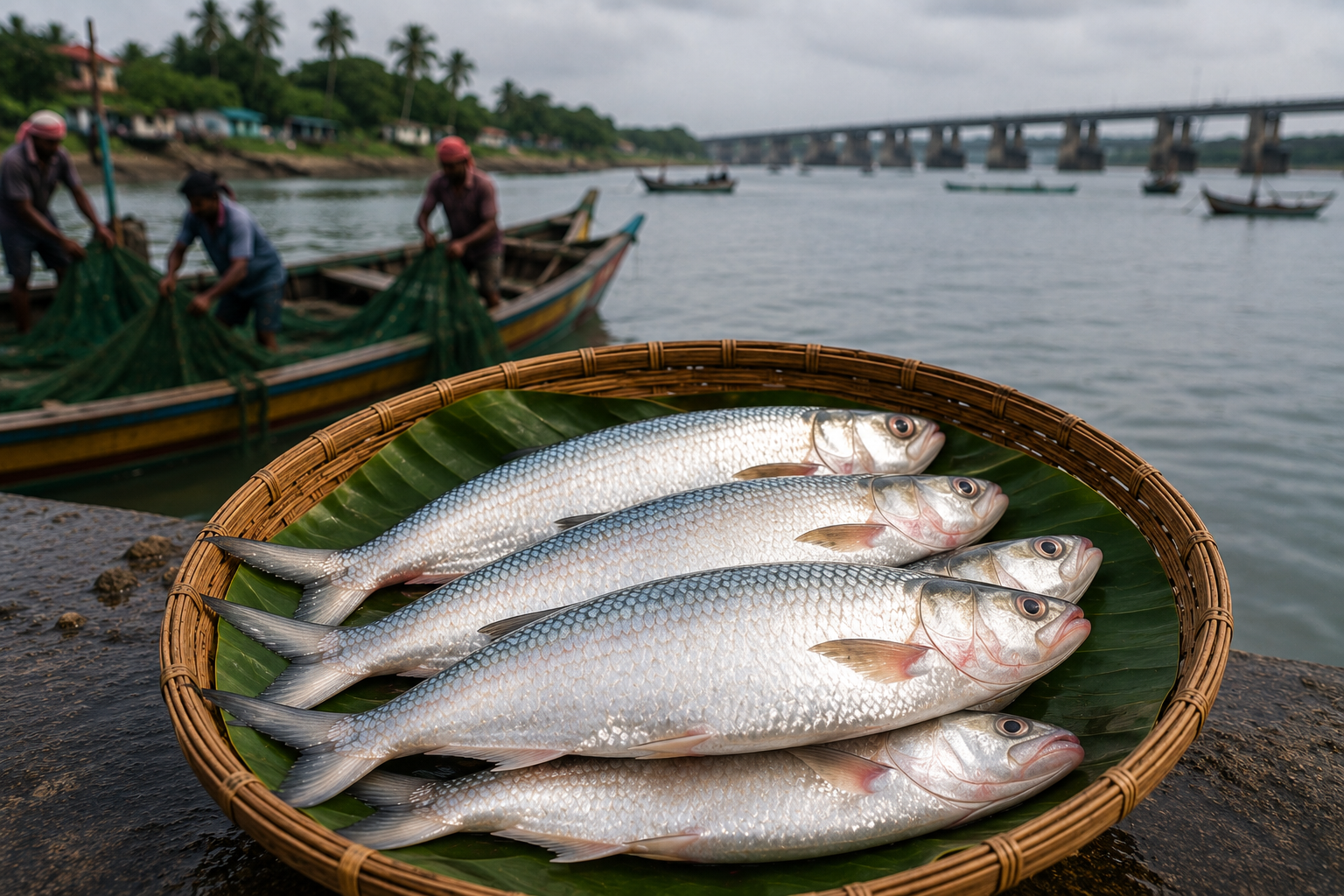
The arrival of Pulasa, the iconic fish synonymous with the Godavari River, has been delayed this monsoon, raising concerns among fishermen and seafood lovers across Andhra Pradesh. Traditionally, July marks the beginning of the much-awaited Pulasa season in the undivided Godavari districts. However, despite entering the third week of July, fishermen say not a single Pulasa has been caught this year.
According to local fishermen, the delayed arrival is primarily due to low inflows in the Godavari River, caused by inadequate rainfall and the absence of significant floodwaters. Without sufficient freshwater discharge into the sea, the migratory fish are unable to enter the river system, affecting both fish availability and the livelihoods of fishing communities.
A Delayed Start to the Pulasa Season
Every year, Pulasa attracts enormous attention in Andhra Pradesh, particularly in the Godavari districts, where the fish is considered a seasonal delicacy. During a normal monsoon, Pulasa begins appearing in local markets from July and continues until September, often fetching premium prices.
This year, however, fishermen report that the season has failed to begin as expected. Local fishing communities say the river flow remains too weak to trigger the migration of the fish from the sea into the Godavari.
The absence of Pulasa has disappointed traders and consumers alike, as demand for the fish remains high during the monsoon months.
How Hilsa Becomes Pulasa
Scientifically known as Tenualosa ilisha, Hilsa is a migratory fish that spends most of its life in marine waters before entering rivers for spawning.
Locally, the fish is known as ‘Ilasa’ while it remains in the sea. Once it enters the freshwater of the Godavari River during the monsoon migration, it undergoes natural physiological changes that enhance its flavour and fat content. At this stage, it is popularly known as Pulasa, a fish widely regarded as one of Andhra Pradesh’s finest culinary delicacies.
The fish migrates upstream against strong river currents to lay eggs, making the annual journey one of the most remarkable natural migrations in Indian fisheries.
Why Is Pulasa Missing This Year?
Fisheries experts and local fishermen attribute the delayed arrival of Pulasa to several factors.
The most immediate reason is the lack of adequate floodwater in the Godavari River. Pulasa migration is closely linked to monsoon floods, as increased freshwater flow creates favourable conditions for the fish to move from the Bay of Bengal into the river.
In addition to weak river flows, experts also point to changing rainfall patterns, environmental changes, and declining river health as factors that could influence the migration behaviour of the species.
Overfishing during the breeding season has also emerged as a long-term concern. Catching brood fish before they spawn can reduce future populations and affect the sustainability of the fishery.
Pollution from industrial and domestic sources further impacts water quality, creating additional challenges for migratory species such as Hilsa.
Traditional Fishing Communities Feel the Impact
The delayed arrival of Pulasa has directly affected fishermen in the Godavari belt, many of whom depend on the seasonal fishery for a significant portion of their annual income.
Pulasa commands exceptionally high market prices, often becoming one of the costliest freshwater fish sold in Andhra Pradesh during the monsoon season. For many fishing families, even a short harvesting period provides valuable income.
With no catches reported so far this season, fishermen are anxiously waiting for improved river flows that could trigger the fish’s migration.
Need for Conservation Measures
Fisheries experts have stressed the importance of protecting Hilsa breeding habitats to ensure the long-term sustainability of Pulasa fisheries.
They recommend identifying key spawning and migration stretches of the Godavari as protected zones during the breeding season. Similar conservation measures have been implemented in parts of eastern India to support Hilsa populations.
Experts also suggest regulating destructive fishing practices, including the use of small-mesh nets that capture juvenile fish before they mature. Improved scientific monitoring of migration patterns and river conditions could also help strengthen conservation and management efforts.
A Nutritionally Rich Fish
Apart from its unique taste, Pulasa is also valued for its nutritional benefits. The fish is rich in Omega-3 fatty acids, high-quality protein, Vitamin B12, calcium, iron, and other essential nutrients. These nutrients contribute to heart health, brain function, bone strength, and overall wellbeing, making Pulasa not only a prized delicacy but also a nutritious food source.
Waiting for the Monsoon to Revive the Season
While the Pulasa season has been delayed, fishermen remain hopeful that stronger rainfall and increased Godavari inflows in the coming weeks will create favourable conditions for the fish to enter the river.
Until then, one of Andhra Pradesh’s most celebrated seasonal fish remains absent from local markets, leaving fishermen waiting for the river to come alive and consumers hoping for the return of the prized Pulasa to their dining tables.

