
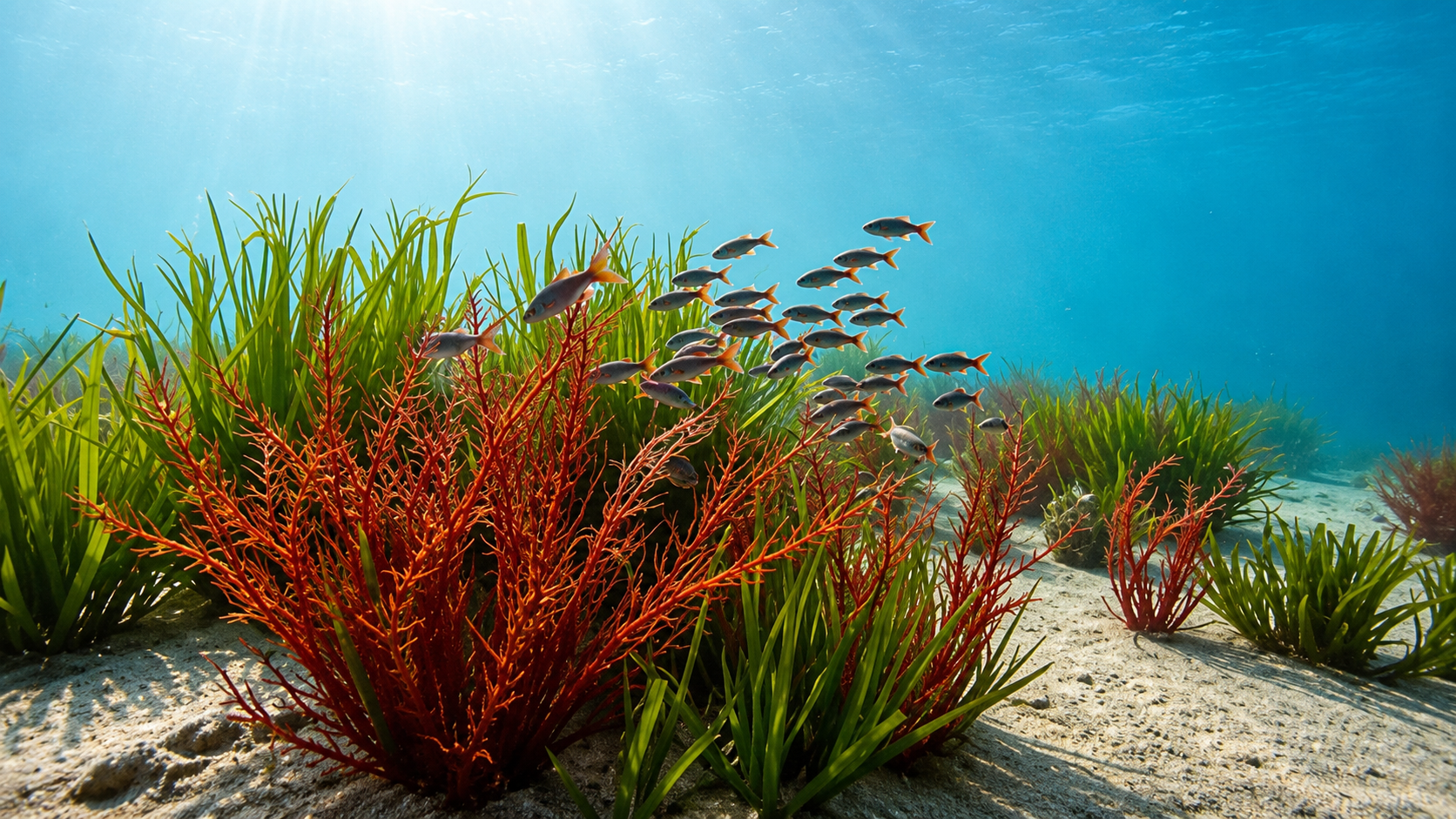
Hidden within a handful of spring-fed pools in Australia’s remote outback lives one of the world’s rarest freshwater fish—the red-finned blue-eye. Found nowhere else on Earth, this critically endangered species has been pushed to the brink by invasive fish, habitat degradation, and declining spring flows. However, years of dedicated conservation work are now giving the tiny fish a fighting chance.
In the arid heart of central Queensland, Australia, a network of shallow natural springs supports one of the planet’s most unique freshwater ecosystems. These isolated pools, fed by the vast Great Artesian Basin, are home to the red-finned blue-eye, a tiny freshwater fish that survives nowhere else on Earth.
Measuring only about the size of a thumbnail, this colourful fish has become one of Australia’s most threatened freshwater species. Decades of pressure from invasive fish, habitat destruction, and shrinking spring flows have pushed it dangerously close to extinction.
Today, thanks to years of conservation efforts led by Bush Heritage Australia at Edgbaston Reserve, the species is showing encouraging signs of recovery.
A Species Found Only in Australia’s Desert Springs
The red-finned blue-eye (Scaturiginichthys vermeilipinnis) has one of the smallest natural distributions of any freshwater fish in the world. It exists exclusively within a small group of spring-fed pools at Edgbaston Reserve in central Queensland.
These springs are sustained by water travelling hundreds of kilometres underground through the Great Artesian Basin, one of the world’s largest underground freshwater systems. As the water reaches the surface, it forms small wetlands that support a remarkable range of unique aquatic life.
Male red-finned blue-eyes are easily recognised by their striking bright red fins, while females display more subdued colours. The species is currently listed as Critically Endangered by the International Union for Conservation of Nature (IUCN).
A Biodiversity Hotspot Unlike Any Other
Although the red-finned blue-eye is the reserve’s most famous resident, it is far from the only rare species living in these springs.
According to Bush Heritage Australia, Edgbaston Reserve is considered one of the most important spring ecosystems within the Great Artesian Basin. The reserve supports 23 species that are found nowhere else on Earth, making it a globally significant biodiversity hotspot.
Among these endemic species are the Edgbaston Goby, several rare freshwater snails, tiny crustaceans, flatworms, spiders, and dragonflies, all of which depend entirely on these isolated spring habitats for survival.
The loss of these fragile wetlands would therefore threaten an entire community of unique aquatic and terrestrial species.
Invasive Mosquitofish Pose the Greatest Threat
The biggest challenge facing the red-finned blue-eye comes from an introduced fish known as Gambusia, commonly called the mosquitofish.
Originally introduced to Australia from the United States during the 1920s to control mosquito populations, Gambusia has since become one of the country’s most damaging invasive freshwater species.
Unlike the delicate blue-eye, Gambusia reproduces rapidly and aggressively competes for food and habitat. It is also believed to feed on the eggs and newly hatched young of native fish.
Conservationists report that once Gambusia enter a spring occupied by red-finned blue-eyes, the native population is often wiped out within 12 to 18 months.
Conservation Efforts Begin to Turn the Tide
When Bush Heritage Australia acquired Edgbaston Reserve in 2009, surveys painted a worrying picture.
Approximately 25 springs had already been invaded by Gambusia, while only four springs still contained surviving populations of the red-finned blue-eye. Importantly, each of these remaining springs was completely free from the invasive fish.
To prevent further losses, conservation teams fenced vulnerable springs, removed invasive fish where possible, and carefully relocated native fish into protected habitats.
The urgency of these actions was clear, as Gambusia had already caused the local extinction of red-finned blue-eyes from seven springs since 1991.
Artificial Springs Help Save a Species
Captive breeding became another essential part of the recovery programme, but early attempts were unsuccessful.
Although the fish survived in conventional aquarium tanks, they refused to breed under artificial conditions.
Researchers eventually discovered that recreating their natural spring environment was the key. They built artificial spring systems using underground tanks supplied with flowing bore water, closely mimicking the unique conditions found in the wild.
This breakthrough enabled successful captive breeding programmes both at Edgbaston Reserve and at a secure conservation facility in Brisbane. These breeding populations now serve as an important safeguard against extinction.
Habitat Degradation Adds to the Challenge
While invasive fish remain the greatest immediate threat, the species also faces several environmental pressures.
According to Bush Heritage Australia, feral pigs and grazing cattle damage fragile spring ecosystems by trampling vegetation, disturbing sediments, and increasing water turbidity. These changes reduce the quality of habitat needed by the red-finned blue-eye to survive and reproduce.
Long-term changes to groundwater availability also present a growing concern.
Since the late 19th century, thousands of bores have been drilled across the Great Artesian Basin to supply water for agriculture. This extensive groundwater extraction has reduced natural spring flows and lowered underground water pressure, placing additional stress on these isolated ecosystems.
Encouraging Signs of Recovery
Despite the many challenges, years of dedicated conservation work are beginning to deliver positive results.
Freshwater ecologist Dean Gilligan, who joined Bush Heritage Australia in 2021, has continued expanding invasive fish control programmes while strengthening captive breeding efforts.
Captive-bred red-finned blue-eyes have already been successfully released into naturally occurring springs, helping restore populations that were once disappearing.
With support from the Australian Government’s Threatened Species Strategy Action Plan, conservation teams are now working to establish five new self-sustaining populations of the species.
A Reminder of the Importance of Freshwater Conservation
The story of the red-finned blue-eye demonstrates how fragile freshwater ecosystems can be and how quickly invasive species can drive native wildlife towards extinction.
At the same time, it also highlights the impact that science-based conservation, habitat restoration, and long-term commitment can have in protecting biodiversity.
As freshwater habitats around the world continue to face increasing pressure from invasive species, habitat degradation, and climate change, the recovery of Australia’s tiny red-finned blue-eye offers a hopeful example of how coordinated conservation efforts can help prevent the loss of species found nowhere else on Earth.
