
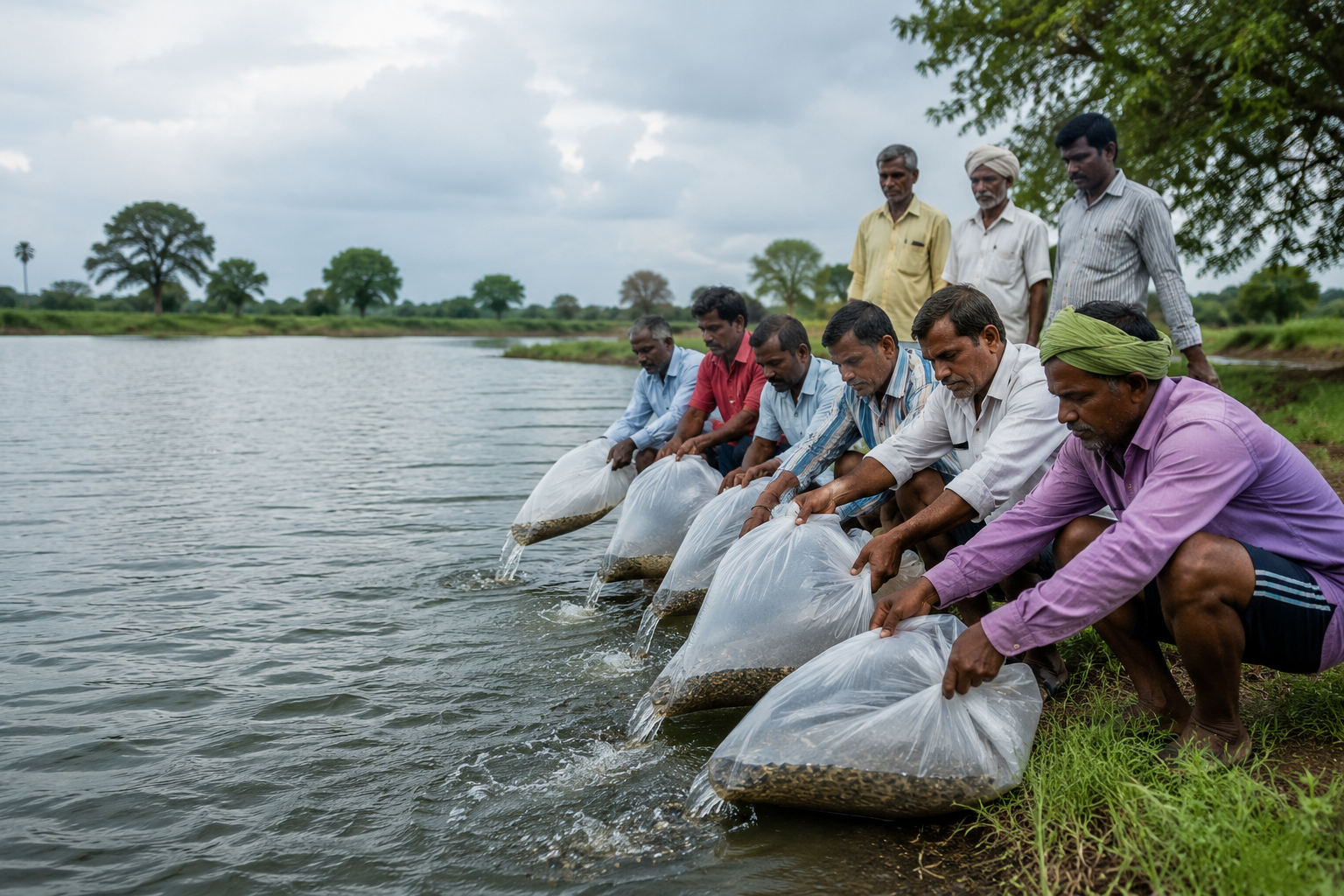
The fishermen community in Telangana has urged the State government to reform its fish seed distribution programme by replacing the existing contractor-based procurement system with a model that allows fishermen cooperative societies to directly purchase fingerlings. Community representatives say the current system has resulted in the supply of poor-quality fingerlings, affecting fish production and the livelihoods of thousands of fishing families across the state.
The demand comes ahead of the annual fish stocking season, when the Fisheries Department releases fingerlings into reservoirs, lakes, tanks, and other inland water bodies to enhance fish production and support inland fisheries. While the community has welcomed the government’s free fish seed distribution programme, it has raised concerns over its implementation, stating that improvements in procurement could help achieve better outcomes.
Fishermen Raise Concerns Over Fingerling Quality
According to representatives of the Telangana Gangaputra Community Development Organisation, the quality of fingerlings supplied through contractors has become a major concern. They argue that poor-quality fish seed can affect survival rates, fish growth, and overall production, ultimately reducing the income of fishing communities that depend on inland fisheries.
The organisation has urged the government to discontinue the contractor-based procurement system and instead allow local fishermen cooperative societies to select and procure fingerlings based on the specific requirements of their water bodies.
Proposal for Direct Procurement Through Cooperative Societies
Community leaders have proposed that registered fishermen cooperative societies be permitted to purchase fingerlings directly from approved hatcheries or suppliers. Under this model, the government could reimburse the procurement cost through the Direct Benefit Transfer (DBT) mechanism.
According to the organisation, this approach would give cooperative societies greater control over the quality and suitability of fingerlings while ensuring transparency in the procurement process.
They believe local societies are better positioned to assess factors such as water quality, soil conditions, and the suitability of fish species before making procurement decisions.
Importance of Selecting the Right Fingerlings
Choosing the appropriate fish species and quality fingerlings is an important factor in inland fisheries development. Different water bodies vary in terms of depth, water quality, productivity, and environmental conditions, making species selection an essential part of successful fish stocking programmes.
Community representatives have stated that a standardised supply of fingerlings through contractors may not always match local ecological conditions. They argue that allowing fishermen societies to make procurement decisions could improve survival rates and overall fish production.
Delay in Tender Process Raises Concerns
The Fisheries Department generally begins distributing fingerlings between July and August, with tenders typically floated in April to finalise suppliers before the stocking season.
However, community representatives have expressed concern over delays in this year’s tender process, stating that procurement has not progressed according to the usual schedule. They have called for timely implementation of the programme to ensure fish stocking is completed during the appropriate season.
A Scheme Supporting Thousands of Families
Telangana’s free fish seed distribution programme is one of the state’s major fisheries initiatives. Each year, the Fisheries Department aims to release approximately 90 crore fingerlings into more than 26,000 water bodies across the state.
The programme supports the livelihoods of nearly five lakh fishermen families, making timely and quality stocking an important component of inland fisheries development.
Representatives of the fishermen community have said that improving the procurement process could enhance the effectiveness of the scheme while helping increase fish production and income opportunities.
Call to Revive Local Fish Seed Production
The fishermen’s organisation has also highlighted the decline of fish farms previously managed by local cooperative societies. According to community representatives, many of these facilities have become non-functional over the years, resulting in greater dependence on suppliers from neighbouring Andhra Pradesh for fingerling procurement.
They have suggested that reviving local fish seed production infrastructure could strengthen Telangana’s fisheries sector, reduce dependence on external suppliers, and improve the availability of quality fingerlings within the state.
Looking Ahead
The Telangana Gangaputra Community Development Organisation has submitted a representation to the Chief Secretary seeking reforms in the fish seed procurement system. The organisation has requested the government to consider a cooperative society-led procurement model supported through Direct Benefit Transfer, arguing that it would improve transparency, enhance fingerling quality, and better address the needs of local water bodies.
As the stocking season approaches, stakeholders will be watching to see whether the government considers these proposals while implementing one of Telangana’s largest inland fisheries support programmes.
