
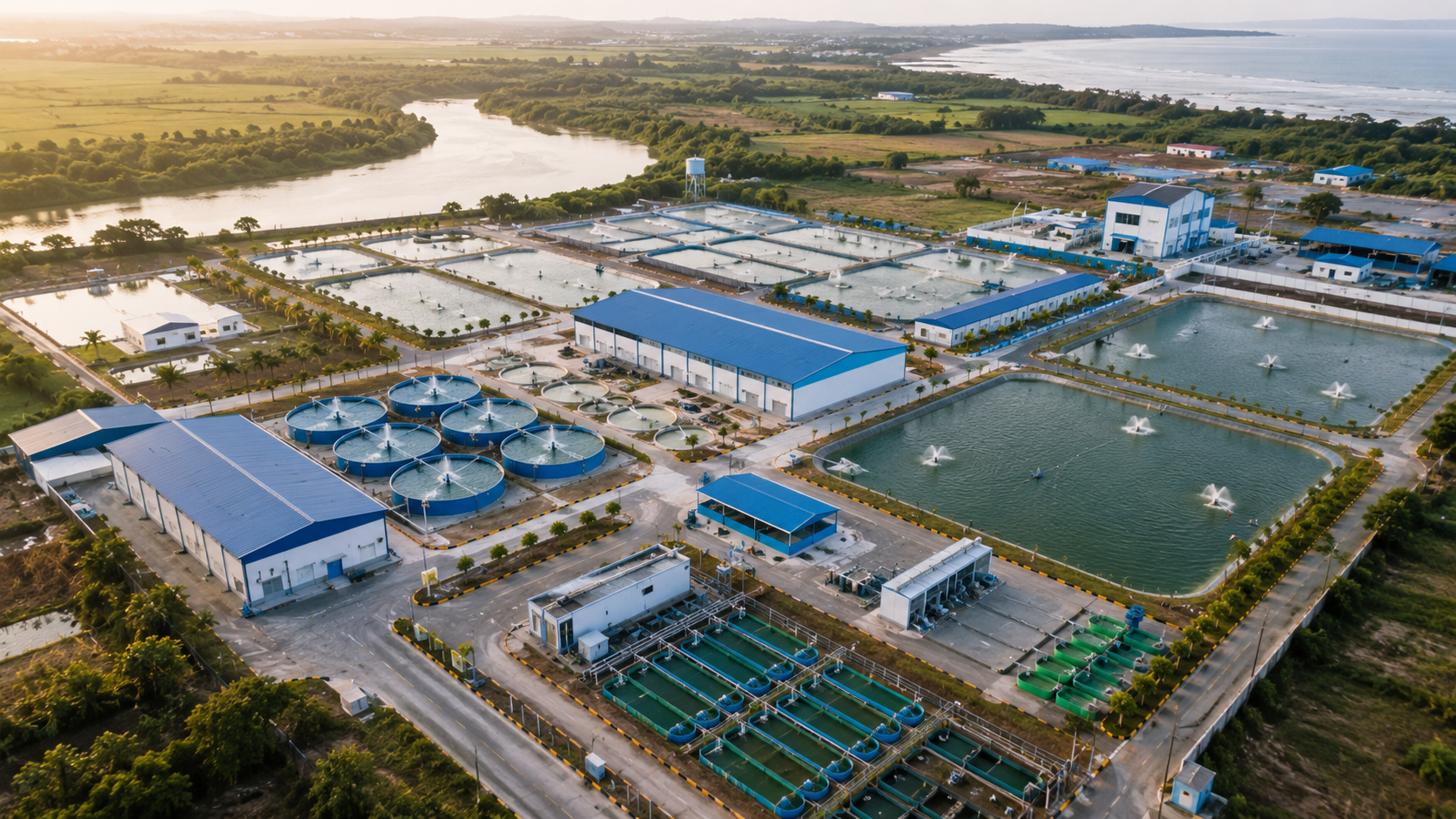
The Government of India has approved 12 Integrated Aquaparks under the Pradhan Mantri Matsya Sampada Yojana (PMMSY), with a total investment of ₹713.80 crore. The initiative aims to create world-class fisheries hubs that strengthen production, processing, value addition, and exports while supporting the country’s Blue Economy.
FN Network Analysis | Fisheries Infrastructure
A Major Push Towards Integrated Fisheries Development
India is accelerating its efforts to modernise the fisheries and aquaculture sector through the approval of 12 Integrated Aquaparks under the Pradhan Mantri Matsya Sampada Yojana (PMMSY). Backed by a total investment of ₹713.80 crore, these Aquaparks are envisioned as comprehensive fisheries hubs that integrate every stage of the seafood value chain—from aquaculture production and processing to packaging, branding, logistics and exports.
The initiative is designed to provide modern infrastructure that supports fish farmers, seafood processors, entrepreneurs and exporters while improving operational efficiency and increasing value addition across the sector.
Andhra Pradesh Receives ₹88.08 Crore Integrated Aquapark
Among the approved projects, Andhra Pradesh has been sanctioned an Integrated Aquapark worth ₹88.08 crore, reinforcing the state’s position as one of India’s leading aquaculture and seafood-producing regions.
The Aquapark will include dedicated facilities for:
- Seafood processing
- Shrimp farming
- Marine finfish culture
- Crab farming
- Seaweed cultivation
- Ornamental fish production
By bringing these activities together within a single integrated ecosystem, the project is expected to improve productivity, reduce operational costs and create new opportunities for value-added seafood production.
Creating End-to-End Infrastructure for the Fisheries Value Chain
The Government aims to develop the Aquaparks as end-to-end infrastructure hubs that address the needs of local fisheries industries while enhancing India’s competitiveness in international seafood markets.
The integrated facilities are expected to:
- Reduce post-harvest losses
- Improve seafood handling and processing
- Strengthen cold chain infrastructure
- Promote value-added seafood products
- Enhance export readiness
- Generate employment across the fisheries sector
The initiative also aligns with India’s broader vision of building a technology-driven and sustainable Blue Economy.
Modern Fishing Harbours and Landing Centres Receive a Major Upgrade
The Aquapark initiative is part of a broader fisheries infrastructure expansion under PMMSY.
The Government has also approved:
- 11 new fishing harbours
- Modernisation of 11 existing fishing harbours
- 23 modern fish landing centres
These projects are intended to improve hygienic fish handling, strengthen seafood logistics and provide better infrastructure for fishermen across coastal regions.
Improved landing and harbour facilities are expected to reduce spoilage, improve product quality and increase returns for fishing communities.
Strengthening Seafood Processing and Deep-Sea Fishing
Infrastructure development extends beyond harbours and Aquaparks.
Under various fisheries development programmes, support has also been approved for:
- 284 deep-sea fishing vessels
- 121 value-added seafood enterprises
- 18 fisheries infrastructure projects under the Fisheries and Aquaculture Infrastructure Development Fund (FIDF)
These projects include investments in modern seafood processing plants, cold storage facilities and integrated supply chain infrastructure designed to improve efficiency from harvest to export.

Building Skilled Fisheries Professionals
Infrastructure alone cannot transform the fisheries sector without skilled manpower.
Recognising this, the National Fisheries Development Board (NFDB) has organised 4,041 training programmes under PMMSY, benefiting more than 1.75 lakh fishers across India.
The training programmes focus on modern aquaculture practices, fisheries management, post-harvest handling, entrepreneurship and technology adoption, helping farmers and fishers improve productivity while adopting sustainable practices.

What It Means for India’s Blue Economy
The approval of 12 Integrated Aquaparks represents a significant step in India’s long-term strategy to build a globally competitive fisheries industry.
By combining modern production systems, seafood processing, cold chain infrastructure, value addition and skill development, the Government aims to create an integrated ecosystem that supports fish farmers, attracts private investment and expands seafood exports.
As India’s fisheries sector continues to grow, these Aquaparks are expected to play a central role in improving seafood quality, generating employment, encouraging entrepreneurship and strengthening the country’s position in the global seafood trade.
